Table of Contents >> Show >> Hide
- The Forgotten Commercial: A Fake Coin and a Real Slur
- Season 5: SNL in a Weird Transitional Phase
- Satire vs. Harm: When the Joke Punches the Wrong Way
- How It Compares to Other Controversial ‘SNL’ Sketches
- Why You’ve Probably Never Seen This Sketch
- What the Sketch Reveals About Comedy in 1980 vs. Comedy Now
- Why Cracked’s Obsession with This Sketch Makes Sense
- Takeaways: The Line Between “Dangerous” and Just Plain Bad
- 500 Extra Words of Experience: What It’s Like to Confront the “Lost” Sketch
Saturday Night Live has never exactly been shy about pushing buttons. From
F-bombs that slipped past censors to sketches that aged about as well as
warm milk, the show has built a reputation on walking the line between bold
satire and bad taste. But every once in a while, SNL doesn’t just walk the
line – it pole-vaults over it.
That’s where the sketch Cracked recently resurfaced comes in: a 1980 fake
commercial sometimes titled “The N*ggerrand”, a gold coin
ad parody that still exists in the archives but has quietly stayed off SNL’s
YouTube playlists. Cracked’s piece,
“The Most Offensive ‘SNL’ Sketch You’ve Never Seen”, argues that
this long-forgotten bit may be one of the show’s most jaw-droppingly
misguided attempts at political satire.
If you’ve never heard of it, you’re not alone. Unless you’re an SNL
completist or someone who stayed up late in 1980 to watch Rodney Dangerfield
host, this sketch has lived in the shadows – not banned, but definitely not
celebrated. So what makes it so offensive, and what does it say about how
comedy ages, especially when it’s riffing on race, apartheid, and money?
The Forgotten Commercial: A Fake Coin and a Real Slur
The sketch appears in Season 5, during the March 8, 1980 episode hosted by
Rodney Dangerfield. It’s structured like one of SNL’s classic faux
commercials: calm music, simple graphics, and a straight-faced spokesperson
selling you something ridiculous.
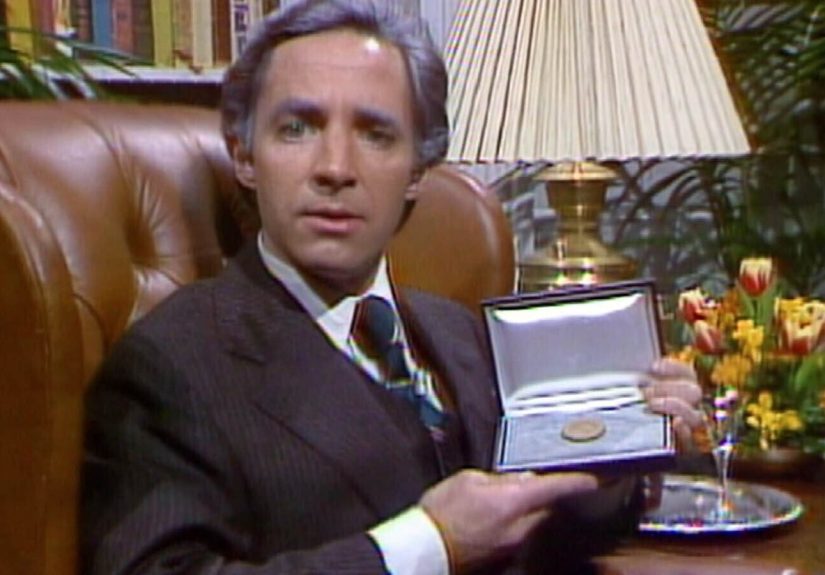
That spokesperson is Harry Shearer, playing a representative of a South
African gold board. The pitch is for a fictional gold coin with a name built
around the N-word – softened in modern discussion as the
“N*ggerrand”, a grotesque play on the real-life South
African Krugerrand, the coin that became a global symbol of
investment in a country built on apartheid.
The ad is packed with ghastly details. The coin supposedly commemorates the
“labor” of Black miners, featuring an image of an African worker on one
side, and on the other, a map of the areas where those workers were legally
forced to live. The sales pitch leans into the exploitation, treating the
suffering of Black South Africans as a clever hook for an investment product.
A tagline implies it’s “the gift that keeps on grinning” – the kind of line
that might make viewers gasp today more than laugh.
On paper, you can see what the writers were going for: a savage attack on
apartheid-era capitalism and the Western investors who shrugged at human
rights abuses as long as their portfolios looked good. In practice, the bit
leans so heavily on the racial slur and the objectification of Black bodies
that the satire gets buried under the shock value.
Season 5: SNL in a Weird Transitional Phase
To understand how this sketch happened, you have to look at
where SNL was in 1979–1980. Season 5 is a transitional,
slightly awkward year in the show’s history. Some of the legendary original
cast – John Belushi, Dan Aykroyd, and Chevy Chase – were gone. In their
place, viewers got Harry Shearer, Paul Shaffer, Peter Aykroyd, and Brian
Doyle-Murray, among others.
The show was still finding itself. The energy that defined early SNL – wild,
experimental, counterculture sketch comedy – was colliding with network
expectations, fatigue, and constant cast turnover. The result was a season
that feels uneven: some brilliant high points and some sketches that seem
more provocative than actually funny.
In that context, the “N*ggerrand” commercial fits right in. It’s edgy,
topical, and clearly trying to make a point about global politics. But it’s
also written from a very specific 1980s vantage point, where white comedy
writers and performers often felt comfortable using racial slurs and imagery
in the name of “satire” – even when the audience most affected by those
slurs wasn’t really in the room.
Satire vs. Harm: When the Joke Punches the Wrong Way
The big question with any offensive sketch is simple:
Who is the butt of the joke? If the sketch truly punches up
– at an oppressive system, a cruel politician, an abusive institution – it
can feel cathartic, even when it’s dark. If it punches down – at people with
less power – it just feels cruel.
With the “N*ggerrand” sketch, the stated target is obvious:
apartheid and the Western investors who ignored it. The
fake coin is essentially a metaphor for blood money. The commercial format
mocks the way financial products are sanitized for TV, even when they’re
built on exploitation.
But that target gets muddled by how the humor is delivered:
-
The sketch repeats a racially loaded coin name built around the N-word,
relying on the shock of that slur to generate laughs. -
The miners themselves never speak. They exist as anonymous bodies etched
onto a coin and trapped in a map. -
The tone is icy, detached, and played completely straight, which is clever
on one level but can make it feel like the suffering is just part of the
bit.
That combination makes the sketch feel like it’s inviting the audience to
laugh with the offensive premise instead of clearly laughing
at the people who created and profited from apartheid. You
understand the intention when you analyze it, but that’s asking a lot from a
two-minute fake commercial at 11:40 p.m. on a Saturday.
It’s the classic problem of “edgy” comedy: if your satirical target isn’t
unmistakably clear, the joke becomes a Rorschach test. Some viewers will see
a sharp political point. Others will just see permission to laugh at a slur.
How It Compares to Other Controversial ‘SNL’ Sketches
SNL has a long list of sketches and moments that have sparked outrage or
regret. Cracked and other outlets have revisited some of the big ones:
-
“Word Association” with Richard Pryor and Chevy Chase (1975):
This job interview sketch escalates into a barrage of racial slurs, ending
with Pryor’s character responding to a slur with the phrase “dead honky.”
It’s brutal, but Pryor’s presence and power clearly center the sketch on
Black anger and dignity pushing back. -
“White Like Me” with Eddie Murphy (1984): Murphy goes
undercover as a white man and discovers a hidden world of unspoken
privilege. Here, the joke hits white society squarely in the face. -
The “Chippendales Audition” sketch (1990): Once considered
a classic, it’s now heavily criticized for body-shaming Chris Farley’s
character, building the entire punchline around his weight. -
The Chelsea Clinton joke (early ’90s): A Wayne’s World
bit that mocked a teenage Chelsea Clinton drew so much backlash that SNL
apologized to the White House.
Compared to these, the “N*ggerrand” bit feels different. The Pryor and
Murphy sketches are undeniably risky, but they are anchored by Black
performers who steer the joke toward systems of racism, not toward victims
of it. With the coin sketch, the most visible subject of the humor is the
racist investment product – but the imagery and language land hardest on the
people it claims to be defending.
That’s what Cracked zeroes in on: the sketch is trying to be righteous, but
it ends up being more disturbing than enlightening. It’s not just offensive
in a “you can’t say that on TV anymore” way; it’s offensive because of how
clumsily it handles injustice.
Why You’ve Probably Never Seen This Sketch
Here’s the weird part: this sketch isn’t totally scrubbed from history. It’s
still lurking in certain official SNL episode archives and may show up on
legacy streaming platforms that run full episodes as originally aired. But
you won’t find it on SNL’s carefully curated YouTube channel, where they
showcase the bits that still play well to modern audiences.
That selective memory isn’t unique to this one sketch. Over the decades,
SNL has trimmed or quietly buried moments that no longer fit NBC’s brand:
slurs, controversial monologues, musical performances that went off the
rails, and jokes that hit differently in the age of social media. As
standards evolve, so do the choices about what to re-surface and what to
leave in the vault.
In that sense, Cracked’s article doesn’t just point at one wild sketch and
say, “Look how bad this is.” It invites readers to think about
how comedy institutions manage their own history. When a
show that’s been on the air for 50 years tries to present a tidy highlight
reel, what gets left out? And what does that selective memory tell us about
how we’d prefer to see ourselves?
What the Sketch Reveals About Comedy in 1980 vs. Comedy Now
Watching old SNL with modern eyes can feel like flipping through a family
photo album and suddenly finding a page of pictures you wish didn’t exist.
The “N*ggerrand” sketch is one of those pages. It forces you to confront how
casually mainstream TV once handled racial language and imagery – even when
it thought it was being progressive.
A few big shifts stand out:
-
Context isn’t enough anymore. In 1980, writers could lean
on the idea that “we’re mocking apartheid, so it’s fine” as justification
for extreme language. Today, audiences expect the target of the satire to
be unmistakable and the harm to marginalized people to be taken seriously. -
Who’s in the room matters. When Black writers and
performers like Pryor or Murphy shape a sketch, the perspective changes.
The “N*ggerrand” bit is delivered entirely through a white, institutional
lens, with Black South Africans reduced to silent symbols. -
Archival access has changed the stakes. In 1980, a risky
joke might air once and then vanish, living on only in memories. In the
streaming era, everything can be clipped, shared, and dissected
indefinitely. That makes old misfires feel newly urgent – and newly
embarrassing.
None of this means SNL has stopped making controversial choices. Recent
seasons have still stirred backlash with sketches seen as insensitive or
lazy about race, gender, or politics. But the conversation around those
sketches is louder and more visible. You don’t need a comedy nerd blog or a
deep-dive article to tell you something crossed a line; social media will do
it in real time.
Why Cracked’s Obsession with This Sketch Makes Sense
Cracked has carved out a niche as a kind of pop-culture archaeologist:
digging up strange, forgotten artifacts and asking, “What were we THINKING?”
The “N*ggerrand” sketch is perfect for that treatment. It’s obscure, it’s
historically loaded, and it forces us to look at how satire can backfire.
By framing it as “the most offensive SNL sketch you’ve never seen,” Cracked
taps into that very modern mix of curiosity and moral discomfort. You don’t
just want to watch the sketch; you want to understand how it happened and
what it tells you about the culture that produced it.
That’s the real value of revisiting material like this. It’s not about
canceling long-gone writers or wagging a finger at comedians who were
working within a different set of rules. It’s about sharpening our sense of
what satire should do today – especially when it’s dealing with racism,
colonialism, and economic exploitation.
Takeaways: The Line Between “Dangerous” and Just Plain Bad
The “N*ggerrand” sketch is a fascinating case study in how a good intention
can be completely undermined by execution. It wants to indict the cruelty of
apartheid and the greed of global investors. Instead, it leaves many viewers
with the lingering sense that the joke is too comfortable using the very
ugliness it claims to condemn.
If there’s a lesson for modern comedy, it might be this:
being offensive isn’t the same thing as being brave.
Courageous satire doesn’t just say the unsayable; it takes responsibility
for where the blow lands. When a sketch leaves the most harmed people as
props while everyone else laughs, it’s not dangerous in an interesting way –
it’s just lazy, or worse, cruel.
That’s why this sketch makes such a compelling subject for Cracked and other
critics. It’s not simply “too edgy for today.” It’s a reminder that even
smart, ambitious comedy can miss the mark badly when it underestimates how
real-world pain feels on the receiving end of a punchline.
500 Extra Words of Experience: What It’s Like to Confront the “Lost” Sketch
So what does it actually feel like to watch a sketch like this for the first
time in 2025, knowing what you know now about apartheid, racial violence,
and the way media shapes public perception?
Imagine you’re a longtime SNL fan, the kind of person who happily loses a
weekend to old episodes, deep-dive podcasts, and listicles about the best
recurring characters. You’ve seen the classics: “More Cowbell,” “White Like
Me,” “Word Association,” the Coneheads, all of it. You think you’ve at least
heard of every major controversy the show has weathered.
Then you click on a Cracked headline about the “most offensive SNL sketch
you’ve never seen,” and within seconds of the fake commercial starting, your
jaw drops. Not because you didn’t expect something edgy – you did – but
because of how blunt and clinical it is. There’s no wink, no obvious cue
that says, “Don’t worry, we’re on the right side of this.” It just sits
there, cold and polished, asking you to take in a racial slur as if it’s
just another brand name.
If you’re someone who grew up hearing that word weaponized, the experience
is even more complicated. You recognize what the sketch is trying to
critique, but your body remembers the sting of the slur, not the cleverness
of the metaphor. You might find yourself pausing, rewinding, checking the
airdate. Did this really go out on NBC? Was this really part of mainstream
American comedy?
For a lot of viewers, that shock is paired with something else: a weird,
uncomfortable nostalgia. You may have seen other edgy bits from the same
era, some of which still land. The Pryor–Chase “Word Association” sketch
still feels like a hammer of righteous anger. Eddie Murphy’s “White Like Me”
still plays like a masterclass in exposing white privilege. You can sense
the difference immediately. Those bits are dangerous in a way that feels
alive and purposeful. The “N*ggerrand” sketch feels dangerous in a way that
makes you want to scrub your brain afterward.
There’s also the fandom angle. In online SNL communities, people trade
stories about “lost” sketches, cut-for-time bits, and bizarre experiments
that only aired once. When this coin commercial comes up, it’s usually with
a mix of morbid fascination and genuine discomfort. Some fans treat it as a
dark curiosity: something you watch once just to say you’ve seen it. Others
argue that keeping it accessible, with context, is important – not to
celebrate it, but to remember what went wrong.
And then there are the conversations that follow. Watching the sketch almost
demands a debrief: the late-night text to a friend saying, “Okay, I finally
watched that offensive SNL thing, and wow, it’s worse than I expected,” or
the comment thread where people debate whether it should ever see the light
of day outside an academic or critical setting.
That’s where an outlet like Cracked becomes weirdly comforting. It gives you
a framework for processing what you saw. Instead of just sitting with the
raw discomfort, you get historical context, critical analysis, and – because
it’s Cracked – a bit of gallows humor that acknowledges how absurd it is
that this ever made it to air.
In the end, the experience of confronting “the most offensive SNL sketch
you’ve never seen” isn’t just about one bad decision from 1980. It’s about
realizing how much art and entertainment from the past still lives with us,
still shapes us, and still needs to be reckoned with. The sketch is a relic,
but the questions it raises about satire, race, and responsibility are very
much alive – on SNL, on the internet, and in every writers’ room trying to
figure out how far is too far.
Maybe that’s the most valuable thing about digging it up: not the shock of
the sketch itself, but the opportunity to decide, together, what we’re
willing to laugh at – and what we’re not.