Table of Contents >> Show >> Hide
- Why Carrier Drones Are Suddenly Everyone’s Favorite Idea
- What the Royal Navy Has Already Done (and Why It Matters)
- So What Would a “Carrier Drone Force” Actually Look Like?
- Why the Royal Navy Might Move Faster Than You’d Expect
- The Hard Parts (Because the Ocean Doesn’t Care About Your PowerPoint)
- How This Compares to the U.S. Navy (and Why “First” Is a Tricky Word)
- What to Watch Next
- Conclusion
- Experiences Related to “The Royal Navy Could Field the First Aircraft Carrier Drone Force” (Extended Section)
- SEO Tags
Aircraft carriers have always been weirdly honest machines: they take your budget, turn it into jet fuel, and then throw both of them off the side of a ship at high speed.
It’s thrilling. It’s terrifying. It’s also why navies everywhere are staring at drones the way your phone stares at you when you’ve been scrolling for four hours: We can do this smarter.
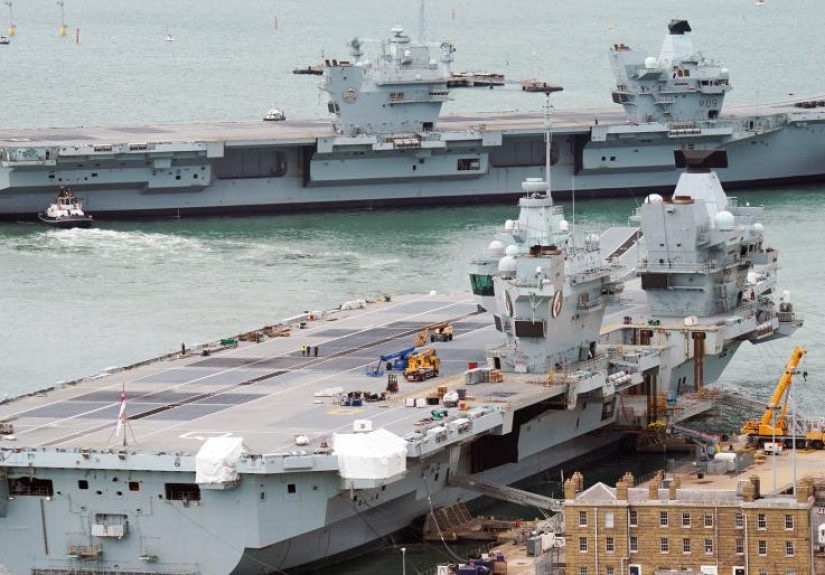
The Royal Navyoperator of two Queen Elizabeth-class carriers, built for short takeoff/vertical landing (STOVL) jetshas been especially loud about the next step:
a “hybrid” air wing that mixes crewed aircraft (hello, F-35B) with uncrewed systems that can scout, carry cargo, extend sensor reach, and (eventually) do much more.
If you define an “aircraft carrier drone force” as a carrier deploying with multiple drones that do real worknot just one-off demosthe Royal Navy has a credible shot at being among the first to make it routine.
And yes, the phrase “drone force” sounds like a superhero team-up you’d binge in a weekend. But the underlying idea is serious: make the carrier air wing more persistent, less expensive per flight hour,
and less dependent on putting humans in the riskiest parts of the mission.
Why Carrier Drones Are Suddenly Everyone’s Favorite Idea
1) The math is brutal (and carriers are basically floating spreadsheets)
Crewed naval aviation is astonishingly capableand astonishingly expensive. Jets and helicopters cost a fortune to buy, a fortune to maintain, and another fortune to keep ready at sea.
They also carry the “human factor” price tag: training pipelines, fatigue limits, and the fact that pilots are not replaceable parts. (Despite what certain action movies suggest.)
Drones don’t magically make warfare cheap. But they can shift cost curves for certain jobsespecially the jobs that are boring, long, repetitive, or best done a few miles farther out than your
most valuable crewed aircraft should be risking.
2) Persistence wins arguments
A key advantage of uncrewed systems is endurance. When your goal is to keep eyes on an area, track a contact, or maintain a wide surveillance “umbrella,” you don’t always need a pilot in the loop
for every moment of flight. You need steady coverage and reliable data.
That matters at sea, where the ocean is huge, the “interesting” parts move, and the carrier strike group would rather not learn about surprises the old-fashioned way.
3) The carrier flight deck is a harsh audition
The sea is an unforgiving test environment. Salt, wind, moving decks, tight spaces, and complex air traffic coordination make shipboard aviation hard even when everything is crewed.
If a drone can operate from a carrier safely and repeatedly, it’s not just “a drone,” it’s a drone that passed the maritime equivalent of a reality show elimination round.
What the Royal Navy Has Already Done (and Why It Matters)
Logistics drones: the least glamorous revolution that actually changes everything
Let’s start with the mission nobody brags about at parties: moving stuff. Spare parts, small packages, critical componentsthings that keep ships and aircraft running.
Traditionally, that means helicopters or boats. Both are valuable assets. Both have better things to do in contested environments.
During its 2025 carrier strike group deployment (Operation Highmast), the Royal Navy used Malloy T-150 drones to move supplies between shipsan operationally meaningful milestone.
The concept is simple: let drones handle routine “deck-to-deck” delivery so helicopters can focus on anti-submarine warfare, surveillance, and other higher-priority tasks.
Simple ideas are often the ones that stickbecause they save time, reduce risk, and free up scarce capability.
And it’s not theoretical. The Navy reported sustained deck operations and growing confidence, which is exactly how “we tried it once” becomes “we do this now.”
Small ISR drones: the “flying eyes” that extend a ship’s awareness
The Royal Navy has also emphasized smaller surveillance drones as a force multiplier.
In 2025, it described an operational first where a small Puma drone supported a Merlin helicopteressentially acting as forward “eyes” while the crewed aircraft relied on the drone’s information
to help close in on suspect vessels.
That detail matters because it’s not just “a drone flew.” It’s integration: crewed and uncrewed systems working together in an operational pattern.
Navies don’t transform by buying one impressive thing. They transform by making new workflows normal.
Fixed-wing carrier drone trials: Mojave on the big stage
The headline-grabbing moment came when the Royal Navy conducted trials with General Atomics’ Mojavea short takeoff and landing (STOL) uncrewed aircraftoperating to and from HMS Prince of Wales.
According to official statements around the test, the drone launched, flew patterns, and recovered back aboard the carrier during the demonstration.
The significance isn’t that the Mojave exists. It’s that the Queen Elizabeth-class carriers have no catapults and no arresting gear.
That design choice complicates “classic” carrier drone concepts that assume catapult launches and arrested recoveries.
A STOL approach is appealing because it aims to work with what the ship already hasturning a major engineering constraint into a design requirement rather than a deal-breaker.
So What Would a “Carrier Drone Force” Actually Look Like?
Think of it less as “the carrier replaces jets with robots” and more as “the carrier adds a set of uncrewed specialists.”
In the near term, the Royal Navy’s most realistic carrier drone force would likely be a layered mix:
- Ship-to-ship logistics drones to move parts and supplies quickly and cheaply.
- Small ISR drones to extend visual and sensor coverage around the group.
- Medium fixed-wing drones (STOL-capable) for longer-range surveillance and maritime awareness.
- Rotary uncrewed systems for persistent observation, niche reconnaissance, or specialized support roles.
That combination might not look as cinematic as a squadron of stealthy unmanned fighters. But it would be highly practicaland arguably more transformative in day-to-day operations.
Mission sets that make sense first
If you want to predict what comes first, follow the incentives:
-
Intelligence, Surveillance, Reconnaissance (ISR):
Drones are natural for broad-area maritime search and persistent overwatchespecially when paired with crewed aircraft that can respond. -
Range extension for sensors:
Getting sensors forward helps the carrier group see earlier and decide fasteroften the difference between calm competence and chaotic improvisation. -
Logistics and resupply:
It sounds dull until you realize sustained operations run on parts, not vibes. -
Support to crewed aviation:
Drones cueing or complementing helicopters and jets can increase effectiveness without increasing risk proportionally.
Why the Royal Navy Might Move Faster Than You’d Expect
The STOVL carrier design nudges innovation
Because the Queen Elizabeth-class carriers were built around STOVL operations, they don’t have the launch and recovery hardware that some other navies rely on.
That could have been a permanent limitation for carrier drones. Instead, it pushes the Royal Navy toward drones that can operate without major ship modificationslike STOL designs and certain rotary solutions.
In other words: the Royal Navy is incentivized to pursue drones that are “carrier-friendly” in the real world, not just on concept art.
Operational experimentation is already institutionalized
The Royal Navy has openly framed its direction as a move toward “hybrid air wings,” and it has dedicated units focused on uncrewed aviation development and integration.
That matters because technology adoption is less about gadgets and more about habits: training, procedures, deck choreography, and command-and-control norms.
There’s a strategic window
Several navies are developing carrier-capable uncrewed systems, but major programs can take years to deliver at scale.
The Royal Navy’s approachstarting with logistics and ISR, adding larger shipboard-capable drones as they matureoffers a path to deploy meaningful capability sooner,
even if the most advanced “unmanned combat aircraft” visions remain longer-term.
The Hard Parts (Because the Ocean Doesn’t Care About Your PowerPoint)
1) Airspace coordination and safety
A carrier already runs complex flight operations. Add drones and you increase the “traffic control” challenge.
You need reliable detect-and-avoid behaviors, disciplined procedures, and robust communicationsespecially in bad weather and at night.
2) Data links, bandwidth, and electronic resilience
Drones are only as useful as the information they can provide and the control systems they can sustain.
At sea, that means resilient links, smart data management, and plans for degraded environments.
The most valuable drone is the one that still works when conditions get messy.
3) Maintenance and deck handling
Saltwater corrosion, spare parts, storage footprints, battery logistics (for some drones), and deck handling procedures all matter.
The unglamorous “support tail” determines whether drones are occasional guests or permanent residents in the air wing.
4) Doctrine: the human part of automation
The biggest transformation is often cultural: learning what to automate, how to trust it, and where humans must stay firmly in control.
The Royal Navy’s public messaging has repeatedly emphasized a hybrid approachuncrewed where it adds value, crewed where it’s essential.
That’s not just a slogan; it’s a strategy to avoid betting everything on technology that isn’t ready for every mission.
How This Compares to the U.S. Navy (and Why “First” Is a Tricky Word)
If we’re being precise, the U.S. Navy has long operated drones from ships and is pursuing carrier-based uncrewed programs (like refueling drones) alongside other maritime ISR systems.
So “first” depends on the definition.
The Royal Navy’s claim to “first” is more plausible in a narrower, operational sense:
a carrier strike group that deploys with multiple types of drones performing routine missionslogistics, surveillance, and integrated support to crewed aircraft
creating a recognizable, repeatable “drone force” attached to the carrier.
That’s less about beating someone in a race and more about crossing a threshold: when drones stop being an experiment and become part of the default tool kit.
What to Watch Next
- More routine ship-to-ship drone logistics during major deployments, expanding payload types and distances.
- Expanded “hybrid” tactics where drones cue or supplement helicopters and jets more frequently.
- Jet-powered or higher-end fixed-wing demonstrations aimed at operating from carriers without catapults or arrestor gear.
- Clear procurement signals: when the Royal Navy shifts from “trial” language to “fielding” language, the change is real.
Conclusion
The idea of an aircraft carrier drone force isn’t science fiction anymoreit’s a practical answer to practical problems.
The Royal Navy is building toward a hybrid air wing in the most sensible way possible: start with missions where drones offer immediate value, prove they can operate safely from the carrier environment,
and expand capability as integration matures.
If the Royal Navy keeps stacking real-world milestoneslogistics deliveries between ships, integrated ISR support to crewed aviation, and larger fixed-wing operations from the deckthen the “first carrier drone force”
won’t be a marketing line. It’ll be what the flight deck looks like on an ordinary day at sea.
Experiences Related to “The Royal Navy Could Field the First Aircraft Carrier Drone Force” (Extended Section)
Imagine you’re standing on the edge of a carrier flight deck at dawn. Not the cinematic versionno dramatic music, no perfect lightingjust wind, salt, and the steady mechanical confidence of a ship built to move.
The deck crew is already working, because the ocean does not accept “I’m not a morning person” as a valid excuse.
In the old mental model of carrier aviation, your day is built around a small number of extremely valuable aircraft. Every launch is a big deal. Every recovery has a little tension baked in.
The jets are fast, loud, and expensivelike sports cars that also happen to be national strategic assets. The helicopters are versatile and constantly busy, doing the unglamorous work that keeps the group safe.
Now add dronesnot as a one-time demonstration for cameras, but as a normal part of the rhythm. A small logistics drone lifts off with a box that would otherwise demand a helicopter hop.
Nobody cheers. That’s the point. It’s so routine that it barely deserves a glance, except from the person whose job is to make sure routine stays routine.
The mood shift is subtle: you can feel the crew recalculating what “worth it” means when a flight is cheap enough, safe enough, and simple enough to do more often.
Later, a small surveillance drone goes up and becomes the quiet scout that never asks for a lunch break. On a screen inside the ship, its feed is just another layer of the world
the way weather radar is “just there” until you realize how blind you’d be without it. The drone isn’t replacing anyone’s skill. It’s multiplying it.
When a crewed helicopter is tasked to investigate something oddmaybe a contact that doesn’t match expectationsthe drone is already ahead of the story, giving the team context before the big, expensive machine arrives.
The first time a crew relies on a drone’s picture instead of flipping on a helicopter’s radar, it probably feels a little like changing lanes without checking your mirrors.
Your instincts are built around what you control directly. But as the workflow proves itselfagain and againthe anxiety fades and is replaced by a different kind of confidence:
the confidence that comes from having more options.
The deck itself changes in small ways. Procedures get tweaked. Hand signals get refined. People learn the quirks of new equipment the way they learn the quirks of new coworkers.
Someone figures out the fastest way to move a drone safely from storage to the launch point. Someone else learns how salt air affects components and starts a new maintenance habit.
None of it is glamorous. All of it is what “fielding” actually means.
And perhaps the most interesting experience is the way the carrier’s “presence” starts to stretch. A carrier strike group has always been about reach.
With drones, that reach becomes more elastic. You can look farther, more often, and with less strain on your most precious aircraft and crews.
It doesn’t make the sea less dangerous. It makes the group less surprisedand in naval operations, fewer surprises is a superpower.
So when people talk about the Royal Navy fielding the first aircraft carrier drone force, the real experience isn’t a single dramatic moment.
It’s the day the crew realizes the drones aren’t visitors anymore. They’re part of the ship’s daily languagelaunch, recover, deliver, observe, repeat.
The carrier is still a symbol of power, but the “how” of that power gets a little smarter, a little steadier, andquietlya little more future-proof.