Table of Contents >> Show >> Hide
- Why the Skagit Valley Tulip Festival Feels Bigger Than a Flower Event
- Tulip Town: The Place Where “Follow the Rainbow” Actually Makes Sense
- How to Plan a Smart Visit Without Getting Defeated by Traffic, Weather, or Wishful Thinking
- What Makes the Experience Memorable Beyond the Photos
- Experience Section: What It Feels Like to Follow the Rainbow at Tulip Town
- Conclusion
- SEO Tags
Some spring destinations whisper. The Skagit Valley Tulip Festival shows up like it owns the color wheel. Every year, Washington’s Skagit Valley turns into a living paint palette, with stripes of red, pink, yellow, purple, and orange stretching across farmland like nature hired a production designer. And if there is one place that captures the playful, photo-happy, family-friendly spirit of the season, it is Tulip Town.
This is not just a place to stare at flowers and pretend you suddenly understand botany. It is a full-on spring ritual. People come for the blooms, stay for the views, and leave with muddy shoes, overloaded camera rolls, and the slightly irrational belief that their backyard could also become a Dutch masterpiece. It cannot. But dream big.
At the heart of the experience is a simple idea: follow the rainbow. At Tulip Town, that means following bands of color through the fields, chasing the next bright row, the next perfect photo, the next little moment that makes you stop and grin. It is part flower farm, part seasonal escape, part reminder that spring still knows how to make an entrance.
Why the Skagit Valley Tulip Festival Feels Bigger Than a Flower Event
The Skagit Valley Tulip Festival is not a single gate, a single field, or a single afternoon. It is a countywide spring celebration that spreads across the valley each April and pulls together gardens, farms, local businesses, art events, scenic drives, and small-town charm. That scale is part of its magic. You are not just attending an event. You are stepping into a whole region that has decided to throw a month-long party for flowers.
That matters because the best tulip festivals are never only about tulips. They are about timing, atmosphere, and place. In Skagit Valley, the backdrop does a lot of heavy lifting. Snowy mountain views, open farmland, winding country roads, and nearby towns like Mount Vernon and La Conner turn the festival into a complete Pacific Northwest getaway. One minute you are standing in front of striped fields that look suspiciously Photoshopped, and the next you are hunting down coffee, pastries, or dinner with a view.
The festival is also dynamic rather than fixed. Bloom timing changes each year because tulips do not care about your calendar invite. Some varieties arrive early, others later, and the season shifts depending on the weather. That unpredictability is actually part of the charm. There is no one perfect date that guarantees every field is in full blast. Instead, there is a rolling spring performance, and visitors get to catch different acts depending on when they go.
Another reason the festival works so well is variety. The participating gardens each offer a different personality. Some lean dramatic and polished. Some feel more relaxed and rural. Some are built for strolling, some for photos, and some for family-style wandering. Tulip Town stands out because it strikes a sweet spot between visual spectacle and approachable fun.
Tulip Town: The Place Where “Follow the Rainbow” Actually Makes Sense
Tulip Town has the kind of name that sounds made up by a cheerful children’s book writer, but the experience is very real. Rooted in Skagit Valley tradition and originally founded by Dutch immigrants, Tulip Town has become one of the best-known stops during festival season. It blends history, color, and accessibility in a way that makes it appealing to first-time visitors, repeat travelers, couples, families, and anyone whose phone storage is about to have a very busy day.
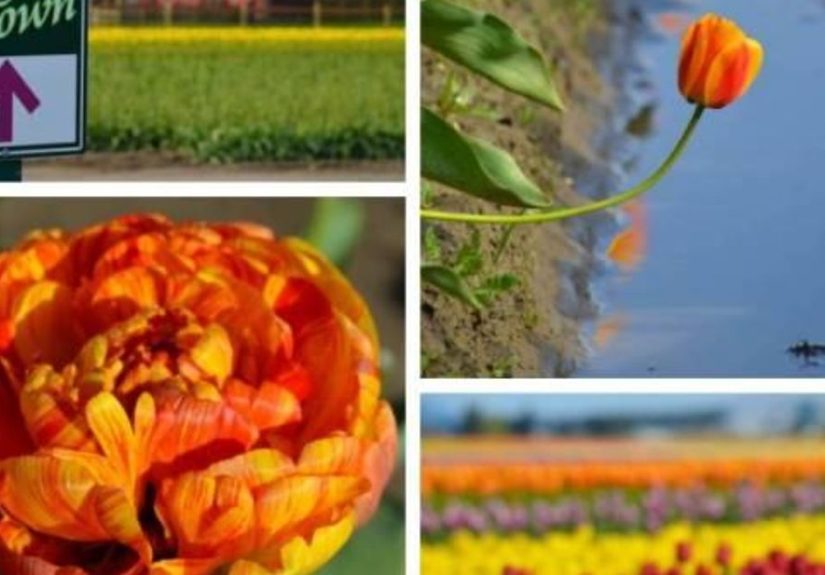
The phrase follow the rainbow fits Tulip Town especially well because the place is designed for movement through color. You are not just looking at flowers from a distance. You are moving through scenes that change every few steps. One row glows scarlet, the next turns soft pink, then golden yellow, then a painterly mix of cream, coral, and purple. It feels less like visiting a farm and more like walking through spring’s mood board.
Part of Tulip Town’s appeal is that it offers more than fields alone. The setting is intentionally visitor-friendly, with photo opportunities, a trolley ride through the blooms when conditions allow, food and drink options, and indoor spaces that make the experience feel less like a quick stop and more like a small spring destination. It is also known for being dog-friendly, which is excellent news for anyone who believes their dog deserves seasonal content and a heroic tulip portrait.
Tulip Town is not trying to be intimidatingly fancy. That is one of its strengths. It feels welcoming. You can arrive with a serious camera and an aesthetic plan, or you can show up wearing sneakers that you do not mind sacrificing to mud and simply enjoy the color overload. Either way, the place understands the assignment.
There is also a practical side to Tulip Town’s charm. Compared with the vague chaos some travelers expect from flower festivals, Tulip Town offers a more structured experience. Tickets typically bundle core access and parking, and the site is set up to help people enjoy the day rather than just survive it. In other words, it is spring beauty with a side of logistics, which is honestly underrated.
How to Plan a Smart Visit Without Getting Defeated by Traffic, Weather, or Wishful Thinking
If you want the best Skagit Valley Tulip Festival experience, a little planning goes a long way. Tulips are glorious. Traffic, on the other hand, is also very real. So is mud. So is the possibility that your “casual day trip” suddenly includes a roadside snack, three farm stands, and a long conversation about bloom maps.
1. Treat bloom timing like a living thing
The biggest rookie mistake is assuming tulips obey a strict schedule. They do not. Bloom timing changes year to year, and even within the season, some fields are just getting started while others are already showing off. That is why checking official bloom updates before visiting is essential. Think of it as the floral version of checking the weather before a beach day, except prettier and with more rows.
2. Know that there is no single festival ticket
Another smart move is understanding how tickets work. The Skagit Valley Tulip Festival is a regional celebration, not a single amusement park gate. Each garden operates independently, so visitors usually buy admission directly from the location they want to visit. That means Tulip Town tickets are separate from other gardens, and planning ahead saves both time and stress.
3. Go early, go on a weekday, or accept your fate
If flexibility is on your side, weekdays and early mornings are your best friends. You will usually get easier parking, lighter traffic, softer photo light, and fewer accidental photobombs by strangers in neon jackets. Weekends can still be wonderful, but they are more likely to feel like everyone in the Pacific Northwest woke up and had the same flower idea.
4. Dress for beauty and mild inconvenience
Skagit Valley in spring can be sunny, gray, rainy, windy, or all four before lunch. Wear layers. Wear shoes that can handle gravel and mud. Bring a waterproof jacket. Tulips look fantastic under moody skies anyway, so a little drizzle is not the villain of the story. In fact, cloudy weather often makes the colors look richer and the crowds a little smaller.
5. Build a whole day, not just a quick stop
The smartest visitors do not rush in and rush out. They turn the festival into a full-day experience. Start at Tulip Town in the morning, linger long enough to enjoy the trolley and photo spots, then head to La Conner or Mount Vernon for lunch, shopping, or a walk through town. Add another garden, a local event, or a scenic drive, and suddenly the day feels complete rather than hurried.
6. Respect the fields like the working farms they are
This sounds obvious, but every year someone behaves as if flowers are a trampoline-adjacent resource. They are not. The tulip fields are agricultural land and an important crop. Stay where you are supposed to stay, avoid stepping into production rows, and remember that great photos do not require chaotic energy. A little respect keeps the festival beautiful for everyone.
What Makes the Experience Memorable Beyond the Photos
Yes, the photos are part of the appeal. Nobody is pretending otherwise. But the Skagit Valley Tulip Festival stays with people for reasons that go beyond social media proof of life.
First, there is the sensory experience. The breeze moving across the fields. The shift from one color palette to another. The contrast between neat rows and big open skies. Tulip Town lets visitors slow down and notice details that usually get bulldozed by daily routines. For one afternoon, your schedule becomes very simple: walk, look, laugh, repeat.
Second, the festival works for different kinds of travelers. Couples can make it romantic without trying too hard. Families can keep it casual and fun. Solo visitors can have an unhurried, camera-in-hand day that feels genuinely restorative. Even people who claim they are “not flower people” tend to go suspiciously quiet once the fields appear. That is the tulip effect. It humbles the cynics.
Third, the local context adds depth. This is not a temporary pop-up built purely for tourism. The festival grows out of Skagit Valley’s agricultural identity, community pride, and seasonal rhythms. You feel that connection in the surrounding farms, the local businesses, and the sense that spring here is not just observed. It is celebrated properly.
Experience Section: What It Feels Like to Follow the Rainbow at Tulip Town
You pull into Skagit Valley expecting flowers. That part is obvious. What you do not expect is the strange, immediate joy of seeing the first field appear through the car window. It does not look real at first. The colors arrive in bands so clean and bright that your brain takes a second to process them. Then suddenly you are there, parking the car, fixing your jacket, and trying to act normal while your camera app is already open.
Walking into Tulip Town feels like entering spring at full volume. The fields stretch outward in organized waves, but the emotional effect is delightfully unorganized. You start with a plan. Maybe you will do one loop, take a few photos, grab a coffee, and be very efficient about the whole thing. Five minutes later, that plan is gone. You are wandering toward another row because the red tulips look different from this angle, and now the yellow ones are glowing, and somehow the purple section has become urgent.
The best part of Tulip Town is how it invites you to move slowly. There is no need to sprint toward a single iconic viewpoint and leave. Every corner gives you another reason to pause. One path frames the mountains. Another catches the breeze moving the petals in a way that makes the whole field shimmer. Even the quieter moments feel cinematic. Someone laughs in the distance. A trolley rolls by. A dog trots proudly through the scene like it has booked a commercial.
There is also a sense of collective good mood that is hard to fake. Families point out favorite colors. Couples negotiate photo angles with surprising seriousness. Friends compare bouquets, boots, and snack decisions. No one looks especially interested in being cool, which is refreshing. Tulips are not a cool activity. Tulips are a joyful activity. Much better.
If the weather turns slightly misty, the experience somehow becomes even more Pacific Northwest in the best way. The clouds lower, the colors deepen, and the fields feel softer and more dramatic. Instead of ruining the day, the gray sky often makes it more memorable. You zip your jacket, laugh at your muddy shoes, and keep going because the blooms still look ridiculous in the best possible sense.
Inside the more sheltered spaces, the mood shifts from wide-open wonder to cozy seasonal charm. You warm up, grab a drink, scroll through the fifty-seven photos you already took of basically the same row, and decide that yes, actually, each one is artistically distinct. Then you head back outside for one more walk, which of course becomes three more walks.
By the time you leave, the day has become larger than the original plan. Tulip Town is not just a stop on a list. It becomes the center of the memory: the bright rows, the fresh air, the sound of people happily overreacting to flowers, the small-town roads leading in and out of the valley, and the feeling that spring still has the power to surprise you when it is done this well.
That is what following the rainbow really means here. It is not about chasing a perfect photo or collecting colorful backgrounds like trophies. It is about letting color pull you through a place that feels alive, seasonal, and briefly extraordinary. The rainbow is not at the end of the visit. It is the visit. And at Tulip Town, that turns an ordinary day trip into the kind of spring memory people talk about long after the petals are gone.
Conclusion
The Skagit Valley Tulip Festival works because it combines natural beauty with regional character, and Tulip Town captures that formula beautifully. It offers color, ease, charm, and enough practical comforts to make the day feel inviting rather than exhausting. For first-time visitors, it is an easy entry point into the festival. For returning travelers, it remains one of the valley’s most rewarding spring traditions.
If your goal is to experience the festival in a way that feels vibrant, memorable, and pleasantly unpretentious, Tulip Town is a smart choice. Come ready to walk, ready for changing weather, ready to check the bloom updates, and ready to let the rainbow do what it does best: pull you forward, one brilliant row at a time.