
Table of Contents >> Show >> Hide
- What you’ll find in this guide
- Why hobbies matter more than you think
- Pick a “lane” so you don’t pick nothing
- Run a hobby sampler (no long-term commitment required)
- Make time without “finding time”
- Start cheap and upgrade only when it sticks
- Go solo, go social, or do the hybrid thing
- Use the “flow” sweet spot to stay motivated
- Common sticking points (and how to get unstuck)
- Specific hobby ideas for adults (by personality and lifestyle)
- Experiences: what it feels like to build hobbies as an adult
- Conclusion: make hobbies adult-proof
Being an adult is basically a full-time job where the boss is your calendar and the overtime is unpaid. So when someone says,
“You should get a hobby,” it can sound like, “Have you tried adding another tab to your brain?”
But exploring hobbies in adulthood isn’t about becoming a competitive macarons champion by next Tuesday.
It’s about finding small, repeatable pockets of joy that make your life feel like more than errands, emails, and existential dread.
The good news: research and health experts consistently link enjoyable leisure activities to better well-being, stress relief,
social connection, and even healthier routines. The even better news: you don’t need “a passion.” You need a plan that fits
your real lifeyour budget, your energy, your schedule, and yes, your attention span (which has been personally victimized by doomscrolling).
Why hobbies matter more than you think
In adulthood, hobbies aren’t just “fun extras.” They can act like a pressure-release valve for stress and a way to reconnect
with parts of yourself that aren’t defined by work, school pickups, caregiving, or being the household’s default problem-solver.
Health organizations frequently recommend enjoyable activities as part of stress management because they help interrupt rumination,
support relaxation, and create positive feelings that can buffer tough days.
Hobbies also tend to sneak in benefits you didn’t order. A creative project can sharpen attention and patience. A physical hobby
can improve energy and sleep. A social hobby can reduce loneliness. Even “quiet” hobbies like puzzles, cooking, reading, or crafts
can give your brain structured downtimelike a vacation for your nervous system, but with snacks.
If you’ve ever felt guilty for spending time on something “unproductive,” reframe it: a hobby is a form of maintenance.
Not the glamorous kindmore like brushing your teeth or updating your phoneexcept it’s for your mood, identity, and resilience.
Pick a “lane” so you don’t pick nothing
The easiest way to stall is to search for the perfect hobby. The best way to start is to pick a lane. Think of lanes as categories
that match what you want right now (not what looks impressive on social media).
Choose your hobby lane (you can switch later)
- De-stress lane: something soothing or repetitive (knitting, coloring, baking, jigsaw puzzles, journaling, guitar basics).
- Energy lane: something that gets you moving (walking club, pickleball, yoga, hiking, dance classes, strength training).
- Brain lane: something skill-based (language learning, chess, coding, photography, woodworking, drawing).
- Connection lane: something with built-in people (community choir, book club, volunteering, recreational leagues).
- Maker lane: something you create (ceramics, DIY home projects, sewing, soap-making, gardening).
- Adventure lane: something that expands your world (birding, geocaching, kayaking, travel meetups, rock climbing).
One lane is enough. You’re not drafting your “final personality.” You’re picking what would make next week feel better.
If you want a practical rule: pick the lane that solves your biggest current problem (stress, loneliness, low energy, boredom).
Run a hobby sampler (no long-term commitment required)
Adults avoid hobbies for a predictable reason: we think we must commit. We don’t. Try a “sampler” approachshort experiments
designed to generate evidence about what you actually enjoy.
The 3-2-1 Hobby Sampler
- 3 weeks total
- 2 sessions per week (20–45 minutes each)
- 1 tiny goal per hobby (so you can “win” quickly)
Pick three hobbies from one lane or mix lanes. Keep the goals ridiculously achievable:
“Bake one new recipe,” “Learn five basic guitar chords,” “Walk 20 minutes twice,” “Paint one small watercolor postcard.”
The point is to test the experience, not your talent.
A sample “menu” you can copy
| Lane | Hobby | Starter goal | What you’re testing |
|---|---|---|---|
| De-stress | Simple baking | One no-fuss recipe | Does this calm you or stress you? |
| Energy | Beginner yoga | Two short routines | Do you feel better after? |
| Brain | Photography basics | 10 photos with one theme | Do you enjoy “learning mode”? |
| Connection | Book club / meetup | Attend once | Do you like the people part? |
| Maker | Plant care | Repot one plant | Do you enjoy hands-on progress? |
After each session, write one sentence: “I liked ___,” “I didn’t like ___,” “Next time I’ll ___.”
That’s it. You’re collecting data on your preferences like a scientistexcept the lab is your living room and the equipment is vibes.
Make time without “finding time”
Time doesn’t magically appear behind the couch cushions. Adults build hobbies by attaching them to existing routines.
If your schedule is packed, your hobby needs a smaller footprintnot a motivational speech.
Three time strategies that work in real life
-
The “after” rule: Hobby happens after something you already do.
Example: “After dinner, I sketch for 15 minutes,” or “After I put the laundry in, I practice guitar for one song.” -
The “two-day anchor” rule: Pick two days you can realistically repeat (e.g., Tuesday + Saturday).
Consistency beats enthusiasm. -
The “minimum viable hobby”: Decide the smallest version you’ll do on tired days.
Five minutes counts. One page counts. One song counts. One lap counts.
If your brain argues, “That’s not enough to matter,” congratulationsyour brain has been trained by productivity culture.
The goal is not to do more. The goal is to do it again.
Start cheap and upgrade only when it sticks
A classic adult mistake: spending $200 on supplies to force commitment. That’s not a hobby; that’s a hostage situation.
Start with the lowest-cost version and upgrade when you’ve repeated it enough times to trust it.
Low-cost ways to explore new hobbies
- Borrow first: libraries, tool-lending programs, “borrow from a friend” swaps.
- Take a single class: community education, local studios, parks and recreation programs.
- Buy the smallest kit: beginner sets, sample packs, used gear.
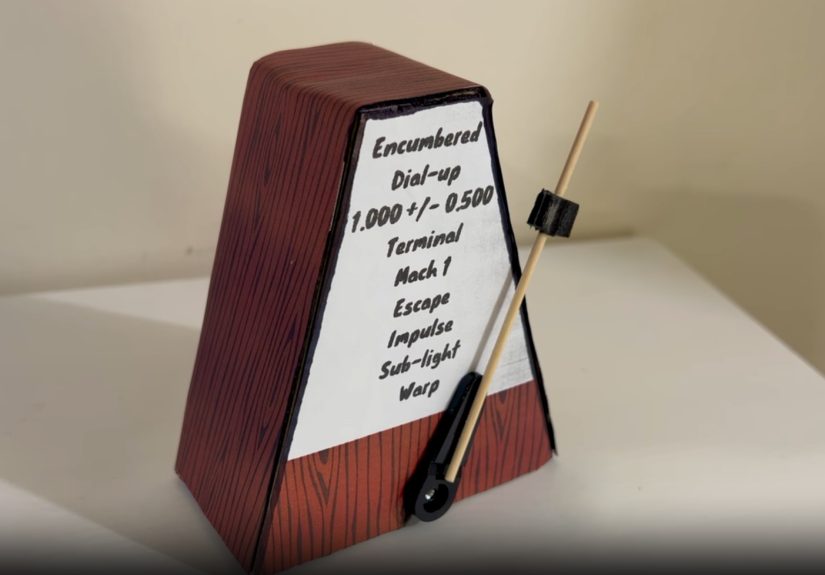
- Use what you already have: your phone can be a camera, a metronome, a field guide, a drawing reference, a language coach.
A simple rule of thumb: earn the upgrade. After 6–8 sessions, you’ll know whether the hobby is a fling or a keeper.
Then spending money feels like supportnot bribery.
Use the “flow” sweet spot to stay motivated
One reason hobbies fizzle is that the challenge level is wrong. Too easy feels boring. Too hard feels like failure.
Psychologists describe a “flow” zonewhen challenge and skill are well-matchedwhere people feel deeply absorbed
and time passes faster than it should legally be allowed to.
How to design your hobby for flow
- Make the goal clear: “Learn one riff,” “finish one page,” “cook one new dish,” “walk one loop.”
- Raise difficulty slowly: add one new technique, not five.
- Reduce distractions: silence notifications for 20 minutes (your group chat will survive).
- Track tiny wins: flow likes momentum, not perfection.
This is why many adults fall in love with hobbies that have visible progress markersrecipes, stitches, songs, mileage,
before-and-after DIY, photos, garden growth. Your brain can see improvement, and it keeps showing up for more.
Common sticking points (and how to get unstuck)
“I’m not naturally good at anything.”
Nobody is naturally good at “beginning.” That’s the entire point of beginning.
Swap the goal from “be good” to “be consistent.” Adults who stick with new hobbies often focus on showing up,
not showing off. Skill is a side effect of repetition.
“I feel silly doing this.”
Yes. Welcome to learning. The cure is lowering the stakes: choose a beginner class, follow a basic tutorial, practice at home,
or do a hobby that has a strong beginner culture (many sports leagues, craft circles, and community classes are built for this).
Also: being a little silly is often a sign you’re doing something healthy.
“I don’t have energy after work.”
Then you don’t need a high-energy hobby right now. Choose a de-stress hobby with a “soft landing”:
short walks, gentle stretching, sketching, music, easy cooking, beginner crafts, low-pressure reading.
Keep sessions short and predictable. On better days, you can do morebut don’t require it.
“I start strong, then quit.”
This is usually a design problem, not a character flaw. Try these fixes:
- Cut the session length in half so it’s easier to repeat.
- Lower the difficulty until it feels inviting again.
- Add accountability (a friend, a class, a weekly meetup).
- Create a visible cue (leave the guitar out, keep the sketchbook on the table, set shoes by the door).
“I want a hobby that’s actually useful.”
Greatchoose “double-duty hobbies.” Cooking builds life skills. Gardening can reduce grocery runs and boost outdoor time.
DIY teaches repair confidence. Photography can turn everyday walks into mini-adventures. Volunteering builds community.
Just make sure “useful” doesn’t turn your hobby into another obligation. Useful is a bonus, not the entry fee.
Specific hobby ideas for adults (by personality and lifestyle)
If you love quiet focus
- Reading challenges (short stories count)
- Journaling, gratitude logs, or creative writing prompts
- Puzzles, crosswords, logic games
- Sketching, watercolor, calligraphy
- Home baking, bread, or “one-pan dinners” as a creative outlet
If you want movement without misery
- Walking + podcasts, walking + photography, walking + birdwatching (pick your upgrade)
- Beginner yoga or mobility routines
- Dance classes (yes, even if you have two left feet)
- Pickleball, beginner tennis, or recreational leagues
- Hiking, easy cycling, or swimming
If you want creativity with a social twist
- Craft nights, knitting circles, quilting groups
- Ceramics classes or open studio sessions
- Community theater (on stage or behind the scenes)
- Choir, beginner music ensembles, or ukulele groups
- Cooking classes or recipe swaps
If you want a “builder” hobby
- Woodworking basics (start with sand-and-finish projects)
- DIY home repair and small upgrades
- 3D printing or beginner electronics kits
- Gardening (container gardens are real gardens)
- Photography + simple editing (progress shows up fast)
The best hobby ideas for adults are the ones you’ll do when your day is averagenot just when you feel inspired.
That’s the standard. If it survives a normal Tuesday, it’s a winner.
Experiences: what it feels like to build hobbies as an adult
Let’s talk about the part people don’t put on the highlight reel: adult hobbies often start awkwardly, in the margins of busy weeks,
with uneven motivation and mildly chaotic supplies. That’s not failureit’s the authentic hobby ecosystem.
Below are a few common “experience patterns” adults report when they start exploring hobbies in adulthood. Think of these as composite
snapshots: realistic, relatable, and designed to help you recognize what’s normal.
1) The “I forgot I liked being a beginner” moment
Many adults begin a hobby expecting instant competence because adulthood trains us to be capable. You’re used to knowing how to do things:
manage tasks, solve problems, keep life moving. Then you try a new skilldrawing, guitar, ceramicsand suddenly you’re producing something
that looks like it was made by a friendly raccoon with ambition. The initial discomfort can be surprisingly emotional.
But somewhere around session four or five, a switch flips: you realize being a beginner is actually a relief. The stakes are low.
There’s no performance review. You can make mistakes and still be fine. For some people, that’s the first time in years they’ve done
something purely for the process.
2) The “hobby identity” effect
After a few weeks, the hobby starts to change how you see yourself. Not in a dramatic “I moved to Paris to paint” waybut in a small,
grounding way. You stop saying, “I’m trying to learn to cook,” and start saying, “I cook.” You stop saying, “I’m thinking about hiking,”
and start saying, “I’m a person who hikes sometimes.” This identity shift matters because it turns the hobby from an activity into a
stable part of your lifesomething you return to when you’re stressed, bored, lonely, or tired of feeling like your days blur together.
It’s also why hobby exploration can feel surprisingly meaningful: it expands who you are beyond your responsibilities.
3) The “time guilt” battle (and how people win it)
A very adult experience is enjoying your hobby while simultaneously hearing a voice in your head listing everything else you could be doing:
“You should clean the kitchen.” “You should answer that email.” “You should meal prep.” People who stick with hobbies don’t eliminate this
voicethey renegotiate with it. They set boundaries like, “I’m doing 20 minutes, then I’ll do the chores,” or they schedule hobby time the
way they schedule appointments. Some pick “double-duty hobbies” when guilt is strongcooking, gardening, DIYbecause it feels productive.
Others learn that the guilt fades when they notice real benefits: better mood, better patience, less doomscrolling, more energy.
The win isn’t becoming a perfectly balanced human; it’s proving to yourself that rest and play are allowed.
4) The “social surprise”
A lot of adults start hobbies for personal reasonsstress relief, creativity, fitnessand then discover a hidden perk: easier friendships.
It’s hard to make friends as an adult because you need repeated, low-pressure contact. Hobbies create that. You see the same people at the
same class, club, meetup, or volunteer shift, and conversation becomes natural because you already share a topic. Even introverts often
prefer hobby-based socializing because it has structure: you can talk, you can not talk, and nobody is confused. Over time, the hobby
becomes a bridgeless “make friends” pressure, more “do the thing” companionship.
5) The “I changed my mind and that’s fine” ending
Another normal experience: you try a hobby and it’s… okay. Not terrible, not magical. Adults sometimes interpret “not magical” as “quit.”
But hobby exploration is allowed to be neutral. Plenty of people keep a hobby in a “sometimes” categoryseasonal gardening, occasional
baking, winter crafts, summer hiking. Others keep the format but switch the content: they try running, hate it, and discover they love
walking. They try painting, feel stuck, and move to photography. The success metric isn’t loyaltyit’s learning what fits your life.
When adults treat hobby exploration like experiments instead of identity decisions, they stay curious longer and find better matches.
If any of these experiences sound familiar, you’re doing it right. Adult hobbies aren’t about transforming into a new person.
They’re about giving your current self a place to breathe, learn, and feel humanone small session at a time.
Conclusion: make hobbies adult-proof
Exploring hobbies in adulthood works best when you drop the fantasy version (unlimited time, instant talent, perfect aesthetic) and build the real version:
small sessions, low cost, repeatable routines, and goals that make you feel goodnot judged.
Start with one lane, run a short hobby sampler, keep the bar low, and follow the evidence of what you enjoy.
The right hobby won’t just fill time; it will change how your time feels.




Go solo, go social, or do the hybrid thing
Some people recharge alone. Some people need a calendar invite and mild peer pressure. Many people need both.
Your “best” hobby format depends on your personality and your life season.
Pick the format that makes repetition easier
Great when you want quiet and control.
Great when you want connection and accountability.
home projects + maker spaces, running + a weekly club).
If you’ve been feeling isolated, choose a hobby with “people built in.” If you’ve been overstimulated,
choose a hobby that lets you go quiet without guilt. Either way, you’re still doing self-carejust with different settings.