Table of Contents >> Show >> Hide
- Why “Selling Your Soul” Shows Up in Music So Often
- Top 10 Musicians “Accused” of Selling Their Soul to the Devil (And What’s Really Going On)
- 1) Robert Johnson (Delta blues) The Crossroads King of Myth
- 2) Tommy Johnson (blues) The “Original” Deal Story That Often Gets Blended
- 3) Peetie Wheatstraw (blues) “The Devil’s Son-in-Law” as a Stage Persona
- 4) Niccolò Paganini (violin virtuoso) When Skill Looks Like Sorcery
- 5) Giuseppe Tartini (composer/violinist) The Dream That Turned into a Devil Sonata
- 6) Franz Liszt (piano superstar) “Mephistopheles Energy” Before It Was a Meme
- 7) Bob Dylan The “Bargain” Comment That Launched a Thousand Threads
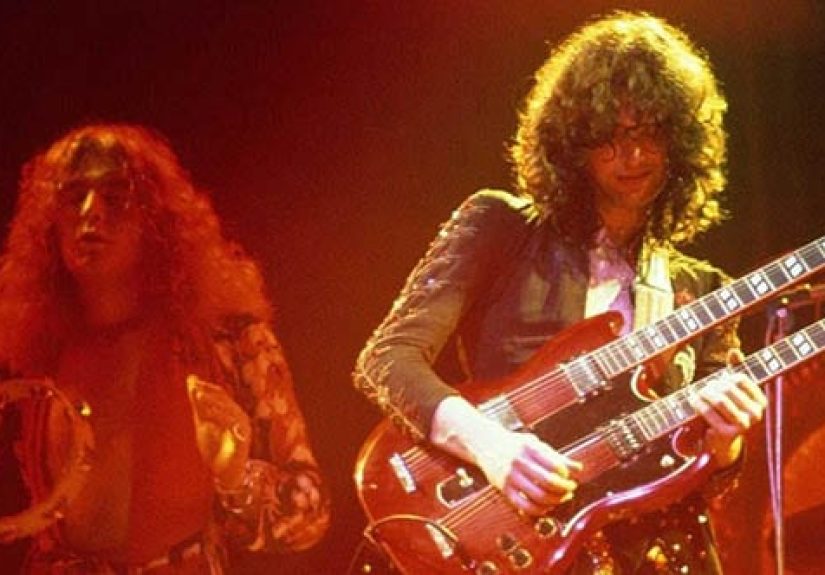
- 8) Jimmy Page (Led Zeppelin) Occult Curiosity + Rock Legend = Devil Rumors
- 9) Ozzy Osbourne (Black Sabbath) Satanic Panic, Stagecraft, and Misread Theater
- 10) “The Crossroads” as a Collective Character Because One Name Couldn’t Carry It All
- What These Legends Actually Tell Us (If You Read Them Like an Adult)
- of “Experiences” Around the Soul-Selling Music Myth
- Conclusion
Somewhere between a smoky juke joint and your aunt’s Facebook comment section lives one of music’s most stubborn legends:
the idea that certain musicians got so good that normal practice couldn’t explain itso obviously they made a deal with the Devil.
Is any of this literally true? No. But is it culturally realwoven into interviews, folklore, stage personas, and music history chatter?
Absolutely.
This article treats “sold their soul” stories as what they are: myths, rumors, metaphors, and marketing fuelsometimes embraced by the artist,
sometimes pinned on them by a shocked audience who couldn’t process a talent level that felt borderline supernatural.
We’ll dig into the why behind the legends, the real-world context, and what each story says about the era that birthed it.
Method note (for transparency): To ground the folklore in reality, this piece synthesizes widely cited U.S.-based reporting and educational material
about blues history, American music culture, and “devil’s music” narratives, along with reputable classical-music scholarship and commentary.
Examples of sources consulted include public-education projects, museums, major radio organizations, and music-history journalism (e.g., PBS music education materials,
Library of Congress public collections, Mississippi Blues Trail materials, Minnesota Public Radio/YourClassical, established music-history outlets, and academic musicology).
No links are included so this stays clean for web publishing.
Why “Selling Your Soul” Shows Up in Music So Often
1) Talent can feel like a crime scene without witnesses
When someone’s skill rockets past what audiences think is “humanly possible,” people look for explanations. In the early 1900s, that often meant superstition.
Today it might mean “industry plant” or “they must have connections.” Same impulse, new vocabulary.
2) The “Faustian bargain” is a shortcut to talk about fame
The soul-sale story is basically a dramatic metaphor for the cost of success: long tours, lost privacy, creative pressure, addiction risk,
and the weird moment when strangers think they own your face.
3) It’s also branding (whether anyone admits it or not)
Dark imagery sells in certain genres. Some artists leaned into devilish aesthetics because it shocked audiences,
annoyed gatekeepers, and built a legend that outlived any one album cycle.
4) The blues-versus-gospel culture clash fueled “devil’s music” talk
In many communities, blues and church music were treated as opposing lanes: Saturday night vs. Sunday morning.
That tension gave the “devil made him do it” narrative a place to stickespecially when a musician came from a religious background.
Top 10 Musicians “Accused” of Selling Their Soul to the Devil (And What’s Really Going On)
Important: This list is about the legend, not a literal endorsement of supernatural contracts.
Think of these as the ten biggest “deal with the devil” stories in music historysome self-mythologized, some assigned by audiences,
all culturally loud.
1) Robert Johnson (Delta blues) The Crossroads King of Myth
If “sold his soul” were a genre, Robert Johnson would be the headliner. The crossroads story says he met the Devil late at night,
had his guitar tuned (or his talent “activated”), and returned with playing that stunned everyone.
The legend stuck partly because Johnson’s life was poorly documented, his recordings were intensely influential,
and his early death left plenty of room for mystery.
The grounded explanation is less spooky and more human: intensive practice, absorbing local styles,
and the way a great musician can sound like multiple players at once. But the crossroads story persists because it’s cinematic.
It turns a complicated life into one unforgettable scene: a lonely road, a guitar, and a price tag with your name on it.
2) Tommy Johnson (blues) The “Original” Deal Story That Often Gets Blended
Here’s a twist many people miss: the “deal with the devil” story is commonly told about Robert Johnson,
but blues-history discussions often connect similar tales to Tommy Johnson as well.
In some retellings, Tommy is described as openly telling people he’d made a dealsometimes framed as bragging,
sometimes as half-joking theater, sometimes as folklore that grew legs.
What matters is how these stories function: they’re a way to explain sudden improvement, confidence, and showmanship.
In a world without social media receipts (“here’s my practice routine”), legend becomes the résumé.
3) Peetie Wheatstraw (blues) “The Devil’s Son-in-Law” as a Stage Persona
Peetie Wheatstraw didn’t just get labeled by othershis public image actively played with demonic titles.
He recorded under nicknames like “The Devil’s Son-in-Law” and leaned into hell-tinged bravado in song themes and marketing.
In modern terms, this is branding: you pick an unforgettable persona, and audiences do the rest.
The smart read is that Wheatstraw was using shock value and humor to stand out in a crowded scene.
The legend of “selling your soul” becomes a theatrical wink: not “I did it,” but “I’m bold enough to let you wonder.”
4) Niccolò Paganini (violin virtuoso) When Skill Looks Like Sorcery
Paganini’s playing was so astonishing that audiences and critics in his era didn’t just call him talentedthey called him unnatural.
That’s where the “Devil’s violinist” nickname and pact rumors flourished.
Add his gaunt appearance, dramatic performance style, and the gossip engine of the 1800s, and you get a perfect storm of “he must be possessed.”
In reality, Paganini was a technical innovator with obsessive discipline and a flair for spectacle.
But the rumor reveals something important: people often “supernaturalize” genius when they can’t understand the mechanics behind it.
5) Giuseppe Tartini (composer/violinist) The Dream That Turned into a Devil Sonata
Tartini is linked to one of the most famous “devil” stories in classical music: a dream in which the Devil plays a breathtaking violin piece,
inspiring Tartini to recreate it. The result became associated with the nickname “Devil’s Trill.”
Notice the difference here: it’s not “I traded my soul.” It’s “I had a dream so vivid it felt otherworldly.”
That’s a very human creative experiencewriters, painters, and composers have long described ideas arriving like lightning.
The devilish framing adds drama, but the core is about inspiration and craft.
6) Franz Liszt (piano superstar) “Mephistopheles Energy” Before It Was a Meme
Liszt was a 19th-century celebrity: hysterical crowds, swooning fans, and a reputation for performance intensity that sounded almost scandalous for the time.
He also wrote and performed works inspired by Faustian themesmusic that explicitly plays with temptation, spectacle, and the devil-as-character.
When an artist becomes larger than life, people reach for larger-than-life explanations.
Liszt didn’t need a demon contract; he had charisma, ambition, and a generation ready to mythologize virtuosity.
If the Devil showed up in the story, it was often because Liszt’s art invited him in as a symbol.
7) Bob Dylan The “Bargain” Comment That Launched a Thousand Threads
Dylan sits in a different category: not a folk legend from the distant past, but a modern icon whose words get replayed, dissected, and memed.
In a widely circulated interview moment, Dylan spoke about having made a “bargain” long ago to get where he is.
Some people took it literally; many took it as metaphor; almost everyone agreed it was peak Dylanmysterious, slippery, and impossible to footnote emotionally.
The key is that Dylan’s work is full of allegory, biblical language, and American mythmaking.
So the “sold his soul” interpretation says more about how we read artists than what an artist “confessed.”
8) Jimmy Page (Led Zeppelin) Occult Curiosity + Rock Legend = Devil Rumors
Jimmy Page has long been associated with occult curiosity and collecting, which is enough to trigger a certain kind of headline.
From there, the “sold his soul” rumor becomes a lazy shortcut: explain success with a spooky story rather than musicianship, production skill,
and a band that reshaped rock guitar vocabulary.
In Page’s case, the myth also reflects the 1970s fascination with mysticism in pop culturewhen symbolism, secret knowledge,
and “forbidden” aesthetics were part of the artistic palette. Not a contractmore like a mood board with candles.
9) Ozzy Osbourne (Black Sabbath) Satanic Panic, Stagecraft, and Misread Theater
If you grew up hearing that heavy metal was “the devil’s music,” odds are Black Sabbath was somewhere in that conversationfairly or not.
Dark themes, unsettling artwork, and theatrical performances became easy targets for moral panic.
That atmosphere created fertile ground for “they sold their souls” accusations.
But the reality is more nuanced: horror imagery and ominous soundscapes can be storytelling, not a spiritual résumé.
Metal often uses darkness the way horror movies doexploring fear, power, and chaos in a controlled artistic space.
The Devil rumor was less about proof and more about anxiety.
10) “The Crossroads” as a Collective Character Because One Name Couldn’t Carry It All
Yes, this last slot is a cheat. But it’s an honest one.
The crossroads legend didn’t stay neatly attached to one musicianit spread across blues culture,
because it answers a big question with a simple story: How did someone get that good?
In blues history discussions, crossroads talk often pops up alongside multiple figures, places, and retellings.
That’s how folklore works: it’s a shared narrative that communities reshape.
The “musician” here is the myth itselfan ever-evolving character that travels through American music like a ghost hitching a ride on a guitar case.
What These Legends Actually Tell Us (If You Read Them Like an Adult)
The Devil is often a metaphor for the price of mastery
Skill at the highest level is expensive. It costs time, relationships, sleep, comfort, and sometimes health.
“Selling your soul” is a dramatic way of saying, “This took everything.”
They’re also about culture: fear, faith, and rebellion
In many eras, music has been treated as morally suspiciousespecially music tied to nightlife, dancing, sexuality, or rebellion.
Calling it “devilish” is an old trick for policing behavior.
And sometimes they’re just fun
People like ghost stories. Music is emotional. Put them together and you get legends that survive longer than most chart hits.
of “Experiences” Around the Soul-Selling Music Myth
If you’ve ever fallen into the “sold their soul to the devil” rabbit hole, you know it’s not just triviait’s a whole vibe.
Fans describe a particular kind of thrill that comes from standing in a place tied to a legend, even when you fully understand it’s folklore.
For example, blues travelers who visit Mississippi talk about the strange feeling of seeing a normal intersection and realizing it carries an outsized weight in music storytelling.
There’s no portal, no smoke, no demon with a tuning forkjust cars passing and a quiet sense that a myth can be bigger than the pavement it lives on.
Live music creates the same sensation in real time. People who catch a jaw-dropping guitarist at a small club often report that moment of disbelief:
“How is that even possible?” It’s not that they literally think the performer made a supernatural contract. It’s that the performance feels like it breaks the rules.
And in that split secondbefore your brain supplies the rational explanation (“practice,” “technique,” “years,” “influences”)the old stories make emotional sense.
The Devil myth is basically a poetic placeholder for awe.
Classical audiences have their own version of this experience. When a violinist plays Paganini cleanly at speed, listeners sometimes laughnot because it’s funny,
but because their minds can’t process what they’re hearing. That laughter is a cousin of the crossroads legend: an instinctive response to virtuosity.
Even people who don’t know the “Devil’s violinist” rumor can feel why it existed. Your body reacts before your logic catches up.
Then there’s the modern internet experience: watching old interview clips, debating what an artist “really meant,” and seeing how quickly myth spreads when it has the right ingredients.
One ambiguous quote becomes ten reaction videos, fifty comment threads, and a hundred confident declarations from people who were not in the room.
The “sold their soul” narrative thrives online because it’s simple, dramatic, and emotionally satisfyingfar more shareable than “this person worked relentlessly and got lucky in the right moments.”
Finally, plenty of listeners experience these stories as a way to talk about their own ambition.
People will jokingly say, “I’d sell my soul to be that good,” which is really just admiration with a dark punchline.
In that sense, these legends aren’t about the Devil at all. They’re about how humans explain greatness, envy it, fear it, worship it, and sometimes use it as motivation.
The myth persists because the experience of awe persistsevery time someone plays a note that makes you stop scrolling and listen.
Conclusion
No credible history requires a literal Devil to explain musical genius. But the “sold their soul” stories remain useful because they’re not really about contracts
they’re about awe, fear, fame, and the way culture tries to put a price tag on brilliance.
Whether it’s the blues crossroads, Paganini’s impossible technique, or rock’s flirtation with occult imagery, the same pattern repeats:
when music makes people feel something too big for logic, myth shows up to translate the feeling.