Table of Contents >> Show >> Hide
- What Happened in the Nevada Desert?
- Why the Discovery Triggered Such a Strong Reaction
- What the Law Says About Cremated Remains on Public Land
- Why Investigators May Have a Hard Time Solving It
- What This Says About the Funeral Industry in 2025 and Beyond
- A Broader Oversight Problem, Not Just a Desert Mystery
- What Families Should Take Away From This Case
- Why This Story Will Keep Getting Attention
- The Human Experience Behind the Headline
- Conclusion
The Mojave Desert is famous for silence, heat, and the kind of scenery that makes people say, “Wow, nature is intense.” In 2025, however, a remote stretch of land south of Las Vegas became known for something far more disturbing: hundreds of piles of cremated human remains discovered near Searchlight, Nevada, on public land managed by the Bureau of Land Management. What began as a shocking local discovery quickly turned into a national story, not just because of the headline-grabbing location, but because it raised serious questions about dignity, regulation, funeral-home responsibility, and how a modern death-care system can still leave families with haunting uncertainty.
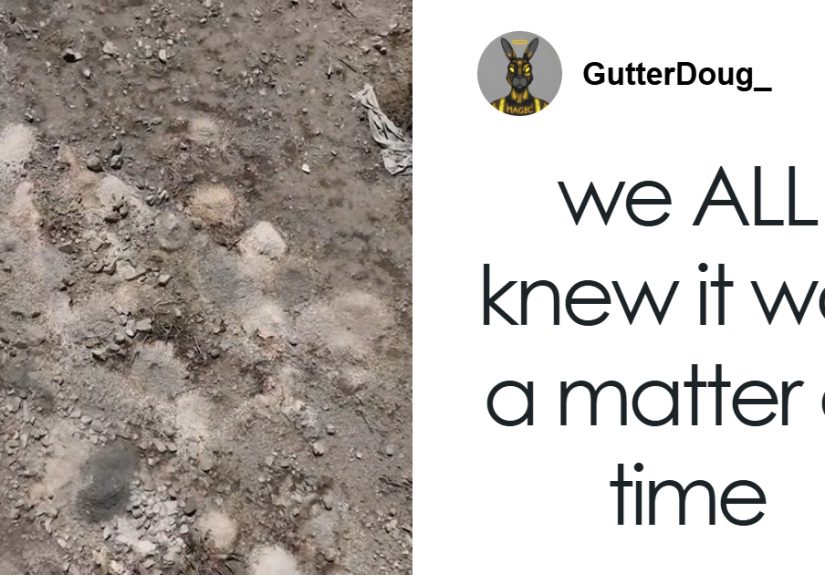
The case has been covered in waves. Early reporting described roughly 70 piles of ashes. Later recovery work revealed a much larger number, with about 315 sets of cremated remains ultimately collected and transferred into individual urns by Palm Mortuaries and Cemeteries. That detail matters. This was not a one-off scattering by a grieving family member following a quiet personal ritual in the desert. Investigators and funeral professionals alike have treated the scene as something far more organized, far more troubling, and far more likely tied to commercial mishandling than private remembrance.
For SEO purposes, the main keywords here are obvious: Las Vegas desert human remains, cremated remains investigation, Searchlight Nevada cremains, BLM investigation, and funeral home regulations. But beneath those search-friendly phrases is a harder truth: this story landed with force because it sits at the intersection of grief, bureaucracy, and public trust. And when those three collide, the result is not tidy. It is dusty, unresolved, and deeply unsettling.
What Happened in the Nevada Desert?
The discovery happened outside Searchlight, a small Southern Nevada town roughly an hour south of Las Vegas. A local man reportedly stumbled upon unusual piles in the desert and alerted authorities. By August 2025, federal officials had confirmed that the material was human cremated remains, commonly known as cremains. That alone was enough to launch an investigation. But the story grew stranger as recovery efforts continued. What first looked like dozens of piles eventually turned into hundreds, and workers later found a second nearby area containing more remains.
That shift from “about 70” to “around 315” is one of the most important facts in the case. It explains why the story moved from grim curiosity to serious public alarm. A few scattered remains might suggest an odd but isolated act. More than 300 piles strongly suggest a pattern, a method, and likely a commercial source. In plain English: nobody accidentally creates a desert-sized filing error for the dead.
Officials have remained cautious about naming suspects publicly, and as of the latest widely available reporting, the investigation was still active with limited information released. That lack of closure has only intensified public interest. People can handle bad news better than vague news. Vague news lingers. It rattles around in the mind. It makes everyone wonder whether the people responsible are known, whether families might ever be notified, and whether the system is equipped to stop it from happening again.
Why the Discovery Triggered Such a Strong Reaction
Stories involving human remains are always emotionally charged, but this one struck a nerve for several specific reasons. First, the remains were cremated, which means many families who choose cremation do so believing it is a simpler, dignified, and controlled final arrangement. The idea that cremains might be dumped on public land shatters that assumption instantly.
Second, the setting added to the shock. Las Vegas already carries a cinematic reputation, so a mystery in the desert practically writes its own tabloid trailer. But this is not a thriller plot twist. It is a breakdown in real-world after-death care. The desert backdrop may have drawn clicks, but the core issue is trust: when a family pays for cremation and final disposition, they are trusting professionals to do exactly what they promised, not improvise with federal land and a dirt road.
Third, the scale suggested systemic problems rather than one bad decision. Funeral professionals interviewed in follow-up coverage noted that unclaimed cremains are a known issue in the industry, especially as cremation becomes more common. Yet known issue does not mean acceptable outcome. A challenging administrative problem is not a permission slip for undignified disposal. The minute that distinction blurs, the entire industry has a credibility problem.
What the Law Says About Cremated Remains on Public Land
Here is where the story gets legally interesting. Nevada does not broadly prohibit an individual from scattering cremated remains on public land. In other words, a family member is not automatically breaking the law by privately dispersing ashes in an appropriate outdoor location. But federal land policy draws a much sharper line around commercial activity.
The Bureau of Land Management states that individual, non-commercial scattering of cremated remains may qualify as casual use, subject to applicable law and local conditions. Commercial disposal is a different story. BLM policy says the agency does not issue permits or other land-use authorizations for commercial services that dispose of cremated remains on public lands. That distinction is huge. It means this case is not just about “ashes in the desert.” It is about whether a commercial actor may have handled human remains in a way that federal policy plainly does not allow.
Nevada law and regulations add another layer. State rules require licensed operators and facilities handling human remains to preserve dignity and treat remains with dignity and respect at all times. That language is not decorative. It is the legal backbone of the profession. Funeral service is not simply logistics with nicer wallpaper. It is a regulated field built around care, custody, identification, documentation, and respectful disposition.
Why Investigators May Have a Hard Time Solving It
If this story feels like something investigators should be able to wrap up neatly, reality is less cooperative. Cremated remains are notoriously difficult to trace once they are separated from identifying containers, tags, records, or paperwork. Reporting later in 2025 suggested that only a small number of the recovered remains could be identified through information found at the scene. For the rest, the odds are much tougher.
That is one of the most heartbreaking dimensions of the case. Cremation simplifies transportation and storage, but it can complicate later identification when records fail or labels vanish. Unlike a paperwork typo at the DMV, these errors are not easily patched with a second appointment and a polite sigh. Once cremains are mishandled or stripped of traceable identifiers, the trail can go cold fast.
Investigators also have to prove more than the fact that the remains were there. They have to establish who placed them there, when, under what authority, and whether the act was private, commercial, or connected to a specific facility. That is a much narrower task than general public outrage might suggest. Public outrage asks, “How could this happen?” Investigations ask, “What can we prove?” Those are not the same question, and the second one is much slower.
What This Says About the Funeral Industry in 2025 and Beyond
This case arrived at a moment when the American funeral industry was already changing quickly. The National Funeral Directors Association projected the U.S. cremation rate at 63.4% in 2025, more than double the burial rate. That matters because rising cremation rates change everything: storage needs, family expectations, pricing structures, documentation, and the long-tail problem of unclaimed remains. More cremation does not automatically mean more abuse, but it does mean more pressure on systems that were not always designed for this scale.
Industry experts have long noted that unclaimed cremains are a real operational challenge. Families may delay pickup because of grief, conflict, cost, indecision, or simple emotional paralysis. Funeral homes then become the reluctant long-term custodians of remains that nobody comes back for. That is unpleasant, but it is also part of the job. Professionals do not get to skip the hard part because it is inconvenient. The burden of dignity remains the burden of the business.
The Federal Trade Commission’s Funeral Rule does not govern every aspect of final disposition, but it does reinforce a broader consumer-rights principle: funeral providers owe families transparency and accurate information. The Las Vegas desert case pushes that principle beyond pricing and into accountability. If a business accepts custody of someone’s remains, the family’s expectation is not just a receipt. It is certainty.
A Broader Oversight Problem, Not Just a Desert Mystery
One reason this story resonated so deeply is that it did not emerge in a vacuum. In 2025, Nevada regulators also took unrelated enforcement action against a Las Vegas funeral home over delayed cremations, record failures, and handling problems. That separate case has not been publicly tied to the Searchlight discovery, and it should not be conflated with it. Still, it shows that oversight of after-death care was already under intense scrutiny in Nevada before the desert case fully unfolded.
That wider context matters because it changes how readers interpret the story. Without it, the Searchlight discovery looks like a grotesque outlier. With it, the case starts to resemble a warning flare about staffing, compliance, storage practices, and the uneven ways death-care businesses manage growing cremation volume. Not every funeral home is cutting corners. Many are deeply ethical and meticulous. But when failures occur in this sector, the emotional damage is enormous because the service being mishandled is literally irreversible.
What Families Should Take Away From This Case
For families, the lesson is not to panic but to ask better questions. Consumers arranging cremation should request written documentation, understand who is responsible for transport and final disposition, ask how remains are identified throughout the process, and clarify what happens if cremains go unclaimed. None of those questions are rude. They are responsible. In funeral planning, politeness is nice, but paperwork is better.
Families should also remember that “cremation” is not the end of the logistical story. There is still custody, documentation, return, storage, and final placement. A good provider will be able to explain each step clearly and in writing. If a business gets cagey, vague, or allergic to specifics, that is not a charming personality quirk. That is a red flag in a suit jacket.
Why This Story Will Keep Getting Attention
The Las Vegas desert human remains investigation has everything that keeps a story alive online: mystery, location, scale, public outrage, and unanswered questions. But it also has something more durable than internet shock value. It touches a universal fear that few people say out loud: what if the people entrusted with our loved ones do not do what they promised?
That is why this story matters beyond Nevada. It is a test of institutional trust. The public will judge not only whether investigators solve the case, but whether the system shows enough seriousness, transparency, and compassion along the way. The strongest response will not be dramatic language or performative outrage. It will be rigorous records, ethical custody practices, clearer oversight, and a visible commitment to treating every person, claimed or unclaimed, as fully human.
The Human Experience Behind the Headline
Headlines like this one tend to arrive with all the subtlety of a slot machine jackpot, but the lived experience behind them is quieter and sadder. A reporter gets a tip and probably assumes it will be strange, not historic. A volunteer in funeral service drives out into the heat expecting a difficult recovery and is still stunned by the scale of it. A local resident hears the story and suddenly looks at the desert a little differently, because a landscape once associated with open space now carries the weight of abandonment.
One of the most striking details from later coverage was how professionals described the scene: not as a crime-drama spectacle, but as an emotionally exhausting task. Each pile had to be approached as an individual person, not a mass problem. That changes the rhythm of the work. You are not just cleaning a site. You are correcting a profound disrespect, one careful step at a time. Bag. Urn. Repeat. And with every repetition comes the same thought: somebody loved this person.
There is also the reporter’s experience, which deserves more attention than it usually gets. Journalism often looks fast and clinical from the outside, but stories like this are carried by people who have to see the images first, verify what they are looking at, make the phone calls, listen to the officials, and then figure out how to tell the public the truth without turning grief into theater. That is a narrow bridge to walk. Too dry, and the story feels cold. Too dramatic, and it becomes exploitation. The best reporting on this case avoided both traps.
For funeral professionals, the emotional burden is different. Their daily work already involves grief, paperwork, and a level of public trust that most professions never have to shoulder. Recovering abandoned cremains in the desert is not just another task on the calendar between meetings and lunch. It is a confrontation with the worst-case version of what their profession can become when ethics collapse. That is why some of the strongest comments from professionals were not angry in a flashy way. They were sad, disappointed, and deeply protective of the idea that the dead should never be treated as disposable.
For families who read about this case from afar, the experience is often more personal than they expect. Many immediately think of a parent’s urn on a shelf, a grandparent’s ashes scattered at sea, or the funeral home that handled a recent loss. The story opens a door to questions people usually keep closed. Was everything done properly? Were the records accurate? Would we even know if something went wrong? These are uncomfortable questions, but they are human ones. Grief makes people want reassurance; this story offered the opposite.
And then there is the community experience. Searchlight is not a giant city built to absorb national attention without blinking. Small places feel stories like this differently. They become known for them. Residents have to answer questions, see camera crews, and watch their hometown get attached to a headline they did not ask for. That can be frustrating, but it can also create a strong local insistence on dignity and accountability. Communities often respond to disturbing events not with spectacle, but with stubborn decency. That may end up being one of the most meaningful parts of this story.
In the end, the most lasting experience tied to this case may be the simplest one: the discomfort of realizing how much civilization depends on quiet professionals doing the right thing when nobody is watching. When that duty is honored, families get peace. When it fails, even the desert starts telling on us.
Conclusion
The urgent investigation launched after hundreds of piles of human remains were discovered in the Las Vegas desert is more than a strange Nevada headline. It is a case study in dignity, oversight, and the fragile contract between grieving families and the professionals they trust. The facts now publicly known suggest a discovery near Searchlight, an active federal investigation, a recovery that grew from early estimates of dozens to roughly 315 sets of cremated remains, and a growing concern that commercial mishandling may be at the center of it all.
Until authorities release more, the story remains unfinished. But even now, it has already exposed the legal gray areas, operational strains, and emotional stakes surrounding cremation in America. It has reminded readers that final disposition is not a technical footnote. It is a moral obligation. And in a case like this, the real measure of justice will not simply be whether someone is blamed. It will be whether the people left in those piles are finally treated with the dignity they should have had all along.