Table of Contents >> Show >> Hide
- So, What Exactly Is May Day?
- The “Green” May Day: Spring Traditions, Flowers, and Maypoles
- The “Red” May Day: International Workers’ Day and the Fight for Fair Work
- Why the U.S. Doesn’t Celebrate “Labor Day” on May 1
- May 1 in the U.S.: Law Day and Loyalty Day
- How Americans Celebrate May Day Today
- Quick FAQ About May Day
- Why May Day Still Matters
- May Day Experiences: 10 Ways It Can Feel in Real Life (About )
If you’ve ever heard someone say “May Day” and immediately pictured either (a) flower crowns and ribbon dances or
(b) workers marching with signsor (c) a pilot yelling into a radiocongratulations: you’ve met the three
personalities of a single phrase. The holiday May Day (May 1) is mostly a friendly mash-up of springtime joy and
labor history. The emergency call “mayday” is a totally different thing. Same sound, different vibe, much more
sweating.
In the United States, May Day is a bit like that fascinating neighbor who’s lived on your street forever but still
surprises you with new stories. Some Americans celebrate it as a classic “hello, spring!” day with flowers, May
baskets, and school festivals. Others recognize it as International Workers’ Daya date tied to the long fight for
safer workplaces, fair hours, and dignity on the job. And the federal government also marks May 1 in a different
direction with Law Day and Loyalty Day. So yes: one date, multiple traditions, and exactly zero requirement that you
pick just one.
So, What Exactly Is May Day?
May Day is observed on May 1 and has two main meanings:
-
A spring holiday: Celebrations welcoming warmer weather, flowers, and the return of green things
to the planet (and to your neglected yard). -
A workers’ holiday: International Workers’ Day, a global day connected to labor movements and
worker solidarity.
In other words, May Day is both a bouquet and a history lesson. Sometimes it’s both at oncelike a parade where the
floats are covered in daisies and someone is handing out pamphlets about the eight-hour workday.
The “Green” May Day: Spring Traditions, Flowers, and Maypoles
Long before May 1 was linked to labor marches, it was linked to spring feverliterally the “we made it through
winter” kind. Many May Day customs are rooted in older seasonal festivals that used flowers, greenery, dancing, and
community gatherings to celebrate renewal.
From Ancient Festivals to “Bring in the May”
Historians often point to ancient spring celebrationslike Roman festivals honoring Flora (the goddess of flowers)
and fertilityas part of the patchwork that became modern May Day. Over time, European folk customs also grew up
around early May: gathering fresh greenery, decorating homes, singing, feasting, and generally acting like sunlight
is a miracle (which, after winter, it kind of is).
The Maypole: Ribbon Dancing With Surprisingly Deep Roots
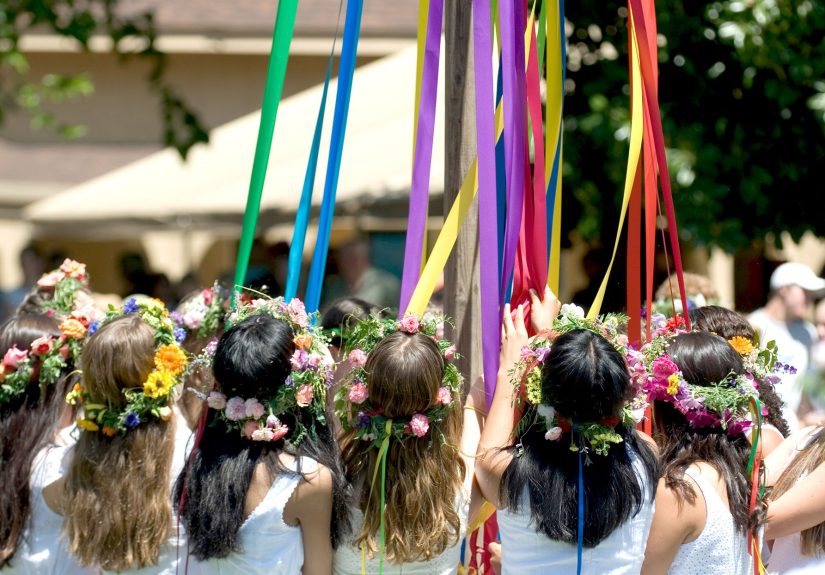
The iconic Maypoletall pole, colorful ribbons, people weaving around itbecame a centerpiece in many May Day
celebrations. It’s playful and photogenic, and it also happens to be an old tradition that communities have adapted
again and again. In the U.S., Maypole dancing shows up most often in school events, local festivals, and heritage
celebrations rather than as a nationwide default. Think: charming small-town energy, not mandatory national policy.
America’s Sweet Twist: May Baskets at the Door
One of the most endearing American May Day traditions is the May Day basket: small baskets, cones,
bags, or boxes filled with flowers and maybe a treat or note, left anonymously on someone’s doorknob or porch.
Classic move: ring the doorbell and sprint away like you’re in a wholesome heist movie.
This tradition was especially popular in the late 1800s and early 1900s and shows up in American literature and
newspapers. It could be friendly (“Happy spring!”), flirty (“I brought flowers and also feelings”), or just
neighborly (“I saw tulips and thought of you and also I had extra cookies”). Some versions even included a
playful chaseif the giver got caught, they might owe the recipient a kiss. It’s like tag, but with romance and a
floral budget.
Not every May Day tradition came straight from the mainland. Hawaii celebrates Lei Day on May 1,
honoring the art of making and giving leianother beautiful, flower-forward way to welcome the season.
The “Red” May Day: International Workers’ Day and the Fight for Fair Work
The other major meaning of May Day is tied to labor organizing and workers’ rights. Around the world, May 1 is
widely recognized as International Workers’ Daya day that highlights worker contributions and
calls attention to working conditions, wages, and rights.
Why May 1? The Eight-Hour Day Movement
In the late 1800s, industrial work often meant punishing hours and dangerous conditions. One of the most important
demands of the era was simple and revolutionary: eight hours for work, eight hours for rest, eight hours for
what we will. U.S. labor organizations pushed for an eight-hour standard, and May 1, 1886 became a major
deadline for nationwide action.
That May 1 saw large-scale strikes and rallies across the country, an early example of national coordination for
better working hours. It wasn’t just one city or one unionit was a broad wave of workers saying, “We are not
machines, and even machines get maintenance.”
The Haymarket Affair: A Turning Point in U.S. Labor History
In Chicago, demonstrations around the eight-hour movement led to the events known as the Haymarket
Affair. A rally at Haymarket Square on May 4, 1886 began as a protest connected to clashes between police
and workers. As police moved to disperse the gathering, an unknown person threw a bomb. The aftermath included
deaths and injuries on both sides and a legal case that became internationally famousand deeply controversial.
The Haymarket Affair became a symbol: to some, of the dangers of unrest; to others, of the risks workers faced when
pushing for reform. Either way, it left a permanent mark on labor history and helped shape how May 1 would be
remembered worldwide.
How May Day Became a Global Workers’ Holiday
In the years after 1886, international labor groups adopted May 1 as a day to recognize worker struggles and
solidarity. Today, in many countries, May Day is a public holiday marked by marches, speeches, and celebrations.
The themes vary by place and timesometimes focused on wages and benefits, sometimes on broader social issuesbut
the core idea is consistent: workers built the world, and they deserve a voice in it.
Why the U.S. Doesn’t Celebrate “Labor Day” on May 1
Here’s the confusing part for many Americans: if May 1 is International Workers’ Day, why is U.S. Labor Day in
September?
Labor Day’s U.S. Origin: Parades, Picnics, and Power
The first U.S. Labor Day celebration took place in New York City in 1882, featuring a major parade organized by
labor groups. Over the next decade, the idea spread. Labor Day was already being recognized in some places before
it became federal.
1894 and the Politics of a New Federal Holiday
In 1894, amid intense labor unrestincluding the Pullman StrikeCongress moved quickly to establish Labor Day as a
federal holiday. Over time, Labor Day evolved into a broad celebration of workers that also functions as the
unofficial end-of-summer weekend (cue the grills, the traffic, and the eternal debate about whether you can wear
white afterward).
Why September Was Also… Strategic
Many historians note that separating Labor Day from May 1 made U.S. Labor Day feel less connected to international
socialist movements and to the more radical associations May Day sometimes carried in American politics. In short:
the U.S. chose a holiday that could honor labor without importing all the ideological baggage that some leaders
worried came with May 1.
May 1 in the U.S.: Law Day and Loyalty Day
Just to make May 1 even more of a “choose your own adventure,” the U.S. also recognizes May 1 as Law
Day and Loyalty Day. Law Day was proclaimed in the late 1950s as a day to reflect on the
rule of law. Loyalty Day is designated in U.S. law as a day for reaffirming loyalty to the United States.
Whether you treat these as meaningful observances or as fun trivia for your next group chat depends entirely on
your personality and your group chat’s tolerance for presidential proclamation facts.
How Americans Celebrate May Day Today
In the U.S., May Day isn’t a federal holiday, so celebrations are often local, cultural, or community-based. That
flexibility is part of its charmyou can celebrate quietly at home or loudly in the streets.
1) Do the May Basket “Doorstep Drop”
Make a small basket (or paper cone) with flowers, a note, or a treat. Leave it for a neighbor, friend, teacher, or
family member. Keep it light and kind. Optional: ring-and-run for tradition. Non-optional: don’t terrify anyone who
hates surprise doorbells.
2) Celebrate Spring Like You Mean It
- Plant something: herbs, flowers, tomatoes, the confidence you lost in February.
- Take a nature walk and “bring in the May” with greeneryresponsibly and legally, please.
- Host a picnic with seasonal foods (berries, greens, anything that looks like it grew outside).
3) Recognize Workers in Your Life
May Day is a good excuse to say thank youto teachers, delivery drivers, nurses, service workers, sanitation crews,
and the coworker who always refills the coffee. If you want to go deeper, support local worker organizations, learn
about labor history in your city, or show up for community events focused on worker rights.
4) Attend a Community Event (or Create One)
Depending on where you live, you might find May Day festivals, cultural celebrations, labor rallies, or spring
markets. If there’s nothing nearby, a small gathering counts: invite friends, make flower crowns, share stories
about your first job, and toast to the radical concept of having weekends.
Quick FAQ About May Day
Is May Day a federal holiday in the U.S.?
No. May Day isn’t a U.S. federal holiday, which is why many Americans only encounter it through school traditions,
cultural festivals, or news about May 1 demonstrations.
Is “May Day” the same as the distress call “mayday”?
Nope. The distress call “mayday” comes from a French phrase meaning “help me” and is used in emergencies. It just
happens to sound like May Day, the holiday. Language is fun like that.
Is May Day a pagan holiday?
Some May Day customs have roots in older seasonal and folk traditions, including pre-Christian celebrations of
spring. But modern May Day can be completely secularflowers, community, and maybe a dessert shaped like a bunny if
you’re feeling ambitious.
Why May Day Still Matters
May Day has lasted because it speaks to two timeless human needs: the need to celebrate life returning to the world,
and the need to insist that the people doing the work get treated like people. Whether you experience May 1 as a
spring festival, a labor history milestone, or a little of both, it’s a reminder that renewal isn’t only seasonal.
Communities can renew tooby caring for neighbors, protecting workers, and finding reasons to celebrate together.
May Day Experiences: 10 Ways It Can Feel in Real Life (About )
If May Day feels “far away” as a concepteither too old-timey (maypoles!) or too big-picture (global labor!)try
imagining it as a collection of small, human moments. Here are a few realistic May Day experiences people often
create for themselves, their families, or their neighborhoods. Consider this your permission slip to celebrate in a
way that fits your life, your community, and your personal tolerance for glitter.
1) The May Basket Mission
You assemble a tiny basketmaybe a paper cone taped into shapeadd a handful of flowers, a couple wrapped candies,
and a note that says, “Happy May Day!” Then you deliver it like a friendly secret agent. The best part is the
recipient’s confusion: “Who left this?” The second-best part is you pretending you’re innocent when you are, in
fact, extremely guilty of kindness.
2) The “My Kid Learned Ribbon-Weaving” Moment
If you’ve ever watched children attempt a Maypole dance, you know the spectrum of outcomes ranges from “adorable”
to “very gentle chaos.” Still, it’s one of those rare activities that’s both festive and mildly educationalcolors,
coordination, teamwork, and the timeless lesson that if everyone runs in random directions, everything becomes a
knot. Honestly, it’s a strong metaphor for group projects.
3) A Spring Reset That Actually Sticks (For a Week)
May Day can be a seasonal checkpoint: you open windows, swap heavy blankets for lighter ones, and convince yourself
that this is the year you’ll keep herbs alive on the windowsill. Even if the basil doesn’t make it, the
ritual still works: it signals a shift from surviving winter to actually living again.
4) The Neighborhood “Hello” You’ve Been Putting Off
A May Day drop-off (flowers, cookies, or even a handwritten card) can be a low-pressure way to connect. It’s not a
big party, it’s not awkward small talk in the hallwayit’s a simple gesture that says, “We share space, and I’m
glad you’re here.” In a world where people can live next door for years without learning each other’s names, that’s
quietly powerful.
5) A Worker Appreciation Check-In
May Day also shows up as reflection: you think about your first job, the hardest job you’ve had, the best boss you
ever worked for, and the coworker who saved your day with one sentence: “I’ve got this.” Some people mark May 1 by
tipping a little extra, writing a thank-you note, or donating to local worker support efforts. Small actions don’t
replace systemic change, but they do remind us that real people are behind every service we rely on.
6) Joining a Community Event (Even Briefly)
Maybe you stop by a local spring festival, a cultural celebration, or a workers’ rally for 20 minuteslong enough
to listen, learn, and feel connected. You don’t have to be a policy expert to show up. Sometimes participation is
as simple as being present and paying attention.
7) The “We Made a Tradition” Feeling
The most lasting May Day experience is when it becomes your own tradition: every May 1 you deliver flowers, plant
something, cook a bright, springy meal, or call an older relative to ask what May Day meant in their childhood.
That’s how holidays survivenot by being perfect, but by being practiced.