Table of Contents >> Show >> Hide
- What a bruise really is
- Why your arms bruise after working out
- 1. Direct pressure from equipment
- 2. A mild muscle contusion
- 3. A muscle strain, not just regular soreness
- 4. You changed your routine too fast
- 5. Tiny blood spots from straining can be mistaken for bruising
- 6. Your medications or supplements make bruising easier
- 7. Your skin and blood vessels may simply be more fragile
- 8. There may be an underlying medical issue
- Normal post-workout bruising vs. something more serious
- Could it be rhabdomyolysis?
- How to treat a workout-related arm bruise at home
- How to prevent bruising after workouts
- When to see a doctor
- The bottom line
- Common workout bruising experiences people report
If you finish an upper-body workout feeling strong, sweaty, and slightly heroic, then spot a mystery bruise on your arm later, your first thought is probably not, “Ah yes, a delightful physiology lesson.” It is usually more like, “Why does my bicep look like it got into an argument with a doorframe?”
The good news is that arm bruising after exercise is often caused by something fairly simple: small blood vessels under the skin break after direct pressure, minor impact, or a muscle strain. The less-fun news is that sometimes bruising is your body’s way of waving a tiny purple flag. If it happens often, shows up without a clear reason, or comes with swelling, unusual bleeding, dark urine, or severe pain, it deserves attention.
This guide breaks down what bruises actually are, why your arms may bruise after a workout, how to tell normal soreness from an actual injury, when to worry, and what you can do to help your body recover. No panic, no dramatic soundtrack, just real information in plain English.
What a bruise really is
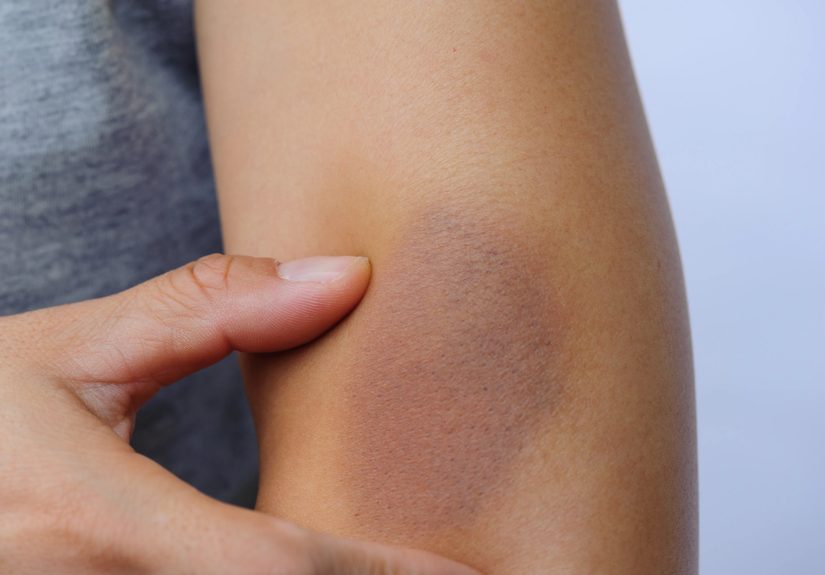
A bruise forms when small blood vessels under your skin get damaged and leak blood into nearby tissue. That trapped blood creates the familiar color show: red or pink at first, then blue, purple, green, yellow, and eventually “nothing to see here.” In many cases, a bruise is more annoying than dangerous. It may feel tender, look dramatic, and make you wonder whether you accidentally joined a full-contact Pilates class.
Bruises on the arms can be especially noticeable because the skin there is often thinner, more exposed, and more likely to get bumped during daily life. That means your workout may not be the only culprit. Sometimes the exercise stressed the area, and a tiny unnoticed bump afterward finished the job.
Why your arms bruise after working out
1. Direct pressure from equipment
This is one of the biggest reasons. Barbells resting on the front of the shoulders, dumbbells brushing the upper arms, kettlebells knocking your forearms, resistance bands snapping back, or even a too-tight arm cuff or strap can create enough localized force to damage tiny vessels. You may not think of it as an “injury” because the contact seems minor, but your blood vessels may disagree.
Common examples include:
- Front rack positions during cleans or squats
- Heavy dumbbells brushing your triceps during presses
- Kettlebell work that repeatedly taps the forearm
- Weight machines with pads pressing into the same spot
- Partner drills, boxing work, or contact-based training
If the bruise appears exactly where equipment touched you, the mystery is usually solved.
2. A mild muscle contusion
A contusion is the medical term for a bruise caused by a blow or impact. Even if you did not take a dramatic hit, repeated contact in one small area can create a minor muscle bruise. These often come with tenderness, swelling, stiffness, and visible discoloration. If you can point to the exact place where something pressed, clipped, or smacked your arm, a contusion moves high on the suspect list.
3. A muscle strain, not just regular soreness
Here is where things get sneaky. Not every post-workout ache is ordinary muscle soreness. Sometimes you strain a muscle or tendon, especially if you suddenly increase load, volume, or intensity. A strain can cause pain, weakness, swelling, and bruising. In more serious cases, people describe a sharp pain, a pop, or soreness that gets worse instead of better.
This matters because a strained biceps, triceps, or shoulder-area muscle can bruise even if the bruise shows up a day later. Blood can travel through tissue, so the color you see is not always right where the injury started. That is why your upper arm can look like modern art while the actual strain sits a little higher near the shoulder.
4. You changed your routine too fast
Your body loves progressive overload. It hates surprise attacks. If you went from “casual curls” to “I live here now” in one week, your muscles and connective tissue may be under more stress than usual. New movements, heavier weights, high-rep eccentric training, and intense classes can all increase the chance of minor tissue damage.
That does not mean every hard workout is harmful. It means your tissues need time to adapt. Going too hard too soon can turn a productive session into a bruise-producing event.
5. Tiny blood spots from straining can be mistaken for bruising
Sometimes what looks like bruising is actually petechiae, which are tiny red, purple, or brown spots caused by bleeding from very small capillaries. Prolonged straining, including heavy lifting, can trigger this. Petechiae are more commonly seen on the face, neck, or chest than the arms, but it is helpful to know the difference. A true bruise is usually a larger patch. Petechiae look more like pinpoint dots and do not blanch when you press them.
6. Your medications or supplements make bruising easier
If you bruise after workouts that barely seem hard enough to wrinkle your T-shirt, it may not be the workout alone. Blood thinners, antiplatelet medications, aspirin, ibuprofen, naproxen, and some supplements can make bruises more likely or more noticeable. Corticosteroids can also thin the skin over time, which makes those small vessels easier to injure.
This does not mean you should stop a medication on your own. It means bruising may be more about your clotting and skin fragility than your bench press form.
7. Your skin and blood vessels may simply be more fragile
Some people bruise more easily because of age, genetics, sun damage, or naturally fragile vessels. The arms are a common place for this because the skin can thin there over time. So yes, it is possible that your workout was only the final nudge and your skin was already more bruise-prone than average.
8. There may be an underlying medical issue
This is less common than simple trauma, but it matters. Easy bruising can happen with bleeding disorders, low platelets, von Willebrand disease, immune thrombocytopenia, liver problems, or certain blood-related conditions. If your bruises are frequent, large, unexplained, or paired with nosebleeds, bleeding gums, heavy periods, or a family history of easy bleeding, it is time to stop blaming the dumbbells for everything.
Normal post-workout bruising vs. something more serious
Usually less concerning
- The bruise appeared where equipment or pressure was obvious
- You have mild soreness but normal movement
- The discoloration gradually improves over days to weeks
- The bruise is tender, but not intensely painful
- You are not having other bleeding symptoms
More concerning
- You bruise often and cannot explain why
- The bruise is very large, very painful, or keeps expanding
- Your arm becomes tight, numb, pale, or severely swollen
- You have a popping sensation, major weakness, or trouble moving the arm
- You also have nosebleeds, bleeding gums, blood in urine or stool, or unusually heavy periods
- You recently started a new medication and suddenly bruise more easily
- You develop extreme muscle pain, swelling, weakness, or dark urine after intense exercise
That last point is especially important because severe overexertion can, in rare cases, be linked to rhabdomyolysis. That is not regular post-leg-day whining. It is a serious muscle breakdown condition that needs medical attention.
Could it be rhabdomyolysis?
Usually, no. Most people with a bruise after lifting weights do not have rhabdo. But because exercise can contribute to it in rare cases, it is worth knowing the warning signs.
Think about rhabdo if you have:
- Severe muscle pain or swelling that feels out of proportion
- Major weakness, not just “I had arm day” fatigue
- Dark, cola-colored, or tea-colored urine
- Symptoms that keep getting worse a few days after a brutal workout
If that sounds familiar, do not try to “hydrate it away and hope for the best.” Get medical care.
How to treat a workout-related arm bruise at home
Use the basics first
For a mild bruise or minor strain, the classic approach still works:
- Rest: Back off the movement that triggered the pain or bruising.
- Ice: Apply a cold pack wrapped in cloth for short intervals.
- Compression: A light wrap may help if swelling is present.
- Elevation: Raise the arm when possible to limit pooling.
Also, do not massage the life out of a fresh bruise. Your arm is injured, not marinating.
Choose pain relief wisely
If you bruise easily, acetaminophen may be a better option than certain anti-inflammatory drugs for pain, especially if a clinician has already told you to avoid medicines that can increase bleeding risk. When in doubt, check with your healthcare professional, especially if you take blood thinners or have a bleeding disorder.
Give it actual time
Bruises do not disappear because you glare at them. Most improve within about two weeks, though deeper bruises can linger longer. If pain and discoloration keep improving, that is reassuring. If the bruise is not fading, keeps growing, or starts acting suspicious, get it checked.
How to prevent bruising after workouts
- Increase weight and volume gradually instead of making every session a dramatic comeback story.
- Check technique on lifts that place pressure on the arms or shoulders.
- Use protective sleeves or padding if equipment repeatedly hits the same spot.
- Warm up properly and do not jump straight into maximal effort.
- Stay hydrated, especially during intense sessions or hot weather.
- Review medications and supplements with a healthcare professional if bruising seems excessive.
- Pay attention to repeated bruising in the same area, which may suggest movement mechanics or equipment setup issues.
When to see a doctor
You should make an appointment sooner rather than later if your bruises are frequent, unusually large, painful without a clear injury, or associated with other bleeding symptoms. You should seek urgent care if your arm is rapidly swelling, feels tight or numb, or if you have severe weakness, dark urine, fever, or signs of infection.
If bruising started suddenly after beginning a new medication, that is also worth discussing. A clinician may want to review your medicines, ask about supplements, and possibly order blood work to check platelet levels or clotting function.
The bottom line
Most arm bruises after working out happen for fairly boring reasons: direct pressure, a small bump, a mild contusion, or a minor strain. Boring is good. Boring means your arm probably needs a little rest, a little ice, and a little less chaos next session.
But bruising is not something to ignore when it is frequent, unexplained, or paired with unusual pain, swelling, bleeding, or weakness. Your body is allowed to complain after exercise. It is not supposed to send cryptic purple messages every week.
So if your bruise clearly matches your kettlebell adventure, treat it gently and keep an eye on it. If it does not make sense, keeps happening, or comes with bigger warning signs, let a medical professional help figure out what is going on. Fitness is supposed to build you up, not turn your arms into a watercolor palette.
Common workout bruising experiences people report
One of the most common experiences is the “I didn’t notice anything at the gym, but now I have a bruise the size of a plum” scenario. This happens a lot with busy workouts where attention is split between breathing, counting reps, and trying not to make eye contact with the person curling in the squat rack. A person may lightly bang a dumbbell against the upper arm during presses or rows and forget about it entirely. Hours later, the arm turns purple and suddenly the mystery feels far more dramatic than the actual cause.
Another very common experience shows up with beginners or people restarting training after time off. They return to heavy arm work, push hard because motivation is high, and feel normal soreness at first. By the next day, one arm is not just sore but tender in one exact spot, and a bruise appears. In many cases, that pattern fits a mild strain or local tissue irritation rather than ordinary delayed muscle soreness. People often describe this as “soreness with attitude” because it feels more focused, more sensitive, and less symmetrical than typical post-workout fatigue.
There is also the front-rack bruise crowd. Anyone doing cleans, front squats, or certain kettlebell drills may notice bruising across the shoulders, upper arms, or forearms while learning technique. New lifters sometimes worry that this automatically means something is seriously wrong. Often, it just means the bar path, rack position, or wrist and elbow setup need refining. Coaches see this all the time: once mechanics improve, the bruises often stop showing up like uninvited guests.
Some people notice arm bruising only after certain types of training, such as boxing, boot camp circuits, obstacle racing, or group fitness classes with lots of equipment changes. That pattern matters. When bruising is linked to a specific format, it usually points to repeated minor impacts, friction, or fatigue-related form breakdown late in the workout. In plain terms, the body may be saying, “This class is fun, but your coordination clocks out before you do.”
Then there are the people who bruise from what seems like almost nothing. They switch nothing in training, yet bruises keep appearing after ordinary sessions. That experience is especially important because it can suggest medication effects, fragile skin, or an underlying bleeding issue. People often realize the pattern only after stepping back and noticing that the bruises are not really tied to hard contact at all. That is usually the moment when it makes sense to stop troubleshooting gym form alone and start asking whether something else is contributing.
The key lesson from these experiences is simple: context matters. A bruise after obvious pressure or impact is usually easier to explain. A bruise that appears often, randomly, or alongside other symptoms deserves more attention. Your workout history, the bruise location, the kind of pain you feel, and whether it keeps happening are all clues. Your arms are not being dramatic. They are just leaving notes in color.