Table of Contents >> Show >> Hide
- Why This Story Resonates So Strongly
- Who Is Amy Jandrisevits, and Why Did She Start Making These Dolls?
- What Makes These Dolls Different?
- Why Dolls Matter More Than Many Adults Realize
- Rare Health Conditions, Representation, and the Weight of Being Seen
- Real Examples That Show Why This Work Matters
- The Toy Industry Is Slowly Catching Up
- What Parents, Caregivers, and Brands Can Learn From This
- Why This Story Deserves More Than a Quick Scroll
- Additional Experiences Related to This Story
- Conclusion
Some internet stories are cute for five seconds and then vanish into the digital fog. This one sticks. Why? Because it is not just about adorable handmade dolls. It is about visibility, identity, and the surprisingly big emotional power of seeing your own face, your own body, and your own reality reflected back at you in the toy aisle.
At the center of the story is Amy Jandrisevits, the founder of A Doll Like Me, a nonprofit built around one beautifully simple idea: every child deserves a doll that looks like them. Not “sort of.” Not “close enough.” Actually like them. That means dolls with limb differences, scars, birthmarks, albinism, hearing devices, facial differences, skin conditions, and rare medical realities that most mass-market toy companies have historically ignored with the enthusiasm of a raccoon ignoring a salad.
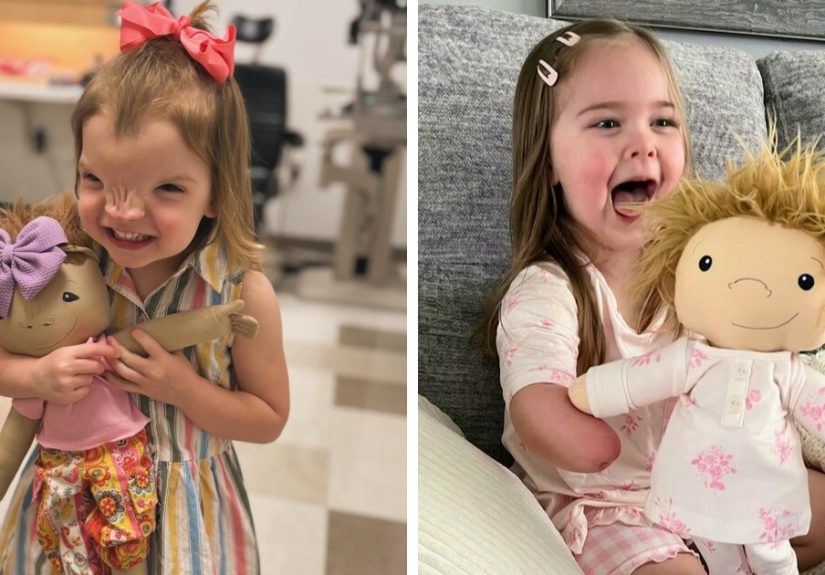
The result is one of those rare viral stories that deserves the attention it gets. The photos may draw people in, but the meaning is much deeper. These dolls are not novelty items. They are tiny mirrors with yarn hair, stitched smiles, and serious emotional impact.
Why This Story Resonates So Strongly
The photo collection attached to this story is powerful because the dolls do more than match a child’s appearance. They validate lived experience. For many children with rare health conditions or visible differences, daily life includes staring, questions, assumptions, and the exhausting job of being “the one who is different.” Adults often underestimate how much that wears on a child. A custom doll cannot fix every hard thing, but it can say something that matters: You are not wrong. You are not odd. You are worth representing.
That message lands especially hard for families dealing with rare diseases. In the United States, rare diseases are individually uncommon but collectively affect millions of people, and many of those patients are children. Families often face long searches for diagnosis, limited treatment options, social isolation, and the emotional fatigue of explaining a condition that few people recognize. Against that backdrop, a doll that visibly shares a child’s features can feel surprisingly profound.
Who Is Amy Jandrisevits, and Why Did She Start Making These Dolls?
Amy Jandrisevits did not stumble into this work from a trendy craft rabbit hole on social media. She came to it through pediatric care. Before founding A Doll Like Me, she worked as a hospital social worker and used dolls in play-based support with children going through medical treatment. That experience taught her something important: dolls can help kids process fear, act out emotions, and understand what is happening to their bodies.
But there was an obvious gap. The dolls used in those settings did not usually resemble the children who needed them most. A child with a limb difference might be handed a standard toy body. A child with a large birthmark or facial difference might be expected to connect with a doll that looked nothing like them. The emotional message was subtle but real: we have tools for comfort, just not ones that include you.
So Jandrisevits changed the equation. What began as a handmade response to a specific need grew into a broader mission. Parents reached out asking for dolls that reflected amputations, albinism, scars, giant congenital nevi, facial asymmetry, and other conditions that mass retail largely left behind. The demand made one thing clear: this was not a niche idea. It was a missing one.
What Makes These Dolls Different?
They Are Specific, Not Generic
Inclusive toy marketing sometimes stops at broad messaging. A brand may announce diversity, then release a doll that is technically different but still generalized. Jandrisevits’ approach is the opposite. Her dolls are tailored to a particular child. That means matching skin tone, hair, scars, surgical changes, limb differences, eye shape, markings, medical details, and facial features with careful attention.
That specificity matters. A child usually knows the difference between “this doll is diverse” and “this doll is me.” The first is progress. The second is personal.
They Represent a Child, Not Just a Diagnosis
There is also a quiet dignity in the way these dolls are made. The child is never reduced to a condition. The doll is still soft, lovable, playful, and full of personality. The medical or physical detail is part of the child’s identity, not the whole story. That balance is important. Kids do not want to be turned into educational pamphlets. They want to be seen as complete people.
Why Dolls Matter More Than Many Adults Realize
To some adults, a doll is “just a toy.” Child development experts would like a word. Organizations including the American Academy of Pediatrics, children’s hospitals, and child mental health specialists have long emphasized the role of play in helping children build emotional regulation, social understanding, communication skills, and confidence. Pretend play gives children a safe way to rehearse real life. They try on feelings, test out scenarios, process fear, and work through uncertainty.
Dolls are especially useful because they act as emotional stand-ins. A child can comfort a doll, speak for a doll, or explain what is happening to a doll when speaking directly about themselves feels too hard. Hospitals use medical play for exactly this reason. Children’s hospitals encourage kids to use dolls and stuffed animals while exploring medical equipment and role-playing procedures, because it can reduce anxiety and help children understand care in a less frightening way.
That makes Jandrisevits’ work more than aesthetically meaningful. It intersects with how children actually cope. A doll that resembles a child’s body or condition can become a bridge between emotion and expression. Suddenly, a child is not merely receiving reassurance from adults. They are practicing it, narrating it, and seeing it embodied.
Rare Health Conditions, Representation, and the Weight of Being Seen
For families living with rare diseases, representation is not a fluffy extra. It is often a form of relief. Rare conditions can be medically complicated and socially lonely. Some families spend years searching for answers. Others receive a diagnosis but still struggle to find a community, accessible care, or public understanding. And because many rare conditions are visible, kids often encounter curiosity that is not always kind.
This is where a custom doll becomes more than symbolic. It can lower the emotional temperature. It can help siblings understand. It can help classmates ask better questions. It can help parents start gentler conversations. Most of all, it can help a child internalize difference without equating difference with defect.
That may sound lofty for a stuffed doll, but childhood identity is built from repeated cues. What do I see around me? Who looks like me? What gets celebrated? What gets hidden? When kids never see themselves represented, they notice. They may not write an essay about it, but they notice. The absence speaks. So does the presence.
Real Examples That Show Why This Work Matters
Albinism and the Search for a Familiar Face
One family highlighted in national coverage wanted dolls for sisters with albinism. The challenge was not simply finding dolls with light hair. It was finding dolls that reflected their children’s actual appearance, including the combination of pale hair, light eyes, and Asian features. That detail is exactly why mainstream toy lines often fall short. They may offer a single trait, but not the layered reality of an individual child.
Limb Differences and Body Confidence
Several children featured in reporting about A Doll Like Me had limb differences, including missing hands, shortened fingers, or partial arms. For one father, seeing a doll that represented his daughter’s arm difference brought him to tears. For another family, a doll helped their child explain a leg condition and ongoing treatment. That is an underappreciated benefit: representation can make self-advocacy easier. A child can point to the doll and begin there.
Rare Facial and Skin Conditions
Some of the most affecting examples involve conditions that draw public attention quickly, such as facial asymmetry or large skin markings. Children with facial infiltrating lipomatosis or giant congenital nevus do not need to be told every day that they stand out; the world handles that job uninvited. What they often need is an environment that says standing out does not reduce their beauty, their normalcy, or their right to belong. A doll that mirrors those traits can make that message tangible.
The Toy Industry Is Slowly Catching Up
To be fair, the mainstream toy industry has improved. In recent years, major brands have expanded their representation efforts with dolls that reflect blindness, Down syndrome, type 1 diabetes, and autism. Those steps matter, and they suggest the market is finally learning what families have known for years: children benefit when toys reflect the real world.
Still, handmade projects like A Doll Like Me reveal where big brands remain limited. Mass production can offer broader inclusion, but it cannot always capture the intimate, highly individual details that a particular child recognizes instantly. A mainstream doll may say, “Someone like you exists.” A custom doll says, “You exist, exactly as you are.” There is room for both, but they are not interchangeable.
What Parents, Caregivers, and Brands Can Learn From This
The biggest lesson is not really about dolls. It is about listening. Families have been saying for a long time that representation affects confidence, belonging, and emotional health. Children with visible differences, disabilities, and rare conditions do not need pity merch. They need thoughtful, accurate, respectful inclusion.
That means creators and brands should work with real communities, not guess from afar. It means designing with care, not just with marketing slogans. It means understanding that “inclusive play” is not a seasonal campaign; it is a design philosophy. And it means recognizing that children do not separate emotional life from play nearly as sharply as adults do. Toys are one of the first places kids learn who gets centered, who gets admired, and who gets edited out.
Why This Story Deserves More Than a Quick Scroll
The title may sound like a feel-good feature, and it is. But it is also a story about justice in miniature. Amy Jandrisevits is not only sewing fabric and yarn. She is stitching representation into childhood. She is taking bodies and conditions that are often treated as unusual, difficult, or invisible and placing them inside a familiar object associated with comfort and imagination.
That is why the photos land so strongly. They are sweet, yes. They are also corrective. Each doll quietly challenges an old assumption: that a “normal” toy body should be the default and everyone else can use their imagination. These children have already been using their imagination. What Jandrisevits offers is something better a world imaginative enough to include them back.
Additional Experiences Related to This Story
To understand why this topic keeps resonating, it helps to picture the everyday moments around it. Not the headline. Not the viral photo. The in-between parts. The toy store walk where a parent casually scans shelves and realizes, once again, that nothing looks remotely like their child. The birthday party where everyone means well, but the “look-alike” doll still comes with the standard face, standard limbs, standard skin, standard everything. The doctor visit where a child is brave in public and then quiet on the ride home. Those are the moments this story speaks to.
For some families, the experience starts with frustration. A mother of children with albinism wants dolls that match their actual features and comes up empty. A parent of a baby born with a limb difference searches online and finds plenty of inspirational slogans, but very few toys that reflect reality. Another family is navigating a rare skin condition and has grown used to stares in grocery stores, curious questions in playgrounds, and that awkward adult expression that is trying to be polite while also being wildly unhelpful. A custom doll does not erase those experiences, but it changes the emotional texture around them.
Then comes the moment of recognition. A child opens a package, sees the familiar detail first, and understands immediately. Maybe it is the missing hand. Maybe it is a birthmark. Maybe it is the shape of the face, the skin markings, the leg difference, or the medical accessory. However it appears, the message lands fast. This toy was not made in spite of me. It was made with me in mind.
That reaction matters to parents, too. Many families described by news coverage talk about tears, relief, gratitude, and even a new sense of confidence. That response makes sense. Parents of children with rare health conditions often carry a constant low hum of worry: Will my child feel left out? Will other kids be kind? Will they see themselves as lovable? When a doll arrives that mirrors their child carefully and respectfully, it can feel like someone finally understood the assignment.
There is also a practical side. These dolls can become conversation starters in schools, hospitals, therapy settings, and family circles. Children use them to explain treatments, demonstrate differences, or simply play without having to pretend away their bodies. Siblings may understand more. Friends may ask better questions. Adults may shift from staring to listening. It is one small object doing a surprisingly large amount of social work.
And maybe that is the bigger takeaway from this entire story. Representation is often discussed in abstract, corporate language, but in real life it is usually intimate. It shows up in what a child hugs at bedtime, what they bring to the couch, what they carry into a waiting room, and what they line up beside them during make-believe. A custom doll can become a tiny companion, a coping tool, a confidence booster, and a quiet rebuttal to the idea that only certain bodies deserve to be standard. That is why these images keep moving people. They are not just charming. They are deeply human.
Conclusion
Woman Creates Dolls That Fit Each Child’s Needs While Representing Their Rare Health Conditions (26 New Pics) works as a headline because it promises heart. It works as a story because it delivers substance. Amy Jandrisevits’ dolls reflect a truth that child development experts, rare disease advocates, and families have all been saying in different ways: when children feel seen, they play differently, cope differently, and sometimes even talk about themselves differently.
In a culture that often treats difference as something to minimize, these dolls do the opposite. They make difference visible without making it tragic. They celebrate individuality without turning children into symbols. And they remind the rest of us that inclusion is not complicated in theory. It just requires paying attention to who has been left out and deciding, deliberately, to bring them in.