Table of Contents >> Show >> Hide
At some point, the internet was always going to end up here: debating whether a chatbot has any business helping someone say “I do.” And once a viral story about a husband using AI for his wedding vows made the rounds online, the comment section did what comment sections do bestturn one awkward newlywed moment into a full-blown culture war.
On one side were people who saw the move as deeply unromantic. Wedding vows, they argued, are not just another piece of content to optimize. They are supposed to be clumsy, personal, vulnerable, maybe a little cheesy, and unmistakably yours. On the other side were people who shrugged and asked a fair question: if AI helps someone organize their feelings, calm their nerves, or get past a wall of blinking-cursor panic, is that really so terrible?
That tension is what makes this story so fascinating. The debate is not really about grammar, sentence flow, or whether ChatGPT can produce a sweet-sounding paragraph about forever. It is about effort. It is about honesty. And it is about whether modern couples see artificial intelligence as a creative assistantor as an emotional substitute where it absolutely does not belong.
The Viral Story That Set Off the Argument
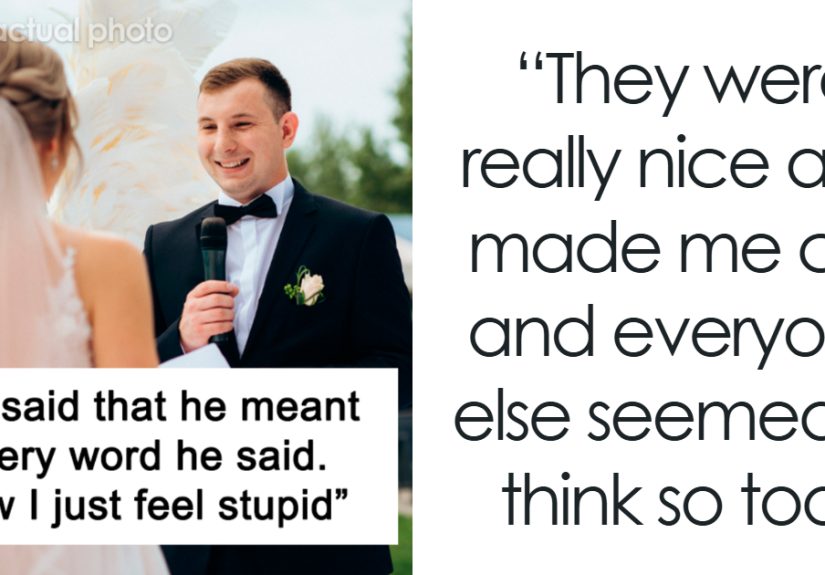
In the online account that sparked the backlash, a bride learned that her husband had used AI to generate his wedding vows. The words may have sounded polished, but the revelation landed with a thud. Instead of hearing heartfelt promises carefully written for one of the biggest moments of their lives, she felt like she had been handed a romantic speech assembled by software.
That emotional whiplash explains why so many people reacted so strongly. Plenty of commenters sided with the bride and said the issue was not whether the vows were technically good. The issue was that wedding vows are supposed to reflect thought, effort, and emotional labor. You are not just delivering lines at the altar. You are showing your partner that you were willing to sit with your feelings, wrestle them into words, and risk sounding imperfect in public. That is part of the gift.
Still, the internet did not unanimously convict the husband of romantic treason. Some people defended him, pointing out that not everyone is a strong writer. For nervous, overwhelmed, or inarticulate people, AI can feel like a life raft. A few commenters argued that using a chatbot for a first draft is not wildly different from borrowing vow templates, asking a friend to edit a speech, or reading examples online for inspiration.
And that is where the story stops being one couple’s problem and becomes a bigger cultural debate. We are no longer asking whether AI can write something beautiful. It clearly can. We are asking whether beauty means the same thing when the person you love did not fully make it themselves.
Why AI Wedding Vows Hit Such a Nerve
Vows Are About More Than the Final Words
The strongest argument against AI wedding vows is surprisingly simple: vows matter because of the effort behind them. People do not usually expect literary genius at the altar. They expect sincerity. In fact, many of the most memorable vows are memorable precisely because they are a little uneven. They sound like the speaker. They contain odd little details, private jokes, messy feelings, and that one sentence that definitely would not have survived a corporate editing pass.
That is why a technically elegant AI-generated vow can still feel emotionally flat. It may sound smoother, but it can also sound strangely frictionless. And love, real love, is rarely frictionless. It is human. It stumbles. It pauses. It remembers tiny things no algorithm would think to mention unless you fed them in. When people say, “You’re supposed to put effort into it,” what they often mean is: the labor is part of the meaning.
Secrecy Makes It Worse
There is also a major difference between using AI and hiding that you used AI. Secrecy changes the emotional math. A partner may be perfectly fine with AI helping organize ideas, tighten phrasing, or polish grammar. What stings is finding out later and realizing the speech you thought came straight from the heart was filtered through a machine without your knowledge.
That is why transparency keeps showing up in expert advice around AI-generated vows. Technology itself is not always the deal-breaker. The feeling of being misled often is. If one person sees AI as a harmless tool and the other sees it as an emotional shortcut, the real issue is not software. It is a mismatch in values and expectations.
Polished Does Not Always Mean Personal
Another reason this debate exploded is that AI often produces language that sounds universally romantic but not specifically intimate. It can give you loving sentiments, but it struggles with the texture of lived experience unless the user deliberately supplies it. That means the result can feel like a high-end greeting card: pleasant, competent, and slightly suspicious.
And weddings are one of the last places people still want visible fingerprints. In an age of auto-complete, smart replies, AI-generated captions, and algorithm-assisted everything, vows remain a kind of emotional no-fly zone. People may happily let AI help budget the reception, build timelines, or brainstorm hashtags. But when it comes to saying, “Here is why I choose you,” many still want a fully human voice in the room.
The Case for AI as a Helper, Not a Ghostwriter
To be fair, the people defending AI vows are not making a ridiculous point. Writing wedding vows is hard. It is intensely personal, highly public, and wrapped in absurd expectations. You are supposed to be moving but not melodramatic, funny but not cringey, personal but not too private, and somehow memorable without turning into a TED Talk in formalwear.
That pressure can freeze people. For someone who struggles with writing, public speaking, anxiety, ADHD, or even just the sheer emotional intensity of the moment, AI can feel less like cheating and more like scaffolding. It can help with structure. It can suggest a flow. It can turn scattered notes into a usable draft. For bilingual couples or people trying to express complex feelings in a non-native language, it may be especially useful.
And there is a real difference between asking AI to replace your feelings and asking it to organize them. Plenty of couples already use outside help when writing vows. They look at examples, ask officiants for guidance, lean on professional vow writers, or get feedback from trusted friends. AI, in that sense, can be another tool in the workshop.
The problem starts when the tool becomes the author. If someone dumps a few generic prompts into a chatbot and reads the results as if they emerged from their own soul at sunrise, that is when the emotional backlash begins. People do not usually mind support. They mind substitution.
What the Online Debate Gets Rightand What It Gets Wrong
The anti-AI crowd gets one important thing right: emotional intimacy is not just about output. It is about process. A partner often wants to feel that you took time, took them seriously, and did not outsource the part that was supposed to reveal something true about you. In that sense, the bride’s reaction in the viral story makes perfect sense. She was not critiquing syntax. She was mourning a missing gesture.
But the pro-AI crowd gets something right, too. Not everyone who uses AI is lazy, cold, or incapable of love. Some people are simply overwhelmed and looking for help expressing what they genuinely feel. Others use AI the same way they would use a template: to get started, not to fake devotion. Treating every form of AI assistance as emotional fraud oversimplifies a real issue.
The smarter takeaway is not that AI is automatically romantic poison. It is that context matters. Intent matters. Disclosure matters. And above all, personalization matters. A vow built from your own memories, values, jokes, and promises is still yours if you used a tool to help shape it. A vow copied from a bot with minimal thought and zero honesty is not.
A Better Rule for Couples in the Age of AI
If couples want to avoid their own version of this debate, the best approach is refreshingly low-tech: talk about it first. Before the ceremony, before the speech-writing panic, before one partner discovers a suspiciously polished paragraph in a notes app, ask the obvious question. Are we okay using AI for this at all?
If the answer is yes, define the boundaries. Maybe AI can help brainstorm structure but not write final lines. Maybe it can polish grammar but not generate promises. Maybe it can help translate, shorten, or organize, but every meaningful sentence has to come from the couple themselves.
That kind of agreement matters because this is not just a writing choice. It is a values choice. Some couples view AI the way previous generations viewed etiquette books: useful, harmless, practical. Others see it as an unwelcome third party in an intimate moment. Neither reaction is irrational. What matters is whether both people are living in the same emotional reality.
There is also a helpful middle path here. Use AI for the rough stuff around the edges, not the heart of the thing. Let it suggest an outline. Let it help with pacing. Let it remind you not to accidentally speak for 14 minutes. But keep the central promises unmistakably human. The best vows do not need to sound flawless. They need to sound true.
Experiences Related to the Topic: Why This Debate Feels So Real
One reason the AI wedding vows story spread so quickly is that it touched a nerve many couples already recognize. The details may be modern, but the emotional conflict is old: one person wants heartfelt effort, the other wants help getting there. Technology just made the disagreement easier to spot.
Take the partner who is deeply loving but terrible with words. This person may spend months planning thoughtful surprises, showing up consistently, handling stress well, and being a genuinely dependable future spouse. But the moment it is time to write vows, they freeze. Their notes app becomes a graveyard of half-finished lines. When AI offers a usable draft in thirty seconds, the temptation is obvious. To them, it feels practical. To their partner, if discovered later, it may feel like the one moment that was supposed to be handmade got factory-finished instead.
Then there is the couple where one person is excited by every new tool and the other is already exhausted by the idea of chatbots entering daily life. For them, the vow issue is not just about vows. It becomes a symbol of a larger “AI gap” in the relationship. One person sees efficiency; the other sees erosion. One sees harmless assistance; the other sees a slow leak in human authenticity. Suddenly the argument is not, “Did you use ChatGPT?” It is, “Do we see intimacy the same way at all?”
There are also positive experiences that complicate the outrage. Some couples have used AI in small, transparent ways and felt it genuinely helped. A bilingual bride might use it to smooth awkward phrasing in English while keeping her own memories and promises intact. A nervous groom might ask it for structure, then rewrite nearly everything by hand. A couple might even compare AI drafts together, laugh at the generic lines, and use them as a warm-up exercise before writing their real vows. In those cases, AI is not replacing closeness. It is functioning like a clunky but useful brainstorming buddy.
Another common experience is discovering that what people value most is not literary beauty but specificity. Many readers who reacted negatively to AI vows were not demanding poetry. They were asking for details only a real partner would think to say: the weird snack obsession, the inside joke from a terrible road trip, the promise to always rewatch the comfort show for the fifth time, the tiny habit that makes a shared life feel shared. That is often what people mean when they ask for sincerity. They want proof that the person at the altar knows them in high resolution.
And perhaps the most revealing experience of all is this: even people who are comfortable with AI in work, school, planning, and everyday writing often draw a line when emotions are involved. They will happily use technology to build a spreadsheet, polish an email, or plan a honeymoon itinerary. But they still want a human hand on the wheel when it comes to apologies, love letters, eulogies, and wedding vows. That pattern says a lot. The resistance is not necessarily anti-technology. It is pro-effort, pro-vulnerability, and pro-presence.
That is why this debate is not going away. As AI becomes more normal, couples will keep renegotiating where convenience ends and intimacy begins. And if this viral story proved anything, it is that most people still believe some moments should cost us somethingtime, discomfort, honesty, couragebecause that cost is part of what makes them meaningful.
Conclusion
The husband in the viral story may have thought he was solving a problem: how to produce beautiful wedding vows without spiraling into panic. But the backlash shows that many people believe the struggle is part of the point. Wedding vows are not supposed to be content-maximized. They are supposed to sound like one human being choosing another in real time, with all the awkwardness and vulnerability that comes with it.
So, are AI wedding vows inherently wrong? Not necessarily. But if AI is doing the emotional heavy lifting instead of helping you express something truly your own, do not be surprised if your partner feels shortchanged. In love, as in writing, people can usually tell the difference between a polished sentence and a genuine one. And when the stakes are forever, effort still matters more than elegance.