Table of Contents >> Show >> Hide
- Why Your Entryway Matters More in Fall
- 1. A Heavy-Duty Outdoor Doormat
- 2. A Boot Tray That Says, “Stop Right There”
- 3. A Shoe Storage Solution That Fits Your Real Life
- 4. Hooks for Coats, Bags, and the Scarf Population Explosion
- 5. An Umbrella Stand That Prevents Tiny Indoor Rainstorms
- 6. A Washable or Low-Pile Rug for the Indoor Side
- 7. A Bench That Gives You a Place to Sit and Stash
- 8. Baskets or Closed Storage for the Small Stuff
- 9. Better Lighting for Darker Fall Days
- 10. A Mirror for Light, Space, and Last-Minute Reality Checks
- 11. Weatherstripping and Draft Control Around the Door
- How to Pull the Whole Space Together
- A Simple Fall Entryway Setup by Home Type
- Common Mistakes to Avoid
- What These Essentials Feel Like in Real Life
- Conclusion
Fall has a way of making your front door work overtime. One minute it is crunchy leaves and pumpkin-spice optimism. The next, it is muddy sneakers, damp umbrellas, rogue scarves, and a dog that has apparently rolled through the entire season on the way inside. That is why a smart fall entryway is not just a pretty little landing zone. It is a hardworking buffer between the outdoors and the rest of your home.
If your entryway usually turns into a pileup of shoes, jackets, bags, and mystery mail, you are not alone. The good news is that you do not need a massive mudroom or a home that looks like it belongs in a magazine spread where nobody has ever touched a backpack. You just need the right essentials, arranged with intention.
Below, you will find 11 practical, stylish, and realistic ways to prep your entryway for fall weather. These ideas help protect floors, reduce clutter, handle wet gear, and make your home feel more welcoming the second you step inside. In other words, less chaos at the door, more “ah, home.”
Why Your Entryway Matters More in Fall
Your entryway becomes a transition zone in autumn. It catches rainwater, dirt, leaves, chilly drafts, and all the daily grab-and-go items that seem to multiply the minute the temperature drops. A well-planned entryway organization system can help prevent mess from traveling through the house, speed up busy mornings, and create a warmer first impression for guests.
Fall is also the perfect time to balance comfort and function. You want the space to feel cozy, yes, but it also needs to stand up to muddy boots, wet coats, and shorter daylight hours. Think of this as seasonal home prep with a stylish side hustle.
1. A Heavy-Duty Outdoor Doormat
A durable outdoor doormat is your first line of defense against mud, grit, and wet leaves. For fall, look for a mat with texture that actually scrapes debris off shoes instead of politely admiring the dirt and letting it pass through. Coir and rubber are strong choices because they can handle moisture and frequent use.
What to look for
- A size that fits your doorway proportionally
- Durable material like coir, rubber, or weather-resistant synthetic fibers
- A surface textured enough to grab dirt
- Easy cleaning with shaking, vacuuming, or rinsing
If your family comes home with wet shoes every day, this is not the place to go flimsy. A good doormat saves your floors from becoming a modern art piece made of rainwater and leaf fragments.
2. A Boot Tray That Says, “Stop Right There”
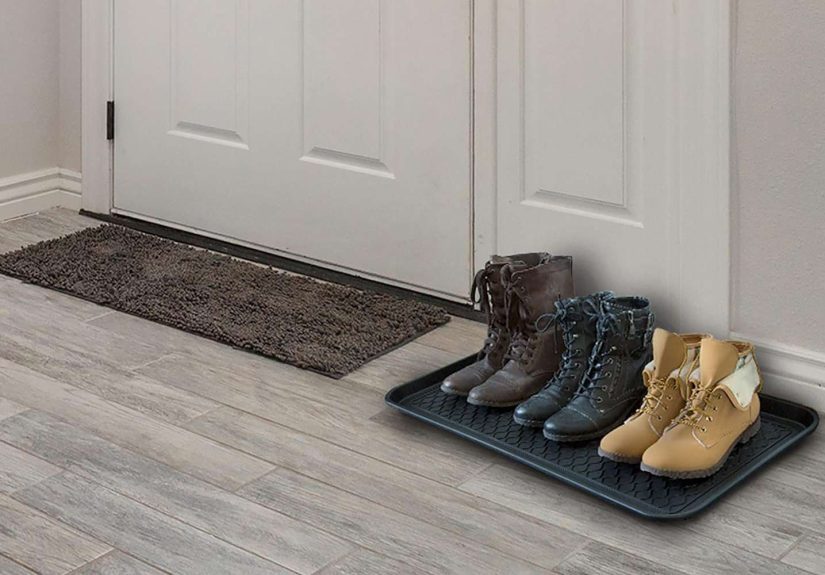
When fall gets messy, a boot tray is one of the most useful entryway essentials you can own. It gives wet boots, muddy sneakers, and soggy clogs a dedicated place to land. Instead of dripping across hardwood or tile, all that moisture stays contained in one easy-to-clean zone.
This is especially helpful for families with kids, pet owners, or anyone who has ever watched a rain-soaked boot leave a suspicious trail all the way to the kitchen. Choose a tray with a lip high enough to catch water and slush, but slim enough to sit near the door without turning your walkway into an obstacle course.
3. A Shoe Storage Solution That Fits Your Real Life
Fall brings more footwear into rotation. Sneakers, rain boots, loafers, ankle boots, hiking shoes, and the one pair somebody always kicks off in the exact middle of the floor. A smart shoe storage setup keeps the entryway from looking like a lost-and-found bin.
The best option depends on your space and habits. Open racks make grab-and-go easier. Closed cabinets hide visual clutter and help the room feel calmer. If your household includes lots of muddy footwear, consider combining both: everyday shoes in a rack, out-of-season or less-used pairs tucked away in closed storage.
Good shoe storage choices for fall
- Low-profile shoe racks for small entryways
- Closed cabinets for a cleaner look
- Stackable shelves for growing households
- Storage benches that hide shoes underneath
4. Hooks for Coats, Bags, and the Scarf Population Explosion
When the weather cools down, outerwear starts multiplying. Hooks are one of the easiest ways to make your entryway more functional because they get items off the floor and within reach. Jackets dry better, bags have a home, and nobody has to scream, “Where is my umbrella?” from three rooms away.
Wall hooks, peg rails, or an over-the-door rack can all work beautifully. The trick is not to overload them. A few well-spaced hooks look intentional and tidy. Thirty-seven items hanging from one poor peg looks like the peg is filing for emotional leave.
5. An Umbrella Stand That Prevents Tiny Indoor Rainstorms
Umbrellas need a proper place to dry. Otherwise, they end up leaning against a wall, sliding onto the floor, and dripping exactly where you were about to step in socks. An umbrella stand solves that problem while making the entryway feel more finished.
Choose one with ventilation if possible, plus a tray or insert that catches water. For small spaces, a narrow stand or a combined rack with shoe or hook storage can do double duty. This is one of those little upgrades that feels wildly adult in the best way.
6. A Washable or Low-Pile Rug for the Indoor Side
Once you have an outdoor mat handling the worst of the mess, an indoor entryway rug can catch the leftovers while making the space feel warm and inviting. Fall is a great time to swap in a rug with texture, pattern, and practical performance.
Low-pile rugs work well in entryways because they are easier to clean, less likely to catch on the door, and better suited to high traffic. Washable rugs are especially useful if you have pets, kids, or weather that cannot make up its mind. Add a nonslip backing or rug pad for safety.
Best rug traits for entryways
- Low pile for easy cleaning and smooth door clearance
- Durable fibers that handle heavy foot traffic
- Washable or easy-care construction
- Nonslip backing or a secure rug pad
7. A Bench That Gives You a Place to Sit and Stash
An entryway bench does two jobs at once. It gives you a place to sit while taking shoes on or off, and it can provide storage underneath or inside. That combination matters even more in fall, when boots are bulkier and daily routines get more layered.
If you have the room, a bench instantly makes the entryway feel more complete. If you are working with a tight footprint, try a narrow bench with a lower shelf or baskets underneath. It is practical, family-friendly, and much easier than trying to zip boots while hopping on one foot like a stressed flamingo.
8. Baskets or Closed Storage for the Small Stuff
Entryways collect little things at an alarming rate: gloves, hats, sunglasses, dog leashes, reusable bags, unopened mail, outgoing mail, keys, lip balm, receipts from 2009. Without a containment plan, these items spread fast.
Baskets, bins, drawers, or a small console with closed storage can keep the visual noise down. The goal is not to hide your life. It is to give everyday essentials a defined home so the space works better. Closed storage is especially helpful if you want the entryway to feel calmer and less cluttered.
What belongs in entryway storage
- Gloves, hats, and scarves
- Dog leash and waste bags
- Keys and sunglasses
- Reusable shopping totes
- Mail tray for action items only
9. Better Lighting for Darker Fall Days
As days get shorter, entryway lighting matters more. A dim, shadowy entry can feel gloomy and impractical, especially when you are trying to find your keys, check your bag, or make sure your child did not leave the house wearing one rain boot and one dinosaur slipper.
Layered lighting works best. Overhead light provides general brightness, while a table lamp or wall sconce adds warmth. If your entryway is tiny, even switching to a brighter, warmer bulb can make a noticeable difference. Good lighting makes the area safer, more inviting, and far more functional during busy mornings and dark evenings.
10. A Mirror for Light, Space, and Last-Minute Reality Checks
A mirror is one of the simplest ways to improve an entryway. It reflects light, helps small spaces feel larger, and gives you one last glance before heading out the door. That last function is not trivial. Sometimes a mirror saves you from discovering your hat situation in the car window.
In design terms, a mirror also helps anchor the space. Hang one above a bench or console table, or use a slim vertical mirror in a narrow hall. It adds polish without requiring much square footage, which is basically the dream.
11. Weatherstripping and Draft Control Around the Door
Not every entryway upgrade is decorative. One of the smartest fall essentials is checking the front door for drafts. If you feel air coming through gaps around the frame or bottom sweep, your entryway is working against you. Weatherstripping and caulking can help seal leaks, improve comfort, and reduce energy waste.
Inspect around the door frame, threshold, and trim. If you can see daylight or feel moving air, it is time for a fix. Movable gaps around doors usually need weatherstripping, while stationary cracks around trim are better handled with caulk. This step may not get compliments from guests, but your heating bill might quietly applaud.
How to Pull the Whole Space Together
The best fall entryway ideas are the ones that balance protection, comfort, and ease. You do not need all eleven essentials in giant, showroom-sized form. You need the right combination for your home.
For example, a small apartment entryway might only have room for a slim doormat, wall hooks, a mirror, and one basket. A busy family home may benefit from a bench, closed shoe storage, a boot tray, layered lighting, and strong draft sealing around the front door. The point is not perfection. The point is friction reduction. When the systems are easy to use, everyone actually uses them.
A Simple Fall Entryway Setup by Home Type
For a small apartment
Use a narrow rug, vertical hooks, a mirror, a tiny umbrella stand, and a closed shoe cabinet with a slim profile. Keep the floor as open as possible.
For a family with kids
Prioritize a boot tray, bench, durable doormat, labeled baskets, sturdy hooks at kid height, and easy-clean rugs. Put function first and beauty right beside it.
For pet owners
Add a washable rug, towel basket, leash station, and maybe a spot for paw wipes near the door. Your floors will thank you, and so will your sanity.
Common Mistakes to Avoid
- Choosing decor with no storage function at all
- Using rugs that slide, bunch, or block the door
- Letting out-of-season coats and shoes crowd the space
- Ignoring drafts until the whole area feels chilly
- Creating a drop zone with no actual system
A good entryway should not feel like a punishment the moment you walk through the door. It should support your routine, protect your floors, and make coming home feel better.
What These Essentials Feel Like in Real Life
Here is the part that home articles do not always say out loud: the best entryway is not the one that looks untouched. It is the one that keeps your household from unraveling at 8:12 a.m. on a rainy Tuesday.
Imagine coming home after work with grocery bags cutting into your hands, your shoes damp from a surprise shower, and your jacket half-zipped because the weather could not decide whether it wanted to be charming or rude. With a proper setup, you step onto a textured mat, park your shoes on the boot tray, hang your coat on a hook, drop your keys in a bowl, and move on with your life. No wet footprints. No jacket on the dining chair. No umbrella performing a slow-motion collapse onto the floor.
Or picture a family with two kids barreling in after school. One has soccer cleats. One has a backpack the size of a studio apartment. There are papers, lunch boxes, and a suspicious number of socks involved. An entryway bench gives them a place to sit, baskets catch hats and gloves, and a shoe rack stops the pileup before it spreads into the hallway. It is not glamorous in the cinematic sense, but it is deeply beautiful in the “nobody is crying over a missing sneaker” sense.
For pet owners, the experience changes too. A washable rug by the door, a basket with towels, and a nearby hook for the leash can turn post-walk cleanup into a two-minute routine instead of a household event. When the weather is wet, that kind of setup can save both your floors and your mood.
Even if you live alone, a better entryway can make home feel more settled. There is something comforting about walking into a space with warm light, a mirror reflecting a bit of glow, and a rug that feels soft after a long day. It tells your brain you have crossed from the outside world into your own space. That matters more in fall, when days get darker, routines get busier, and comfort starts carrying more emotional weight.
One of the nicest things about these upgrades is that they are not all-or-nothing. Maybe you start with a doormat and a boot tray. Then you add hooks. Then a small lamp. Then one day you seal the draft under the front door and suddenly realize the whole area feels better. Less cold. Less messy. Less chaotic. That is real progress.
And perhaps that is the real secret behind prepping your entryway for fall weather: it is not just about stuff. It is about making everyday transitions easier. It is about reducing the tiny frictions that add up over a season. It is about creating a front-door routine that feels smooth, warm, and a little more human.
So yes, buy the boot tray. Hang the hooks. Upgrade the lighting. Get the rug that can survive actual life. Your future self, standing in the doorway with wet shoes and a cold nose, will be deeply impressed by your foresight. Possibly even smug. Deservedly so.
Conclusion
Prepping your entryway for fall weather is one of the easiest ways to make your home cleaner, cozier, and more functional. With the right mix of doormats, boot trays, shoe storage, hooks, rugs, lighting, mirrors, and draft control, your front door area can handle the season without turning into a cluttered mess zone. Start with the essentials that solve your biggest daily annoyances, then build from there. Fall may be unpredictable, but your entryway does not have to be.