Table of Contents >> Show >> Hide
- First, what counts as a “back acne scar”?
- The big rule: stop new breakouts first (or you’re mopping during a rainstorm)
- Way #1: Fade discoloration and smooth mild texture at home (the consistency game)
- Way #2: Rebuild collagen with dermatologist procedures (the “texture specialists”)
- Way #3: Target raised scars and stubborn marks with medical scar therapy (the “back scar boss fight”)
- How to choose the best of the 3 ways (a practical decision guide)
- Common mistakes that keep back acne scars around longer
- Conclusion: Your back doesn’t have to stay in “scar highlight reel” mode
- +: Real-life experiences people have while trying to fade back acne scars
- 1) The “I treated my face like royalty and ignored my back like a forgotten attic” phase
- 2) The “I tried to scrub the scars off” trap
- 3) The gym-shirt mystery
- 4) The “I got impatient and added everything” spiral
- 5) The “internet peel” cautionary tale
- 6) The “I finally saw a dermatologist and wished I did it sooner” moment
Back acne scars are the ultimate “why is my skin holding a grudge?” problem. You finally stop breaking out, you’re ready to live your best tank-top life… and your back is like, “Remember last year? I do.”
The good news: most back acne marks and scars can improve a lot with the right strategy. The slightly annoying news: the “right strategy” depends on what you’re actually dealing withbecause not every “scar” is a scar.
First, what counts as a “back acne scar”?
People often lump three different things into one phrase:
- Post-inflammatory hyperpigmentation (PIH): flat brown/gray marks (more common in medium-to-deep skin tones).
- Post-inflammatory erythema (PIE): flat pink/red marks (more common in lighter skin tones).
- True scarring: texture changeseither depressed (pitted/atrophic) or raised (hypertrophic/keloid).
Marks (PIH/PIE) are discoloration. They fade with timefaster with the right skincare and sun protection. True scars are changes in collagen. They can still improve, but usually need procedures or targeted medical treatment for the best results.
The big rule: stop new breakouts first (or you’re mopping during a rainstorm)
If you’re still getting back acne, treat active acne at the same time you treat scars. Otherwise, you’ll keep “printing” fresh marks while trying to erase old ones. A dermatologist can help you do both safely, especially if your acne is painful, deep, or leaving raised scars.
Way #1: Fade discoloration and smooth mild texture at home (the consistency game)
This approach is best for dark marks, red marks, and very mild texture. It’s also the best starting point if you’re not ready for in-office treatments (or your budget is currently “$12 and a granola bar”).
Step 1: Use an acne-fighting body wash the right way
For bacne-prone skin, cleansers with salicylic acid (helps unclog pores) or benzoyl peroxide (helps reduce acne-causing bacteria) can be useful. The trick most people miss: don’t rinse it off instantly. Lather, let it sit briefly, then rinsekind of like letting a dishwasher run instead of waving a sponge in the general direction of a plate.
Step 2: Add a scar-fading “workhorse” active (pick one, don’t collect them like Pokémon)
For back acne scars, the best at-home ingredients are the ones that help your skin renew itself steadily:
- Adapalene (OTC retinoid): helps cell turnover, can improve acne and gradually improve uneven tone and mild texture over time. Start a few nights per week and build up as tolerated.
- AHAs (like glycolic or lactic acid): help exfoliate the surface, can brighten PIH and smooth roughness. Great in body lotions or leave-on treatments made for larger areas.
- Azelaic acid or niacinamide: helpful for discoloration and irritation, often gentler for sensitive skin.
A simple plan beats an aggressive plan. If you pile on retinoids + acids + scrubs + “mystery peel from the internet,” your skin may respond by getting irritated… and irritation can worsen discoloration.
Step 3: Sun protection (yes, on your backyes, even if you “only burn a little”)
UV exposure can make dark marks linger longer and can make redness look more noticeable. If your back is regularly exposedbeach days, sleeveless workouts, outdoor sportsuse a broad-spectrum SPF 30+ on exposed areas and consider UPF clothing. This is one of the highest “effort-to-payoff” moves you can make.
Step 4: Reduce friction and “repeat inflammation”
Back acne scars love two things: picking and friction. Common bacne triggers include sweaty tight clothing, backpacks rubbing the same spot, and hair products sitting on the upper back.
- Shower after sweating when possible (or at least change out of sweaty clothes quickly).
- Choose breathable fabrics and looser fits for workouts.
- Keep conditioner off your back (clip hair up in the shower; rinse thoroughly).
- Avoid aggressive scrubbing. “Sanding” your skin doesn’t erase scarsit can inflame them.
What results to expect
Discoloration typically improves gradually over 8–12 weeks with steady care. Deeper marks can take longer. The win here is progress you can maintain and fewer new scars showing up to ruin the party.
Way #2: Rebuild collagen with dermatologist procedures (the “texture specialists”)
If your back acne scars are mostly about uneven texturepits, dents, or rough patchesprocedures usually outperform at-home products. The goal is to stimulate healthier collagen remodeling so the skin surface becomes smoother.
Microneedling (often the MVP for atrophic acne scars)
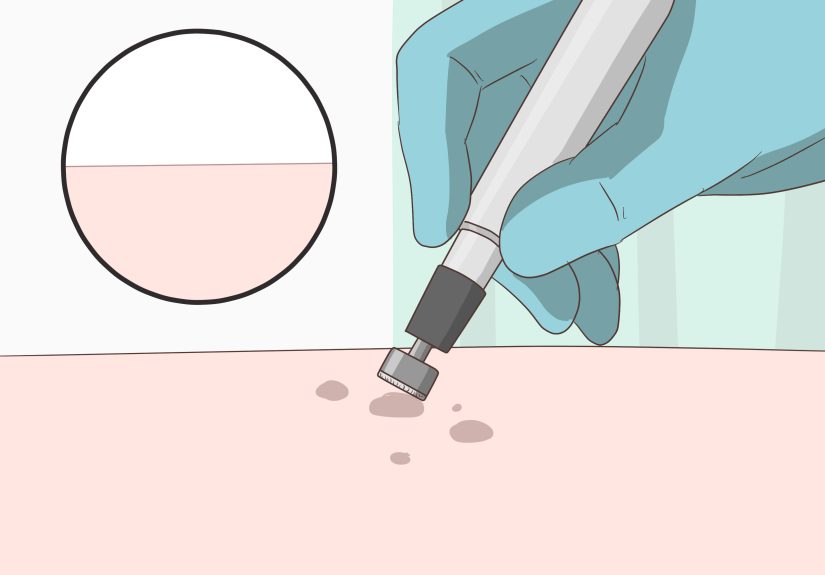
Microneedling uses tiny needles to create controlled micro-injuries that trigger collagen production. It’s commonly used for acne scars and can be an option for many skin tones. Many people need a series of sessions, and improvement is gradual.
Important nuance: if you’re prone to keloids (raised, thick scars that grow beyond the original breakout area), microneedling may not be appropriate. A dermatologist can help you figure that out.
Chemical peels (good for tone + mild texture, especially when supervised)
Chemical peels range from light “freshen the surface” peels to deeper peels with more downtime. They can improve discoloration and some types of superficial scarring. In-office peels are tailored to your skin type and scar pattern.
One safety note you should absolutely not skip: the FDA has warned consumers against using certain chemical peel products without professional supervision due to the risk of serious skin injuries. If a product is marketed like it could strip paint off a wall, it probably belongs nowhere near your back.
Laser resurfacing (powerful, but not one-size-fits-all)
Laser treatments can help resurface scarred skin and stimulate collagen. Some lasers remove layers of skin (ablative), while others heat deeper layers with less surface damage (non-ablative). Results can be impressivebut the best laser choice depends on your scar type, skin tone, and how your skin tends to pigment after inflammation.
Dermabrasion and related resurfacing options
Dermabrasion removes the upper layers of skin to improve texture. It can be useful for certain scars, but it comes with downtime and is typically performed by experienced professionals. It’s not the same thing as scrubbing your back with a loofah until you see your past lives.
Combination plans often work best
Many dermatology plans combine approachesfor example, microneedling plus a peel series, or laser plus targeted topicalsto improve both discoloration and texture. This is especially common when scars vary across the back (some dark marks here, some raised scars there, and a few dents that refuse to move out).
What results to expect
Procedures typically require multiple sessions. Improvement is often noticeable after a few months because collagen remodeling takes time. The best outcomes usually come from a customized plan, not a random menu selection based on what’s trending on social media this week.
Way #3: Target raised scars and stubborn marks with medical scar therapy (the “back scar boss fight”)
The back and shoulders are common places for raised scarshypertrophic scars and keloidsbecause the skin is under tension and may respond aggressively to inflammation. If your “scars” are raised, thick, itchy, or expanding, treat them like raised scars (not like discoloration).
For hypertrophic scars and keloids: flatten first
Dermatologists often use combinations of:
- Corticosteroid injections: injected into raised scars to help flatten and soften them and reduce symptoms like itchiness.
- Silicone gel or silicone sheets: used consistently over time to help reduce raised scar appearance (often months).
- Compression and laser approaches: sometimes used in specialized scar care plans, especially for thicker or symptomatic scars.
- Surgery (select cases) + prevention strategies: some scars can be reduced surgically, but recurrence is a real riskso doctors often pair surgery with other treatments.
This is the area where DIY is most likely to disappoint. Raised scars respond best to consistent, medically guided treatment. Also: if you have a history of keloids, tell your clinician before any procedureyour skin’s “scar personality” matters.
For stubborn discoloration: prescription options and smart supervision
If dark marks are persistent, a clinician may recommend prescription-strength retinoids or other pigment-focused treatments. The goal is to fade marks without triggering more irritation (because irritated skin can darken againlike a petty office email thread that never ends).
If active acne is still happening: treat the source aggressively enough
Sometimes scars won’t improve much because new breakouts keep re-injuring the same zone. In that case, a dermatologist may consider prescription acne therapy (topicals, short courses of oral medications, hormonal options for some patients, or other approaches depending on severity). Stopping new inflammation is what prevents the next wave of scarring.
How to choose the best of the 3 ways (a practical decision guide)
If your back looks mostly “stained” but smooth to the touch
You’re likely dealing with PIH/PIE. Start with Way #1 (at-home fading + sun protection) and give it a consistent 8–12 weeks.
If your back feels unevenpits, dents, or rough texture
You’ll usually get the best results with Way #2 (procedures like microneedling, peels, lasers), while maintaining a gentle version of Way #1 at home.
If your scars are raised, thick, itchy, or growing
That’s the “don’t wing it” category. Go with Way #3 (medical scar therapy). Raised scars often need injections and/or silicone-based therapy, and your provider can help prevent worsening.
Common mistakes that keep back acne scars around longer
- Over-exfoliating: irritation can deepen discoloration and trigger more breakouts.
- Skipping sun protection: UV can “set” dark marks and slow fading.
- Picking and squeezing: turns a small breakout into a long-term souvenir.
- DIY high-strength peels: higher risk of burns, worse pigmentation, and actual new scarring.
- Not treating active acne: new breakouts = new scars.
Conclusion: Your back doesn’t have to stay in “scar highlight reel” mode
Getting rid of back acne scars is less about one miracle product and more about matching the fix to the problem: fade marks with steady at-home care, smooth texture with collagen-stimulating procedures, and flatten raised scars with targeted medical treatment. If you want the fastest, safest resultsespecially for raised scars or deeper textureseeing a dermatologist is often the shortcut that saves you months of trial-and-error.
+: Real-life experiences people have while trying to fade back acne scars
Even when the science is solid, the day-to-day reality of treating back acne scars can feel like a sitcom where your skin is the chaotic side character. Here are a few “this happens all the time” experiences that can make the process easier (and a lot less frustrating).
1) The “I treated my face like royalty and ignored my back like a forgotten attic” phase
A lot of people put their best products on their face, then treat their back with whatever body wash was on sale in a gallon jug. The first big improvement often comes from something boring: using a targeted cleanser consistently and applying a leave-on treatment to the back the same way you would on your face. It’s not glamorous, but it’s effective. (Your back would like a formal apology and a non-greasy lotion.)
2) The “I tried to scrub the scars off” trap
When someone sees texture or dark marks, the instinct is to exfoliate harder. So they buy a rough scrub, a scratchy brush, and maybe a loofah that could sand hardwood floors. Then the back gets red, irritated, andsurprisebreaks out again. The lesson people learn the hard way: irritation feeds the exact cycle you’re trying to stop. Gentle, consistent exfoliation (chemical, not sandpaper) tends to work better than going full “kitchen scouring pad.”
3) The gym-shirt mystery
Many bacne stories have the same plot twist: tight workout clothes + sweat + not changing quickly = breakouts in the same spots, over and over. People often notice scar fading starts faster when they change out of sweaty clothes sooner, shower after workouts when possible, and avoid straps rubbing the same area daily. It’s a small habit change that prevents new inflammationmeaning fewer new marks joining the party.
4) The “I got impatient and added everything” spiral
Back acne scars fade slowly. That’s just biology. Around week two, a lot of people panic and start layering: retinoid on Monday, glycolic acid on Tuesday, random peel pads on Wednesday, a scrub on Thursday, and “why does my back hate me?” on Friday. The reality: most routines work better when they’re simple enough to stick with and gentle enough not to cause constant irritation. People who get the best results usually pick one main active, go slow, moisturize, and protect from sun.
5) The “internet peel” cautionary tale
Some people are tempted by strong at-home chemical peels sold online with dramatic before-and-after photos. What often isn’t shown is the risk: burns, prolonged discoloration, and new scarringespecially if you don’t know the right concentration, timing, aftercare, or whether your skin is prone to hyperpigmentation. The safest experience reports almost always involve supervised in-office treatments or professionally formulated, lower-risk at-home options used carefully and consistently.
6) The “I finally saw a dermatologist and wished I did it sooner” moment
This is a common turning point, especially for people with raised scars or deep texture changes. Once a clinician identifies the scar typePIH vs atrophic vs hypertrophic/keloid the plan becomes clearer. People often say the biggest relief wasn’t just results; it was knowing they were treating the right thing. Because “acne scars” isn’t one problemit’s a category. And your back deserves a strategy, not guesswork.
Bottom line: progress usually looks like small improvements stacking upfewer new breakouts, lighter marks, smoother texture, more confidence. And one day you’ll catch your reflection and think, “Wait… is my back finally minding its business?” That’s the goal.