Table of Contents >> Show >> Hide
- Why Kitchen by Mike Became a Sydney Original
- The Space: Industrial, Australian, and Unapologetically Useful
- The Food: Market-Led, Generous, and Built for Real Life
- Mike McEnearney’s Philosophy: Fine Dining Skills, Casual Dining Soul
- Why the Concept Still Feels Relevant
- The Experience: What It Feels Like to Eat at a Design-Worthy Canteen
- Conclusion
Some restaurants want to impress you with chandeliers, hushed service, and a menu that reads like it has a graduate degree. Kitchen by Mike took a different route. It made a canteen feel cool, made simplicity feel luxurious, and somehow turned the act of pointing at roast chicken and salad into a design-forward dining experience worth crossing Sydney for. That is no small trick.
At its most memorable, Kitchen by Mike was not just a place to eat in Sydney. It was a mood, a philosophy, and a quietly influential answer to a question the hospitality world still wrestles with: what happens when excellent food stops trying so hard to look expensive and starts trying to feel honest instead? The result was a room full of raw wood, enamel plates, seasonal produce, and people lining up happily for lunch as if they had discovered the world’s most stylish school cafeteria. Only this cafeteria had better bread, better lighting, and significantly more self-respect.
For anyone interested in Kitchen by Mike Sydney, Sydney restaurant design, or the rise of produce-led casual dining, the appeal is obvious. The place managed to feel distinctly Australian without waving a flag about it. It was warm but unsentimental, rustic but intentional, relaxed but not lazy. In other words, it looked easy because an enormous amount of thought had gone into making it look easy.
Why Kitchen by Mike Became a Sydney Original
Kitchen by Mike first gained cult status in Rosebery, where chef Mike McEnearney opened the canteen inside the Koskela design warehouse. That location mattered. It was not just a restaurant dropped into a random retail shell; it was part of a larger creative ecosystem shaped by Australian furniture, workshops, makers, and a warehouse atmosphere that gave the whole experience an industrial edge. Instead of fighting the space, the concept leaned into it. The room embraced roller doors, generous scale, communal energy, and a sense that lunch could be both casual and deeply considered.
That original setup helped make Kitchen by Mike feel different from the polished restaurants that dominated aspirational dining. McEnearney had serious kitchen credentials, having worked at Rockpool and in London, but the point here was not to replicate fine dining in disguise. It was to strip things back. Guests queued at a long counter, scanned the daily spread, chose what looked good, paid, and sat down at raw wooden tables. No theatrical cloches. No unnecessary garnish. No menu essay about the emotional journey of a carrot. Just good food, beautifully made, in a room that knew exactly what it was doing.
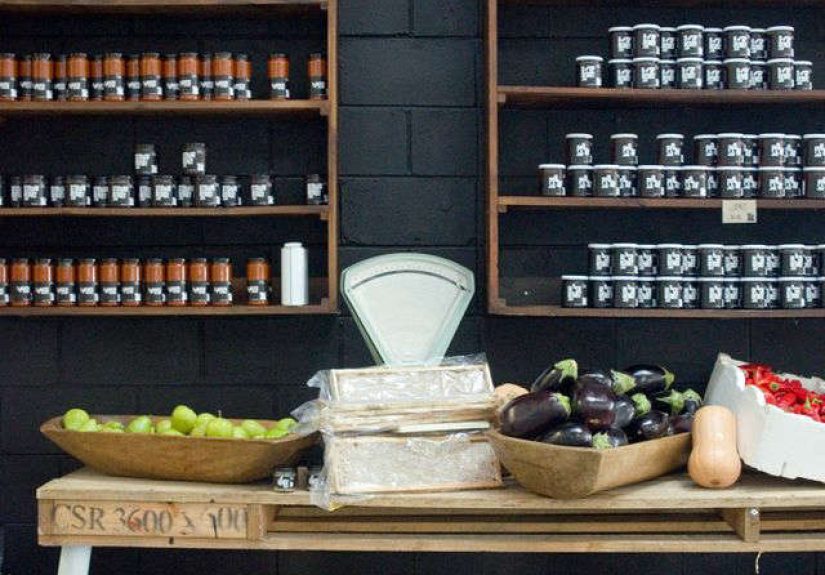
That mix of credibility and informality is what made the brand so powerful. Kitchen by Mike was never anti-design. It was anti-fuss. Those are not the same thing. In fact, the entire venue was built on design choices that made the experience feel grounded: enamel plates, recycled tins holding cutlery, shared tables, reclaimed materials, and an environment that felt more like a smart communal workshop than a restaurant trying to audition for a luxury hotel lobby.
The Space: Industrial, Australian, and Unapologetically Useful
If you want to understand why this was a design-worthy canteen, start with the room. The Rosebery site was tied to Koskela, the Australian design company known for championing local makers, ethical production, and spaces that actually feel lived in. That partnership gave Kitchen by Mike an unusual foundation. The dining room was not decorated to mimic authenticity; it sat inside a broader design environment already committed to materials, craftsmanship, and a distinctly Australian sensibility.
The warehouse setting did a lot of heavy lifting. High ceilings, open volume, and a slightly rough-edged backdrop created the ideal frame for a concept built on abundance rather than delicacy. Platters looked generous there. Bread looked heroic there. A long counter of roasted meats, grain salads, and pastries looked less like retail display and more like a well-organized feast. Even the queue became part of the theater, although “theater” might be too glamorous a word. Call it choreography for hungry grown-ups.
There was also a sustainability-minded logic to the details. Recycled and repurposed elements were part of the visual language, not an afterthought tacked on for marketing purposes. The outdoor decking famously reused materials from an earlier art installation, and the broader Koskela environment leaned into reuse and environmental awareness. That gave Kitchen by Mike something many restaurants still struggle to achieve: values that were visible without becoming preachy.
The best restaurant interiors often make you feel smarter just by sitting in them. Kitchen by Mike did something better. It made you feel calmer. The room invited you to settle in, share a table, and accept that lunch did not need a velvet banquette to feel special. In a city full of beautiful dining rooms, this one stood out because it refused to confuse beauty with polish.
The Food: Market-Led, Generous, and Built for Real Life
The design worked because the food did, too. Kitchen by Mike’s menu philosophy was rooted in what McEnearney found at the market, and that daily flexibility gave the canteen a feeling of motion. This was not a static concept built around a handful of signature dishes frozen in time. It was seasonal, produce-led, and visually generous. Roast meats, bright salads, tartines, wraps, cakes, and loaves of sourdough created a counter that was part lunch service, part edible still life.
That abundance became one of the brand’s signatures. A canteen can be dreary when it looks like food has been portioned by someone who hates joy. Kitchen by Mike took the opposite route. Large platters, colorful salads, and wood-roasted mains turned the service line into the visual center of the room. Ordering with your eyes was not just allowed; it was practically the whole point.
The current menu language still reflects that DNA. Guests choose a main, pair it with salads, add the famous sourdough, and build a lunch that feels flexible rather than fixed. Sample dishes include wood-roasted chicken with oregano and cumin salsa, slow-cooked pork shoulder with chimichurri, grilled mackerel, pumpkin with pomegranate molasses, salted kale with chickpeas and green tahini, and cakes that sound wholesome until you realize you want three of them. That combination of comfort and freshness is central to the brand’s appeal. It is not ascetic health food pretending dessert is a personality flaw. It is real food that happens to have standards.
Just as importantly, the dishes fit the room. A canteen layout demands food that holds up visually and practically. The menu needed to look inviting in trays and on platters, but it also had to survive the reality of lunch: people moving quickly, making choices on instinct, and wanting something satisfying without an instruction manual. Kitchen by Mike understood that. The cooking was thoughtful, but the experience was frictionless.
Simple Does Not Mean Basic
This is where a lot of restaurants get confused. They say they are “simple,” then serve food so under-seasoned and under-imagined that simplicity starts to feel like an excuse. Kitchen by Mike avoided that trap by anchoring simplicity in technique, sourcing, and balance. The food looked casual, but it was backed by a chef who knew exactly what he was doing. That is why roast chicken became memorable, salads became destination dishes, and bread became part of the conversation rather than filler you ignored while waiting for the “real” meal.
In practical SEO terms, this is also why searches for Kitchen by Mike menu, Mike McEnearney restaurant, and best casual dining in Sydney still make sense. The restaurant tapped into an evergreen desire: to eat beautifully without sitting through a performance.
Mike McEnearney’s Philosophy: Fine Dining Skills, Casual Dining Soul
Mike McEnearney’s background explains why Kitchen by Mike landed with such force. He had the fine-dining résumé. He had worked at Rockpool in Sydney and in major London kitchens. But rather than using that experience to build another formal destination restaurant, he redirected it toward something more democratic. That shift matters because it helped legitimize casual dining in a fresh way. Kitchen by Mike was not casual because it lacked ambition. It was casual because ambition had been aimed somewhere more interesting.
That ambition showed up in sourcing, bread, produce, and pace. It also showed up in the belief that “good food available to all-comers” was not a compromise; it was the whole project. The result was a hospitality model where quality was built into the daily flow rather than reserved for people willing to book weeks ahead and whisper over a tasting menu.
Over time, that ethos traveled. Kitchen by Mike expanded beyond the original Rosebery story into later city and airport versions, with the Sydney Airport outpost bringing the same canteen-style spirit to travelers. That sounds almost impossible if you have eaten at airports before, where hope usually goes to buy bottled water and never returns. But Kitchen by Mike’s presence there reinforced the point: this was a format strong enough to move, adapt, and still feel coherent.
Why the Concept Still Feels Relevant
Years later, Kitchen by Mike still feels modern because it anticipated several shifts in dining culture before they became standard talking points. It made sustainability tangible. It made local produce central. It treated lunch as a design experience. It embraced communal dining without turning it into forced intimacy. And it proved that a restaurant could be aesthetically memorable without becoming self-conscious.
That legacy matters in Sydney, where restaurant design is often discussed in terms of drama, waterfront glamour, or high-end polish. Kitchen by Mike offered another model: the stylish canteen. The beautiful utility room. The place where a design-savvy crowd and a hungry office worker could want the same lunch for the same reason. It did not flatten class differences or solve modern life, but for an hour around noon it made good taste feel refreshingly available.
There is also something enduringly appealing about a place that trusts the intelligence of its guests. Kitchen by Mike did not over-explain itself. It presented the food, let the materials speak, and created a structure that encouraged participation. You looked. You chose. You carried your tray. You sat at the table. You became part of the atmosphere rather than just a consumer observing it from a padded chair.
And maybe that is the secret. Kitchen by Mike was never just about aesthetics or food. It was about behavior. It made people eat differently, move differently, and notice their surroundings a little more. That is what design does when it is working properly.
The Experience: What It Feels Like to Eat at a Design-Worthy Canteen
Walking into Kitchen by Mike, you do not get the usual restaurant cues that tell you how to perform. There is no host stand radiating ceremony. No one asks whether you have a reservation as if they are checking you into a diplomatic summit. Instead, the room opens itself up fast. You see the counter, you see the platters, you see the people ahead of you quietly conducting lunch business with their eyes. It is gloriously democratic. Everyone, at least for a moment, becomes a strategist of roast chicken and salad.
The first sensation is visual. The food is laid out with the kind of abundance that makes you suspicious of your own self-control. Golden roasted meats, bright greens, jewel-toned vegetables, slabs of sourdough, cakes waiting patiently for bad decisions to become excellent ones. It feels curated, but not precious. More country feast than urban display case. More “help yourself to something beautiful” than “please admire this concept before eating it.”
Then there is the sound of the place, which is a huge part of the experience. A design warehouse can easily feel echoey or cold, but here the noise tends to register as life rather than chaos. Cutlery clinks, trays slide, conversations bounce across communal tables, and the whole room hums with the energy of people who are genuinely pleased with where they ended up for lunch. The atmosphere says, in the politest possible way, that eating well does not require solemnity.
What makes the experience memorable is the way the design and service model cooperate. You are not seated and separated from the action. You move through it. You inspect the menu by looking directly at the food. You make decisions in real time. You carry your choices to the table and join the wider picture. It is participatory without being exhausting. In an age where “immersive” often means someone wants you to download an app, that kind of analog engagement feels almost luxurious.
Sitting down, you notice the materials. The wood tables are sturdy and unfussy. The enamel plates feel tactile and honest. The recycled tins holding cutlery are practical, yes, but they also reinforce the larger message of the room: things do not need to be delicate to be beautiful. In fact, part of the charm is that nothing seems afraid of use. This is not a museum of tasteful dining objects. It is a working environment designed for appetite.
The food itself tends to land with the same clarity as the room. A roast is a roast, but a good one tastes like someone paid attention. A salad is a salad, but here it comes with texture, acid, herbs, and enough confidence to hold its own. The bread is the sort of detail that reveals whether a place is serious, and Kitchen by Mike has always understood that bread is not a side note. It is part of the identity. Tear into a thick slice with cultured butter and suddenly the whole philosophy makes sense: generosity, restraint, seasonality, pleasure. No lecture required.
And perhaps the most impressive thing is how effortlessly the place flattens the distance between “design people” and “food people.” At Kitchen by Mike, those groups are basically eating the same lunch and loving it for overlapping reasons. One person notices the material palette. Another notices the chimichurri. A third notices both and starts plotting a kitchen renovation they cannot afford. That is the sweet spot. The room works on you whether you arrive for the interiors, the produce, or just the chance to avoid another sad desk lunch.
By the time you leave, what stays with you is not one flashy moment. It is the coherence. The space, the food, the movement, the mood, the values, the pace; all of it hangs together. Kitchen by Mike makes a convincing case that the humble canteen can be elevated without becoming ridiculous. That may be its smartest design move of all.
Conclusion
Kitchen by Mike earned its reputation because it understood something many restaurants miss: design is not decoration, and casual dining is not the absence of standards. In Sydney, it became a benchmark for how a canteen could be beautiful, how a room could be useful and still memorable, and how a chef with serious credentials could build something generous instead of grandiose. The original Rosebery setting inside Koskela gave the concept its visual backbone, but it was the total experience, seasonal food, communal rhythm, honest materials, and quietly intelligent design, that made it stick.
If you are looking for the essence of Kitchen by Mike in Sydney, it comes down to this: it made everyday eating feel artful without ever becoming absurd. That is harder than it looks. Most places manage one side of that equation and trip over the other. Kitchen by Mike managed both, with good bread in one hand and excellent taste in the other.