Table of Contents >> Show >> Hide
- The Craftsman Bungalow: Small House, Big Personality
- Modernizing Without Erasing the Original Melody
- Raising Ceilings, Adding Skylights, and Letting the House Breathe
- Interior Design That Plays in the Right Key
- The Powder Room: A Small Space Deserves a Solo
- Designing for a Composer: Flow, Quiet, and Creative Energy
- Kitchen and Dining: The Social Rhythm of the Bungalow
- Furniture Choices: Collected, Not Decorated to Death
- Outdoor Connection: The California Bungalow Advantage
- Lessons Homeowners Can Steal From This Bungalow Upgrade
- Experience Notes: Living With a Craftsman Bungalow Upgrade
- Conclusion: A Historic Home With a Modern Chorus
Note: This article is written as an original, publication-ready feature inspired by real Craftsman bungalow renovation principles, historic home preservation guidance, and documented design coverage of Brian Paquette’s Los Feliz project for a Hollywood composer.
Some houses are renovated. Others are tuned. A Craftsman bungalow upgraded for a Hollywood composer belongs firmly in the second category. It is not merely a matter of knocking down a few walls, adding stylish furniture, and pretending the old house never had creaky floors, stubborn corners, or opinions of its own. A good bungalow upgrade listens first. It hears the rhythm of exposed beams, the pause between rooms, the warm bass note of wood trim, and the bright little cymbal crash of daylight through a skylight.
That is what makes the story of this Craftsman house so compelling. The home was not treated like a blank white box waiting for a designer to impose a personality. Instead, it was approached like a score: structured, emotional, layered, and full of transitions. The homeowner, a Hollywood composer, already understood the value of flow. In music, a theme must move naturally from one section to the next. In a bungalow, the living room, dining area, kitchen, studio corner, and outdoor spaces need the same kind of graceful movement.
The result is a lesson in how to modernize a historic Craftsman bungalow without sanding away its soul. The house gains openness, light, comfort, and sophistication, yet it still feels grounded in the early twentieth-century spirit of honest materials and human-scaled design. In other words, it gets a glow-up without becoming one of those renovations that looks as if it was assembled by a very expensive refrigerator.
The Craftsman Bungalow: Small House, Big Personality
Craftsman homes became popular in the United States in the early 1900s as part of a broader reaction against overly ornate Victorian design. Instead of fussy decoration, the Craftsman movement celebrated simplicity, structure, natural materials, and visible workmanship. A typical Craftsman bungalow often includes a low-pitched roof, wide eaves, exposed rafters, a welcoming front porch, built-in cabinetry, wood floors, and a fireplace that acts like the emotional headquarters of the home.
These houses are especially beloved in California, where the indoor-outdoor lifestyle fits the bungalow beautifully. A porch is not just a porch; it is a handshake with the neighborhood. A bank of windows is not just a source of light; it is a reminder that the garden, the sky, and the afternoon breeze are part of daily life. In Los Angeles, where creative careers often blur the line between working and living, a Craftsman bungalow can become both sanctuary and studio.
That is why the Hollywood composer’s bungalow makes such an interesting case study. A composer needs quiet, inspiration, and a place to entertain. The home must be private enough for concentration but open enough for friends, collaborators, and the occasional dinner party where someone says, “Let’s just play one quick piece,” and suddenly it is midnight.
Modernizing Without Erasing the Original Melody
The smartest historic renovations do not ask, “How do we make this old house look new?” They ask, “How do we make this old house work beautifully now?” That difference matters. A Craftsman bungalow can usually accept modern updates, but it punishes careless ones. Remove too much woodwork, flatten too many textures, or replace every period detail with anonymous modern finishes, and the house starts to feel like it has forgotten its own name.
For this kind of bungalow upgrade, the guiding idea is balance. Preserve the architectural features that give the house character, then introduce modern comfort where it improves daily life. Original-style window frames, doors, trim, built-ins, and visible structural elements should be protected whenever possible. Kitchens, bathrooms, lighting, mechanical systems, and storage can be updated with greater freedom, as long as they respect the overall language of the home.
In the Hollywood composer’s Craftsman house, the open floor plan is a major move. Traditional bungalows often have defined rooms, but they also use wide openings, colonnades, and visual connections to create a sense of flow. A modern open layout can work if it keeps some sense of proportion and rhythm. The goal is not to turn the house into a warehouse loft. The goal is to let rooms breathe while still giving each area its own purpose.
Raising Ceilings, Adding Skylights, and Letting the House Breathe
One of the most effective upgrades in a small or medium-sized bungalow is improving the quality of light. Many older homes feel cramped not because they are truly tiny, but because ceilings are low, walls are dark, windows are underused, and rooms have been chopped up by decades of awkward remodeling. Raise a ceiling where structurally appropriate, add skylights in the right place, and suddenly the house exhales.
Skylights are especially useful in Los Angeles bungalows because they bring in daylight without sacrificing wall space or privacy. In a composer’s home, that matters. A studio or writing area may need controlled light, while living spaces benefit from a more generous glow. The trick is to avoid making every room equally bright. Good design, like good music, needs contrast. A sunlit kitchen feels better when it opens toward a quieter, moodier living room. A bright hallway becomes more dramatic when it leads into a warm den with layered lamps and deeper tones.
Exposed beams can also help bridge old and new. They acknowledge the structure of the house while adding a strong visual line overhead. In a Craftsman renovation, beams should feel intentional rather than decorative afterthoughts. They are the architectural equivalent of a strong bass line: you may not always notice them first, but they hold everything together.
Interior Design That Plays in the Right Key
A Hollywood composer’s home should not look like a hotel lobby, even a very good one. It needs personality, texture, and a little creative tension. That is where the interior design becomes crucial. The most successful Craftsman interiors combine clean-lined modern furniture with natural materials, vintage pieces, woven textures, and art that feels collected rather than ordered in one panicked weekend.
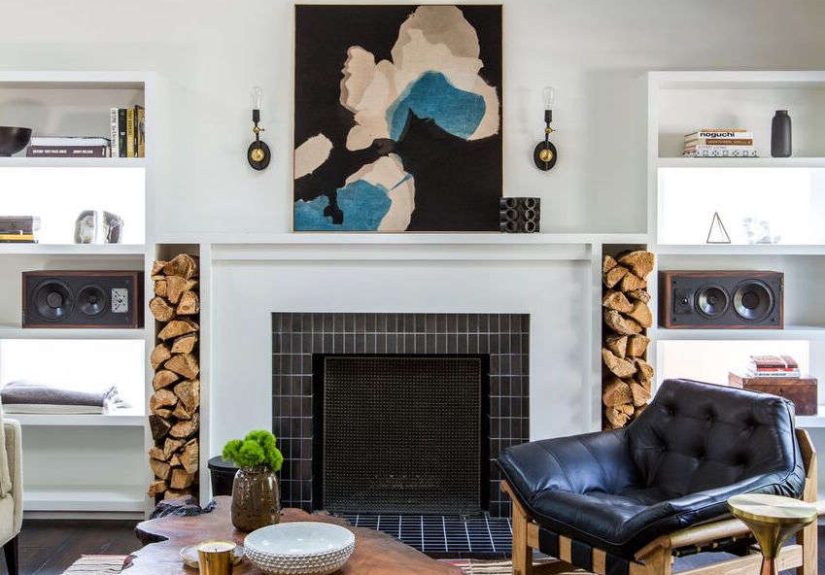
Oversize sofas can define a living area in an open plan, especially when walls have been removed. A vintage rug brings history and pattern. A live-edge wood table adds an organic note without becoming rustic theater. Brass, leather, linen, wool, ceramic tile, and dark metal can all work well because they age gracefully. Craftsman homes do not need everything to be shiny and new. In fact, they usually look better when a few surfaces seem ready to collect stories.
The palette should also respect the architecture. Earthy neutrals, warm whites, soft blacks, natural browns, muted greens, clay tones, and deep blues tend to suit Craftsman bungalows. That does not mean the house must dress like a national park brochure. A bold powder room, graphic tile, sculptural lighting, or modern artwork can add energy. The secret is restraint. One confident design moment beats twelve loud ones fighting in the hallway.
The Powder Room: A Small Space Deserves a Solo
Powder rooms are ideal places for design drama because they are small, self-contained, and visited briefly. A bungalow that stays calm and cohesive everywhere else can afford one room that says, “Yes, I own a velvet jacket.” In the composer’s Craftsman upgrade, the powder room becomes a moment of bold contrast through rich materials and graphic pattern.
This is a smart strategy for homeowners renovating historic houses. If you love daring tile, dark paint, sculptural lighting, or an unusual vanity, try it in a compact room first. The main living spaces can remain warm and timeless, while the powder room carries the high note. Guests will remember it, and you will not have to stare at a maximalist wall treatment every morning before coffee.
For a Craftsman bungalow, suitable powder room upgrades might include cement tile, handmade ceramic tile, aged brass fixtures, a stone sink, dark plaster walls, or a mirror with a simple but strong silhouette. The space should feel special, not random. Think encore, not karaoke.
Designing for a Composer: Flow, Quiet, and Creative Energy
A home for a composer has unusual needs. It must support focus, but it cannot feel sterile. It must allow sound, but also control it. It must welcome collaborators, but still protect the private rituals of making music. While not every homeowner is writing film scores, many people now use their homes for creative work, remote work, study, recording, or serious hobbies. That makes this bungalow upgrade relevant far beyond Hollywood.
Acoustic comfort begins with materials. Rugs, upholstered furniture, curtains, bookshelves, wall hangings, and wood surfaces can soften sound in a room. A completely hard, echoing open plan may photograph beautifully, but it can be exhausting to live in. In a musician’s house, layered textures help create rooms that sound as good as they look. Even a simple reading corner with a rug, a lounge chair, and full bookshelves can become a quiet place to think through a melody.
The floor plan should also create zones. An open kitchen and living area may serve entertaining, while a tucked-away studio or den supports concentration. The best creative homes include both expansion and retreat. You need the big table where ideas are shared, and the smaller room where ideas are wrestled into shape.
Kitchen and Dining: The Social Rhythm of the Bungalow
In many Craftsman bungalows, the dining room was originally a defined space, often with built-ins, wainscoting, or a visual relationship to the living room. Modern living tends to pull the kitchen, dining, and lounge areas closer together. This can be wonderful if handled carefully. The kitchen should feel connected, but it should not visually dominate the entire house with stainless steel bravado.
Natural wood cabinets, painted Shaker-style doors, stone or butcher-block counters, simple hardware, and warm lighting can help a modern kitchen sit comfortably inside a Craftsman shell. Open shelving should be used thoughtfully; it is charming until it becomes a public exhibition of mismatched mugs and emotional support spice jars. Built-in storage is usually the better Craftsman-friendly solution.
For dining, a wood table with comfortable chairs keeps the mood relaxed. Lighting above the table should be strong enough to anchor the space but not so theatrical that dinner guests feel they are being interrogated. A pendant, lantern, or sculptural fixture with brass, blackened metal, ceramic, or linen details can connect old-house warmth with modern style.
Furniture Choices: Collected, Not Decorated to Death
The phrase “collected over time” appears often in good interior design, and for good reason. Historic homes look strange when every item appears to have arrived on the same delivery truck. A Craftsman bungalow wants layers: a vintage rug, a contemporary sofa, a handmade side table, framed artwork, a reading lamp, a stack of books, a ceramic bowl from a trip, and maybe one odd little object that nobody understands but everybody asks about.
For the Hollywood composer’s house, this collected feeling is essential. A creative person’s home should reveal curiosity. It should have enough polish to feel intentional and enough imperfection to feel alive. The balance of modern lines and organic elements keeps the rooms from becoming either too precious or too casual.
Scale is another important lesson. Bungalows are often modest in size, but that does not mean every piece of furniture must be tiny. A few generous pieces can make a room feel calmer than many small ones. Two substantial sofas may define a living area better than a clutter of chairs. A large rug can unify the seating. A strong coffee table can give the room a center. Small house design is not about using small everything; it is about choosing fewer, better things.
Outdoor Connection: The California Bungalow Advantage
A Craftsman bungalow’s relationship to the outdoors is one of its greatest strengths. Porches, patios, pergolas, French doors, garden paths, and shaded seating areas extend the living space without requiring a huge addition. In California, where the climate often rewards indoor-outdoor living, this is not just pretty; it is practical.
A composer’s home benefits from these transitions. A short walk into the garden can reset the mind. A porch can become a place for coffee, calls, or late-night decompression after hours of work. Outdoor lighting should be soft and layered, not stadium-level. Planting should feel natural rather than overly manicured: grasses, climbing vines, citrus, olive, lavender, rosemary, native plants, and textured shrubs all suit the relaxed Craftsman mood.
Lessons Homeowners Can Steal From This Bungalow Upgrade
1. Preserve What Gives the House Its Voice
Before removing anything, identify the home’s character-defining features. In a Craftsman bungalow, that may include wood trim, doors, windows, built-ins, porch columns, rafters, floors, fireplaces, and room proportions. These are not obstacles to design. They are the good parts.
2. Use Modern Updates Where They Improve Life
New lighting, better storage, improved bathrooms, efficient systems, and a more functional kitchen can dramatically improve an old house. The point is not to live like it is 1910. The point is to let 1910 and today have a civil conversation.
3. Create Flow Without Making Everything One Room
Open plans can be beautiful, but defined zones are still important. Use rugs, beams, lighting, furniture placement, partial walls, and changes in ceiling height to give each area a role.
4. Let Materials Age Gracefully
Brass, wood, stone, leather, wool, linen, and ceramic tile develop character over time. That makes them especially suitable for a Craftsman house. Avoid finishes that look perfect only on installation day and tragic by month six.
5. Add One or Two Brave Moments
A bold powder room, dramatic light fixture, oversized artwork, or unexpected tile can keep a historic home from feeling like a museum. The key is to choose moments carefully and give them space to shine.
Experience Notes: Living With a Craftsman Bungalow Upgrade
Anyone who has lived in or renovated an older bungalow knows that charm is not always polite. It creaks. It surprises you. It hides strange previous repairs behind walls. It may offer one closet where a modern family needs four. It may have windows that rattle during a windy night and floors that slope just enough to make a marble roll with purpose. But that is also why these houses are so loved. They feel human.
The best experience of upgrading a Craftsman bungalow comes from learning to work with the house instead of against it. For example, a small living room may not need expansion if the furniture is scaled correctly and the lighting is improved. A dark hallway may not need demolition if a skylight, transom, or better paint color can solve the problem. An old built-in may look awkward at first, but after restoration it can become the feature guests admire most. Many homeowners discover that the “problem areas” are often design invitations in disguise.
In a composer’s home, this experience becomes even more layered. Music changes the way a house is used. A living room is not just a place for a sofa; it may become an informal listening room. A dining table may host friends one night and sheet music the next morning. A quiet corner may become the place where a theme finally makes sense. This kind of home needs flexibility, but it also needs atmosphere. Creativity rarely thrives in rooms that feel aggressively empty. It likes texture, memory, and a few beautiful distractions.
One practical lesson is to invest in lighting early. Older bungalows can become magical at night when lighting is layered properly. Ceiling fixtures alone are not enough. Table lamps, sconces, picture lights, under-cabinet lighting, and dimmers create moods that support different activities. A composer might need bright task lighting in a work area, soft lamps for listening, and warm pendant lighting for dinners. The same principle applies to any homeowner who wants rooms to adapt throughout the day.
Another lesson is to be patient with furnishing. A Craftsman house does not need to be finished instantly. In fact, it is often better when it is not. Start with essential pieces: a comfortable sofa, a solid table, quality lighting, a rug that fits, and storage that solves real problems. Then let art, books, textiles, and objects arrive over time. The house will feel more personal and less staged.
Finally, remember that a bungalow upgrade should make daily rituals better. Morning coffee on the porch. A quiet hour in the studio. Dinner with friends. Reading beside the fireplace. Opening a window after rain. These are not minor details; they are the reason the renovation exists. A successful Craftsman upgrade does not simply improve property value. It improves the tempo of ordinary life.
Conclusion: A Historic Home With a Modern Chorus
Bungalow Upgrade: A Craftsman House Orchestrated for a Hollywood Composer is more than a stylish house story. It is a blueprint for thoughtful renovation. The project shows how an old bungalow can gain openness, daylight, comfort, and modern design while keeping the warmth that made Craftsman homes beloved in the first place.
The magic lies in contrast: old wood and modern lines, open space and cozy corners, quiet rooms and social areas, preserved details and bold new gestures. Like a memorable film score, the home works because every element supports the mood. Nothing feels random. Nothing shouts over the rest. The finished bungalow becomes a place to recharge, entertain, create, and live with a little more rhythm.