Table of Contents >> Show >> Hide
- What “Dambusting” Really Means (and Why R/C Folks Love It)
- R/C Dambusting Is a Reenactment, Not a Re-creation
- The Physics That Makes It Fun (and Humbling)
- Pick Your “R/C Dambusting” Format
- Safety and Rules: The Part That Keeps the Hobby Alive
- Designing the “Bouncer” Without Being a Menace
- How to Make It Look Like “Dambusting” (Without Flying Like a Maniac)
- Best Practices for a “Dambusting Day” With Friends
- Common Problems (and the Slightly Annoying Solutions)
- Why This Niche Is Worth Your Time
- Field Notes: Experiences That Come With the Splash Life (Extra )
- Conclusion
Let’s get one thing out of the way: when most people hear “dambusting,” they picture grainy WWII footage,
a four-engine bomber skimming a reservoir like it’s late for a dentist appointment, and a spinning cylinder
skipping across the water with the confidence of a perfectly thrown stone.
In other words: history, drama, and physics doing a group project together.
Now fast-forward to the present, where you and your radio-control transmitter are staring at a calm pond
thinking, “I could absolutely recreate that… responsibly… with foam… and maybe snacks.”
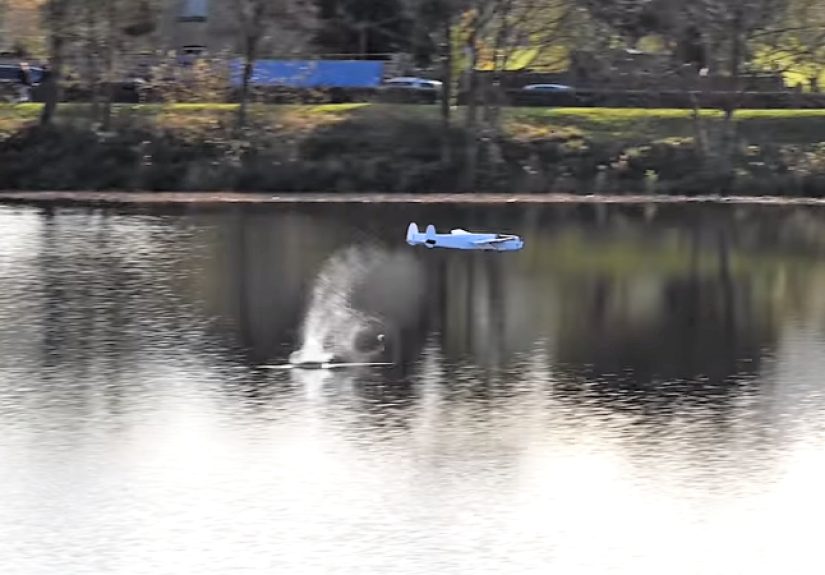
That is the heart of Dambusting, R/C Style: a hobby mash-up of scale modeling, flight skill,
and splashy problem-solvingdone safely, legally, and without turning your weekend into a headline.
What “Dambusting” Really Means (and Why R/C Folks Love It)
The original “Dambusters” raidOperation Chastisewas built around an idea that sounded ridiculous until it worked:
a specially designed munition would be spun backwards, released low and fast, bounce across the water,
hop over defensive nets, and then sink against the dam wall to detonate at depth.
It’s one of those historical moments where engineering doesn’t just solve a problemit struts into the room
wearing a cape.
For R/C builders and pilots, the appeal is obvious:
it’s an iconic mission profile (low, steady, precise),
it involves a unique “payload behavior” (skipping on water),
and it rewards both craftsmanship and stick time.
Plus, if you’re the kind of person who gets excited about hinge gaps and CG placement,
you’re probably also the kind of person who enjoys saying “hydrodynamics” out loud for no reason.
R/C Dambusting Is a Reenactment, Not a Re-creation
A responsible R/C “dambusting” setup is not about weaponsfull stop.
Think of it as a historical-inspired accuracy challenge:
Can you fly a straight, stable run?
Can you hit a target zone on the water?
Can you design a harmless, floating, recoverable “bouncer” that behaves predictably?
The modern hobby version is best described as scale-style flight meets water-skipping science.
Your “dam” is a benign target (often a floating line, a marked zone, or a simple backdrop),
and your “bouncing bomb” is a lightweight, non-harmful prop that’s easy to retrieve.
The goal is precision and spectaclenot damage.
The only thing you should be “busting” is your personal best.
The Physics That Makes It Fun (and Humbling)
Skipping across water works because the object hits at a shallow angle and generates lift-like force during impact.
Spin helps stabilize the object, keeping it from immediately tumbling, digging in, and performing an
unplanned deep-sea exploration.
In stone skipping research and popular explanations, the “sweet spot” is often described as a modest impact angle,
with spin acting like a stabilizer that buys you more consistent bounces.
In R/C dambusting, your “bouncer” is typically not a perfect stone.
That’s actually good news: you can design for stability.
A cylindrical foam “roller” or disc-like pod tends to behave more predictably than a weirdly shaped object
you found in the garage and named “Science.”
Why the original idea used backspin (and what that means for hobby scale)
In the historic concept, backspin wasn’t a party trickit helped the device maintain attitude and skip
in a controlled way, then “bite” and settle near the target.
In hobby terms, you’re not trying to replicate destructive effects.
You’re trying to recreate the motion: clean release, stable skip, and a satisfying splash pattern
that makes spectators say, “Okay, that was actually awesome.”
Pick Your “R/C Dambusting” Format
There’s no single correct way to do this. The best format is the one that matches your skill level,
your local flying site options, and your safety margin (which should always be generous).
Here are the most common approaches that stay on the fun side of the line:
1) The warbird-inspired flyby (scale vibes, modern safety)
This is the classic: a bomber-style model (often inspired by WWII silhouettes) makes a low, steady run over water,
then releases a harmless “bouncer” aimed at a target zone.
The challenge is disciplinekeeping the airplane stable, wings level, and speed consistent.
The release moment should feel deliberate, not like you sneezed and chaos happened.
2) The seaplane or amphibian approach (practical and forgiving)
Amphibians and floatplanes can be a great choice because they tolerate water environments naturally.
You can practice approach lines, flare behavior near water, and retrieval strategies with less stress.
You also get the bonus of looking like a bush pilot on a mission of extremely serious splash science.
3) The boat-based “skip” demo (best for small spaces)
If local rules or geography make flight difficult, an R/C boat can tow or launch a floating “skipper” across a
controlled lane. It’s less historically “accurate,” but it’s often safer and easier to manage in tight environments.
You still get to explore skipping behavior without adding the variable of flight.
Safety and Rules: The Part That Keeps the Hobby Alive
If you’re flying anything remotely aircraft-like in the United Statesespecially around wateryou need to treat
safety as part of the build, not an afterthought.
Recreational flyers are expected to follow FAA guidance, keep operations safe, maintain visual line of sight,
and comply with the rules that apply to recreational operations.
If you’re flying under the recreational exception, you also need to have passed the TRUST safety test and be able
to show proof if asked.
Model aviation safety guidelines (including community-based organization guidance) emphasize basics that matter
even more over water: maintain control, avoid people, fly in appropriate areas, and don’t do reckless stunts.
Translation: the goal is a clean runnot a viral clip titled “WATCH THIS GUY LEARN ABOUT CONSEQUENCES.”
Dropping objects: the “don’t create a hazard” principle
Even when you’re not operating commercially, the common safety standard is simple:
don’t drop anything in a way that creates a hazard to people or property.
In FAA small UAS rules, the language is explicit about not dropping objects in a manner that creates undue hazard.
Hobbyists should adopt that mindset as a baseline: your “bouncer” should be lightweight, soft, and designed to
fall safely if something goes wrong.
Practical safety habits that experienced pilots swear by
- Choose the right site: a sanctioned model flying field or a private, permitted area beats “that random park pond” every time.
- Build a retrieval plan: if you can’t easily recover your bouncer, you’re creating litter (and enemies).
- Keep spectators behind the line: dambusting is a show; shows need boundaries.
- Use a spotter: water environments can hide distance cues, and a second set of eyes is priceless.
- Never aim at structures: your “dam” is a target marker, not an actual dam, dock, or anything you don’t own.
Designing the “Bouncer” Without Being a Menace
The hobby version of a bouncing device should be:
soft, floatable, visible, and recoverable.
The safest builds are often foam-based with bright coloring, designed to land gently if released early.
Water can be deceptive; a small amount of mass becomes a big deal if it falls from height.
So keep it light, keep it soft, and keep your ego out of the materials list.
Common safe materials and concepts
- Closed-cell foam cylinder: floats, resists waterlogging, easy to spot.
- Soft outer wrap: adds durability and reduces “bonk potential.”
- High-visibility finish: because “it’s somewhere out there” is not a retrieval strategy.
- Biodegradable mindset: even if you retrieve everything, assume you might miss one and design accordingly.
Note: some hobbyists use commercially available payload-release devices intended for safe recreational use
(for example, towing or dropping lightweight items).
If you go this route, choose products designed for hobby aircraft, follow manufacturer guidance,
and keep your “payload” boring on purpose.
Boring is good. Boring is safe. Boring keeps the park ranger from learning your name.
How to Make It Look Like “Dambusting” (Without Flying Like a Maniac)
The visual magic of dambusting comes from consistency:
a straight approach line, steady altitude, steady speed, and a clean release point.
In the WWII story, success depended on precise parameters, training, and repeatability.
In the R/C version, the same logic appliesminus the life-and-death stakes, thankfully.
Dial in the run: repeatability beats bravery
A strong R/C dambusting pass looks almost boring right up until the skip happens.
The airplane should track smoothly, with small corrections.
If you’re fighting the model, you’re not ready for a release pass.
Practice the run first. Release later.
Your future self will thank you, and your airplane will stop giving you that “please don’t” energy.
Build a target that rewards accuracy
Instead of any real structure, create a harmless target zone:
a floating lane made of pool noodles,
a buoy line,
or a marked rectangle on the water surface (with permission and retrieval tools).
The best targets are those that are easy to see from the air and easy to reset.
Make the scoring about landing in a zone, not striking anything solid.
Best Practices for a “Dambusting Day” With Friends
If you’re running this as a club activity (which is where it really shines), treat it like an event:
pilot briefing, a defined flight line, one aircraft in the run at a time, and a dedicated retrieval crew.
Water adds complexity, and complexity loves organization.
A simple, safe event format
- Briefing: site boundaries, emergency procedures, who calls “abort,” and where spectators stand.
- Practice passes: no releases until pilots demonstrate stable approaches.
- Release window: a clearly defined lane where releases are permitted.
- Retrieval pause: stop flight operations during retrieval so everyone stays focused.
- Debrief: what worked, what drifted, what surprised you (it’s usually wind).
Common Problems (and the Slightly Annoying Solutions)
Problem: The bouncer “dunks” instead of skips
This usually means the release was too steep, too slow, or the bouncer isn’t stable in contact with water.
In hobby terms: reduce ambition, increase consistency.
A shallower approach and a more stable shape often beats “just send it.”
Problem: The airplane porpoises near the water
Many pilots unconsciously chase altitude over reflective surfaces.
Use a spotter, fly at a conservative height, and focus on a distant reference point on the far shore.
If you don’t have reliable depth cues, you don’t have reliable margins.
Problem: Retrieval becomes a soap opera
If you need a kayak, a telescope, and an emotional support friend to recover one bouncer,
your design needs a rethink.
Make it bright, make it float, and plan a recovery method before the first flight.
The only thing worse than losing a bouncer is realizing it drifted into the reeds to start a new life.
Why This Niche Is Worth Your Time
Dambusting, R/C Style is a rare hobby challenge that blends:
history (a legendary mission),
engineering (shape and stability),
pilot skill (precision flying),
and community (it’s ten times better with friends).
It’s not just “drop thing, make splash.”
It’s “build well, fly well, learn a little, laugh a lot.”
And honestly? It’s refreshing to have an R/C activity where the coolest flex isn’t raw speed or aerobatics,
but calm controlthe kind that makes spectators lean in and whisper, “He’s going to do it… he’s going to do it…”
followed by a satisfying skip-skip-skip and a cheer that sounds suspiciously like adults having pure joy.
Field Notes: Experiences That Come With the Splash Life (Extra )
Anyone who’s tried a “dambusting day” will tell you the first lesson arrives before the first bounce:
water makes everything feel closer than it is, and farther than it should be, at the same time.
You line up your pass, the model looks perfect, and then your spotter says, “You’re drifting left,”
which is a polite way of saying, “Your aircraft is actively negotiating its own treaty with the wind.”
The fix is boringpractice passes, consistent throttle, and a reference point on the far bankbut the
feeling of nailing that straight line is ridiculously satisfying.
Then comes the “bouncer personality test.” Some bouncers skip like they were born for it. Others behave like a
dropped sandwich: one sad flop, then silence. Builders tend to go through a predictable emotional cycle:
confidence (“It’s basically a stone, how hard can it be?”),
confusion (“Why did it cartwheel into Neptune?”),
experimentation (“What if I tweak the shape just a little?”),
and finally wisdom (“Okay, lighter and more stable is better, and I should stop naming prototypes.”).
The best days end with a small pile of retired bouncers on the shoreproof that science is mostly
learning what not to do.
Group events add their own flavor. There’s always one pilot who makes it look effortless, which is equal parts
inspiring and annoying (in the friendly way). There’s also the person who brings the “perfect” scale bomber
and then refuses to fly until the lighting is just rightbecause apparently we’re doing aviation and photography
therapy at the same time. Clubs quickly learn that a retrieval crew is the difference between a fun afternoon and
an argument with a cattail marsh. The moment you pause flight ops so someone can recover a bouncer safely,
the whole event feels more professionallike a tiny airshow with fewer hotdogs and more nerd joy.
Wind, of course, is the uninvited guest. It will show up early, steal your snacks, and rearrange your target lane.
The smart move is to treat wind like part of the game: adjust the run-in angle, widen the scoring zone, and call
“no release” when conditions don’t cooperate. Experienced pilots will tell you the hardest skill isn’t flying the pass;
it’s deciding not to attempt the pass. The bravest thing you can do in R/C is say, “Not today,”
and then live to fly tomorrow with all your parts still attached.
Finally, there’s the moment that keeps people coming back: the clean release and the first skip.
It’s not loud. It’s not destructive. It’s just physics and control aligning for two seconds in a way that feels
oddly cinematic. People cheer, someone inevitably says “nailed it,” and you suddenly understand why this niche exists.
It’s a respectful nod to history, a playful engineering challenge, and a reminder that “serious hobbies” can still be
gloriously silly. If you end the day tired, slightly sunburned, and laughing about the bouncer that skipped perfectly
and then bonked into a lily pad like it was parking, congratulationsyou did dambusting the right way.
Conclusion
If you want a hobby project with real skill-building, real history behind it, and a big payoff in pure spectacle,
Dambusting, R/C Style is a winnerprovided you keep it safe, legal, and intentionally harmless.
Fly smart, build light, choose the right site, and focus on precision over bravado.
The best “dambusters” in R/C aren’t the loudest; they’re the most controlled.