Table of Contents >> Show >> Hide
- What Is Guitar Action, Exactly?
- What Actually Changes the Action?
- Before You Adjust Anything
- Easy Ways to Adjust the Action on an Electric Guitar
- Easy Ways to Adjust the Action on an Acoustic Guitar
- Good Starting Action Measurements
- Quick Diagnosis Guide
- Mistakes to Avoid
- When You Should Take the Guitar to a Pro
- Real-World Experience: What Adjusting Guitar Action Actually Feels Like
- Conclusion
If your guitar feels like you are wrestling a barbed-wire fence every time you play a G chord, there is a good chance the action is too high. On the flip side, if your strings buzz like an angry wasp convention, the action may be too low. Either way, your guitar is trying to tell you something, and thankfully, it is usually not speaking in riddles.
Adjusting guitar action is one of the most effective ways to improve playability, comfort, and even tuning stability. The best part is that some action tweaks are genuinely simple, especially on electric guitars. You do not need a wizard robe, a secret workshop, or a luthier’s beard. You just need patience, the correct tool, and the discipline to make small changes instead of one heroic turn that creates twelve new problems.
In this guide, you will learn what guitar action is, what causes it to change, the easiest ways to adjust it on electric and acoustic guitars, and when to stop being brave and call a professional. We will also cover common mistakes, good starting measurements, and the real-life experience of dialing in a setup that actually makes you want to keep practicing.
What Is Guitar Action, Exactly?
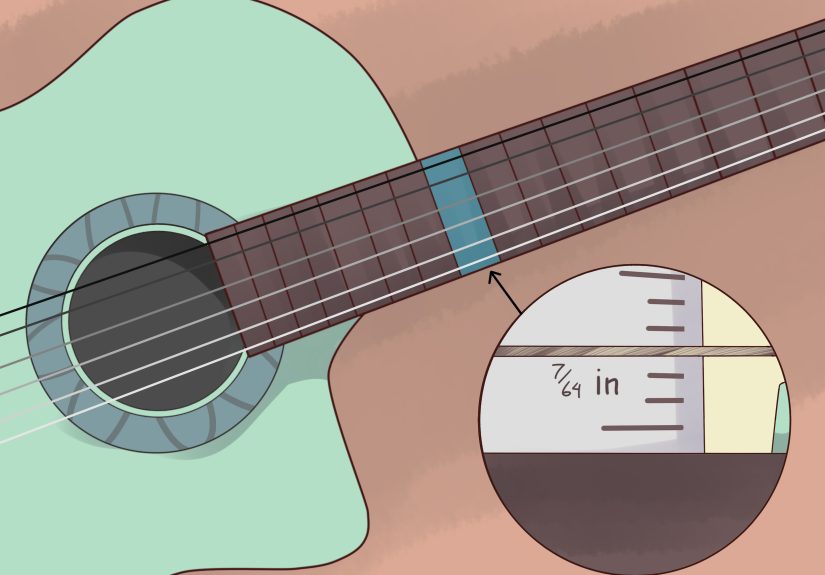
Guitar action is the height of the strings above the frets. Most players and techs measure it at the 12th fret because that gives a reliable snapshot of how the instrument feels across the neck.
High action usually means the guitar feels stiffer and harder to fret. Chords can feel like finger workouts, bends become more demanding, and notes may go sharp if you have to press too hard. Low action feels fast and slick, but if you go too low, buzzing shows up and your guitar starts sounding like it is auditioning for a percussion ensemble.
The trick is not finding the lowest possible action. It is finding the right action for your guitar, your hands, your strings, and your playing style. A jazz player with a light touch may want something lower than a heavy strummer who attacks the strings like they owe him money.
What Actually Changes the Action?
1. Neck Relief
The neck is not supposed to be perfectly, laser-beam straight in every case. Most guitars work best with a tiny amount of forward bow, called relief. Too much relief makes the action feel high, especially around the middle of the neck. Too little relief, or back-bow, often causes fret buzz in the lower positions.
2. Bridge or Saddle Height
On many electric guitars, action is adjusted right at the bridge saddles. That is the easy button. On acoustic guitars, action is often changed by altering saddle height, which can be more involved because you are physically removing material or replacing parts.
3. Nut Slot Height
The nut affects how the guitar feels near the first few frets. If the nut slots are too high, cowboy chords feel oddly hard and notes near the first fret can sound sharp. If the slots are too low, open strings buzz. Nut work is small, precise, and very easy to mess up. In guitar terms, this is one of those “measure twice, file once, panic forever” areas.
4. Humidity, Temperature, and String Gauge
Wood moves. Acoustic guitars especially react to seasonal humidity changes. In wetter conditions, tops can swell and action can rise. In dry conditions, the instrument can shift in the opposite direction. Changing to heavier or lighter strings also changes tension, which can alter neck relief and action. Translation: sometimes your guitar is not broken, it is just having weather feelings.
Before You Adjust Anything
Do these first:
- Tune the guitar to the pitch you actually use.
- Use the correct wrench or screwdriver for your hardware.
- Work in good light on a stable surface.
- Measure the current action before changing anything.
- Make one adjustment at a time.
This matters because setup work is a chain reaction. If you change relief, action changes. If you change action, intonation may shift. If you do three things at once, you may not know which one fixed the problem, or which one caused it.
Easy Ways to Adjust the Action on an Electric Guitar
Measure First, Guess Never
Use a ruler or string action gauge and measure at the 12th fret from the top of the fret to the bottom of the string. Check both the low E and high E. Write the numbers down. Your future self will thank you for not relying on memory, which is usually very confident and often very wrong.
Adjust the Neck Relief First
If the neck has too much bow, lowering the saddles alone may not solve the problem. A common way to check relief is to fret a string at the first fret and again near where the neck meets the body, then look for a very small gap around the middle of the neck. If the gap is large, there may be too much relief. If there is no gap and the neck looks back-bowed, there may be too little.
On most guitars, a clockwise truss rod turn reduces forward bow, while a counterclockwise turn adds relief. The key phrase here is small turns. Think quarter-turns at most until you know how your instrument responds. Retune, recheck, and let the neck settle. If the truss rod feels unusually tight or resistant, stop. That is not a challenge. That is a warning label in disguise.
Lower or Raise the Saddles
Once the neck relief looks good, move to the bridge. On Strat-style and similar bridges, individual saddles can usually be adjusted with small hex screws. Raise them if the strings buzz too much. Lower them if the guitar still feels too stiff.
Start with the low E, retune, remeasure, and test how it feels. Then move across the other strings. If your bridge has two height screws per saddle, keep the saddle level instead of tilting it like a seesaw. The goal is a smooth, playable curve that matches the fingerboard radius.
Check the Radius and Intonation
After changing saddle height, make sure the strings follow the neck’s radius so one string is not suspiciously higher or lower than the others. Then check intonation. Action changes can affect pitch accuracy up the neck, especially if the strings were previously too high. If open notes are in tune but fretted notes up high sound sharp, intonation may need a cleanup pass.
Easy Ways to Adjust the Action on an Acoustic Guitar
Start With the Simple Stuff
Before touching the saddle, check the obvious things. Has the weather changed? Did you switch to heavier strings? Is the neck relief too high? Acoustic action problems often begin with humidity or neck movement, not the saddle itself.
If the neck relief is off, a careful truss rod adjustment may improve the action without any saddle work. This is the easiest acoustic action adjustment and the safest place to begin.
Saddle Adjustment: Effective, but Less Forgiving
If neck relief is correct and the action is still too high, the saddle may need to come down. On many acoustics, lowering the action means removing the saddle and sanding material off the bottom. That sounds simple because the sentence is short. In practice, it requires accuracy, patience, and a flat sanding surface. If you remove too much, you cannot politely ask the saddle to grow back.
Yes, experienced players do this at home. No, it is not usually the first adjustment beginners should attempt on a nice acoustic. If you only need a tiny improvement, or if the guitar is valuable, sentimental, or expensive enough to make you sweat while reading this paragraph, a repair tech is a wise choice.
When the Nut Is the Real Villain
If first-position chords feel weirdly hard even though the action at the 12th fret seems fine, the nut may be too high. If open strings buzz, the nut may be too low. Either problem affects feel, intonation, and tone. Nut slot shaping is precision work, and small mistakes become permanent very quickly. For most players, this is professional territory.
Good Starting Action Measurements
There is no universal number that makes every guitar perfect, but there are useful starting points.
| Guitar Type | Low E | High E | Best Use |
|---|---|---|---|
| Electric Guitar | About 1.5 mm / 4/64" | About 1.25 mm to 1.5 mm / 3/64" to 4/64" | Comfortable all-around starting point |
| Acoustic Guitar | About 2.3 mm | About 1.9 mm | Balanced tone and strumming clearance |
These are starting points, not commandments carved into tonewood. A blues player with a strong attack may want higher action. A light-touch lead player may prefer it lower. Slide guitar players often go higher on purpose. The “correct” setup is the one that makes the guitar feel musical in your hands.
Quick Diagnosis Guide
- Buzz in the first few frets: often too little relief or nut issues.
- High action in the middle of the neck: often too much relief.
- Buzz high up the neck: bridge may be too low, or frets may be uneven.
- Open chords feel stiff and sharp: nut slots may be too high.
- Notes go sharp farther up the neck: action may be too high, intonation may also need adjustment.
- Action changed suddenly on an acoustic: check humidity before declaring a full-blown setup emergency.
Mistakes to Avoid
Turning the Truss Rod Like You Are Opening a Pickle Jar
Small turns. Always. If you feel strong resistance, stop. Forcing a truss rod is how a simple setup becomes an expensive story.
Adjusting the Bridge Before Checking Relief
If the neck bow is wrong, bridge changes can become a pointless loop of frustration. Relief first, bridge second, intonation after.
Skipping the Retune
Strings change tension during adjustment. If you do not retune before measuring again, you are basically asking bad data to make important decisions.
Ignoring the Nut
Many players obsess over the 12th fret measurement and forget that poor nut height can make the first three frets feel awful. If open chords are still a struggle, look there next.
Trying to Sand an Acoustic Saddle Freehand
That is a great way to create a crooked bottom, bad contact, weak tone, and immediate regret. Saddle work should be flat, deliberate, and minimal.
When You Should Take the Guitar to a Pro
DIY action adjustment is absolutely realistic for many players, especially on electric guitars. But there are moments when the smart move is handing the instrument to someone who does this every day.
- The truss rod is hard to turn or seems maxed out.
- The neck appears twisted.
- There are obvious high frets or dead spots.
- An acoustic needs significant saddle or nut work.
- The action is still high even after relief and bridge adjustments.
- The guitar has major humidity symptoms, structural movement, or a neck-angle problem.
There is no shame in this. Knowing when not to keep turning screws is one of the most professional guitar-maintenance skills you can have.
Real-World Experience: What Adjusting Guitar Action Actually Feels Like
The first time many players adjust guitar action, they expect fireworks. They imagine one tiny screw turn will transform a stubborn instrument into a buttery dream machine worthy of a dramatic movie soundtrack. Real life is less cinematic, but in some ways, more satisfying.
Usually, the process starts with a vague feeling that something is off. Maybe barre chords are suddenly more tiring than usual. Maybe bends feel like leg day for your fingertips. Maybe the guitar that felt perfect last month now seems oddly tall, stiff, or buzzy. You do not always notice action problems with a ruler first. Most players notice them in their hands before they can describe them in words.
Then comes the measuring stage, where reality humbles everybody. A guitar can feel wildly different from what the numbers suggest. Sometimes the action is only slightly high, but the neck relief is doing strange things, making the whole instrument feel awkward. Other times, the measurement confirms your suspicion immediately: yes, the strings are sitting high enough to require camping equipment.
On an electric guitar, the experience can be surprisingly rewarding. You make a small saddle adjustment, retune, play a few chords, bend a note, and suddenly the instrument feels friendlier. Not magically different, but more cooperative. The guitar stops fighting back. That is often the real victory. Good action does not necessarily make a guitar feel flashy. It makes the guitar disappear just enough that your hands can focus on making music instead of filing complaints.
Acoustic guitars feel different. Their action changes can be more emotional because they are often more sensitive to seasons, string tension, and humidity. You might think your guitar needs a drastic setup, only to realize it has spent a week in muggy air and the top has risen slightly. A simple humidity correction or a minor truss rod tweak can bring it back to life. That moment is deeply satisfying because it reminds you the instrument is a living wooden machine, not just a static object.
There is also a learning curve in your own touch. Some players chase ultra-low action, then realize they actually play too hard for it. Others have lived with high action so long that a properly adjusted setup feels suspiciously easy, like the guitar is cheating on their behalf. It takes time to discover where comfort, tone, and clean articulation meet.
The most useful experience many players gain is not the ability to hit one exact number. It is the ability to observe symptoms calmly. Buzz only in one area? Check relief. Stiff first-position chords? Think nut height. Everything changed after a weather swing? Check humidity before doing surgery. That kind of practical thinking turns setup work from a mystery into a repeatable process.
And perhaps the most honest truth is this: the best action setup is rarely “perfect.” It is simply right for the moment. Your preferences may change. Your strings may change. Your season may change. Your technique will definitely change. The good news is that once you learn how action works, those changes stop feeling scary. They start feeling manageable. Your guitar becomes less of a puzzle and more of a conversation, ideally one with fewer buzzes and much better chord voicings.
Conclusion
Adjusting the action on a guitar does not have to be intimidating. Start with accurate measurements, check neck relief first, make small bridge or saddle changes second, and always retune before judging the result. Electric guitars usually offer the easiest path, while acoustic guitars demand a bit more caution, especially once saddle or nut work enters the picture.
The biggest secret is that great action is not about chasing the lowest number possible. It is about getting the guitar to feel comfortable, sound clear, and respond naturally to your style. When that happens, practice becomes easier, chords clean up, bends feel smoother, and your instrument starts acting less like an obstacle and more like a teammate. Which, frankly, is the least a guitar can do after all the money you spent on strings.