Table of Contents >> Show >> Hide
- Why Cave Diving Accidents Turn Deadly So Fast
- 1. Mount Gambier’s “The Shaft” and the 1973 Disaster
- 2. Devils Hole, 1965: A Forbidden Dive That Never Ended
- 3. Eagle’s Nest, 2013: A Father-Son Dive That Ended in Silence
- 4. Plura Cave, 2014: Cold Water, Tight Margins, Two Deaths
- What These Accidents Have in Common
- Related Experiences: Why People Still Enter These Caves
- Conclusion
Cave diving is the kind of adventure that makes ordinary scuba look like a polite swim with extra paperwork. It is beautiful, technical, eerie, and unforgiving all at once. One minute, a diver is floating through cathedral-like chambers of limestone, watching light fade into black water. The next, a line is lost, a tunnel silts out, a gas plan breaks down, or a narrow restriction turns into a trap. That is the brutal truth of underwater caves: there is no quick pop to the surface, no easy reset button, and no room for casual mistakes.
That is exactly why cave diving fascinates people. It offers a front-row seat to a hidden world few humans will ever see. Divers describe flooded caves as museums, time capsules, and even the “veins” of the Earth. But the same features that make them mesmerizing also make them lethal. The environment is an overhead one, meaning a diver cannot simply swim straight up to safety. Visibility can vanish in seconds. Gas has to be planned with ruthless discipline. A guide line is not a nice extra; it is the road home.
Below are four cave-diving disasters that show, in different ways, how quickly wonder can become catastrophe. Some involved inexperience. Some involved deep, technical ambition. Some began with a bad decision that seemed small in the moment. All of them reveal the same grim lesson: caves are not impressed by confidence, bravado, or optimism.
Why Cave Diving Accidents Turn Deadly So Fast
Before getting into the cases, it helps to understand why cave diving is uniquely dangerous. Cave divers train around a handful of non-negotiables: continuous guide lines, gas planning, depth limits, multiple lights, and specialized training. The rule of thirds is famous for a reason: use one-third of your gas going in, one-third coming out, and save one-third for the sort of trouble nobody wants but everybody should expect. In caves, running out of breathing gas and becoming trapped are among the most common triggers in fatal accidents. Add darkness, silt, stress, and the fact that human direction-finding becomes hilariously unreliable in zero visibility, and you have the recipe for disaster.
In other words, caves do not usually kill divers in a dramatic movie-monster way. They kill by stacking small failures into one giant, inescapable problem.
1. Mount Gambier’s “The Shaft” and the 1973 Disaster
If you are looking for one of the clearest examples of how group momentum can turn deadly underwater, the 1973 accident at the Shaft near Mount Gambier, South Australia, belongs near the top of the list. A group of eight divers returned for their second day of exploration after previously reaching about 180 feet. They had discussed a limit and agreed not to push deeper into the tunnel section. That agreement lasted right up until it didn’t.
During the descent, one diver felt unwell and turned back. That decision likely saved his life. The other seven continued. Once inside the deeper tunnel, the natural light from above faded, and the environment became far more hostile. The group was roughly 213 feet down, in darkness, in a cave system far deeper than they had planned to explore. Two divers, Stephen Millott and John Bockerman, continued descending. Others hesitated, then tried to retreat. Confusion followed. Darkness did what darkness does best: it turned a bad situation into a disorienting, oxygen-eating mess.
Only part of the group made it out. Four divers died: Gordon Roberts, John Bockerman, Stephen Millott, and Christine Millott. Recovery was so difficult that specialized teams had to train for months and upgrade equipment before all four bodies could be retrieved. The coroner’s findings were devastatingly plain. The victims did not have enough air for the depth they reached, they were not experienced sinkhole divers, and proper safety precautions had not been taken.
This accident remains one of the starkest reminders that underwater caves punish broken agreements. The divers did not begin the day planning a mass fatality. They began with curiosity, momentum, and the very human urge to go just a little farther. In cave diving, that phrase is one of the scariest in the English language.
2. Devils Hole, 1965: A Forbidden Dive That Never Ended
Devils Hole in what is now Death Valley National Park has a surface opening that can fool the eye. From above, it does not advertise the complexity below. In 1965, three teenagers from Las Vegas arrived with scuba gear intending to dive the caverns. A ranger told them they were not allowed to do it. So, naturally, they came back at night and did it anyway. Adventure has many historical nicknames; “good listener” is rarely one of them.
Only two of the boys returned to the surface. Then one of those two went back into the water to search for the third diver and never resurfaced either. In a matter of moments, a reckless dive became a double-fatality tragedy. Their bodies were never recovered.
Military divers later made more than 40 rescue dives into the system. They found a dive light with dead batteries, but not the boys. Experienced cave divers later suggested the victims likely became confused in the dark and disappeared into crevasses or tunnels. That possibility is especially haunting because it captures the central cruelty of cave diving accidents: the margin between “I know where I am” and “I have absolutely no idea where I am” can be vanishingly small.
Devils Hole is now known not only for its geological mystery and endangered pupfish habitat, but also as a cautionary tale about forbidden environments. The accident was not driven by elite technical exploration or cutting-edge gear. It was driven by youth, poor judgment, and a system too complicated for them to understand. Sometimes the deadliest caves do not lure divers with fame. Sometimes they simply wait for people to underestimate them.
3. Eagle’s Nest, 2013: A Father-Son Dive That Ended in Silence
Florida’s Eagle’s Nest is infamous in the diving world, and not because it lacks warning signs. The site is notorious enough that even seasoned divers speak of it with a mix of respect and side-eye. Beneath the surface, the sinkhole drops into a cave system reaching roughly 300 feet. It is gorgeous, deep, and very much not the place to improvise.
On Christmas Day in 2013, Darrin Spivey and his 15-year-old son, Dillon Sanchez, entered Eagle’s Nest. According to reports, they were trying out new scuba gear received for the holidays. The father was an experienced diver, but he was not cave certified. The son was not a certified diver. That is a brutal combination for a site like Eagle’s Nest: confidence, familiarity with water, and nowhere near enough training for the actual environment.
When they did not return, rescuers went in. Dillon was found at about 67 feet. Darrin was found at about 127 feet. Both had drowned.
What makes this story so devastating is how ordinary its setup sounds. A holiday. New gear. A family outing. Nothing about it reads like the opening scene of a technical-diving catastrophe. But that is precisely why Eagle’s Nest keeps appearing in cautionary conversations. It does not need melodrama. The site has claimed numerous lives over the years, including experienced divers. By 2016, National Geographic noted that at least 10 enthusiasts had died there since 1981.
The father-son tragedy is a reminder that open-water experience is not a cheat code for cave diving. Caves require a separate skill set, separate mindset, and separate respect. A person can be perfectly competent in ordinary scuba conditions and still be disastrously unprepared for an overhead environment. Eagle’s Nest has made that point again and again, in the worst possible way.
4. Plura Cave, 2014: Cold Water, Tight Margins, Two Deaths
In February 2014, a group of five Finnish divers entered the Plura cave system near Mo i Rana, Norway. Plura is widely known in the cave-diving world as a major flooded cave destination and one of Northern Europe’s most challenging systems. The setting is spectacular. It is also the sort of place where any problem gets worse fast.
Authorities later confirmed that two of the divers were killed and the remaining three were flown to a nearby hospital. Reports also noted that the Plura system had seen a previous fatality in 2006, when a diver died while attempting a deep-diving record. The cave’s reputation was already well established. After the 2014 accident, it became even darker.
What makes Plura especially unnerving is that it is the kind of destination that attracts people who are not casual thrill-seekers. These are often committed, technically minded divers drawn by the beauty and challenge of long flooded passageways. That matters because it strips away the lazy explanation that cave accidents happen only to the reckless and clueless. Sometimes they happen in advanced environments where the margin for recovery is simply razor-thin.
Cold water, depth, stress, and complex passages can create a cascade that even trained divers struggle to stop. That is one reason cave-diving stories are often less about a single spectacular mistake and more about a chain reaction: one diver has trouble, another diver helps, gas disappears faster under stress, visibility becomes less useful, and the exit does not get any closer just because panic would really, really prefer it to.
The Plura tragedy belongs on this list because it demonstrates a hard truth about the sport. Experience lowers risk, but it does not erase risk. Some cave systems remain dangerous even when the people entering them know exactly what they are doing.
What These Accidents Have in Common
The locations differ. The years differ. The divers differ. Yet the pattern is painfully consistent. In one case, divers exceeded their agreed limits. In another, they entered a system they never should have entered at all. In another, a father and son treated a lethal cave like an advanced dive instead of a specialized one. In another, a technically demanding system exacted a terrible price even from a serious dive team.
Across cave-diving literature and safety analysis, the same themes appear over and over: inadequate gas planning, lack of appropriate training, loss of visibility, disorientation, entrapment, equipment misuse, and stress-fueled breathing that burns through reserves like a match through dry paper. The old safety rules exist because the environment keeps proving them right.
That may sound obvious, but humans are remarkably talented at convincing themselves that this time will be different. The cave is calm. The water is clear. The team feels strong. The plan seems manageable. Then something small shifts, and suddenly the cave is not scenery anymore. It is math, geology, physiology, and time pressure all at once.
Related Experiences: Why People Still Enter These Caves
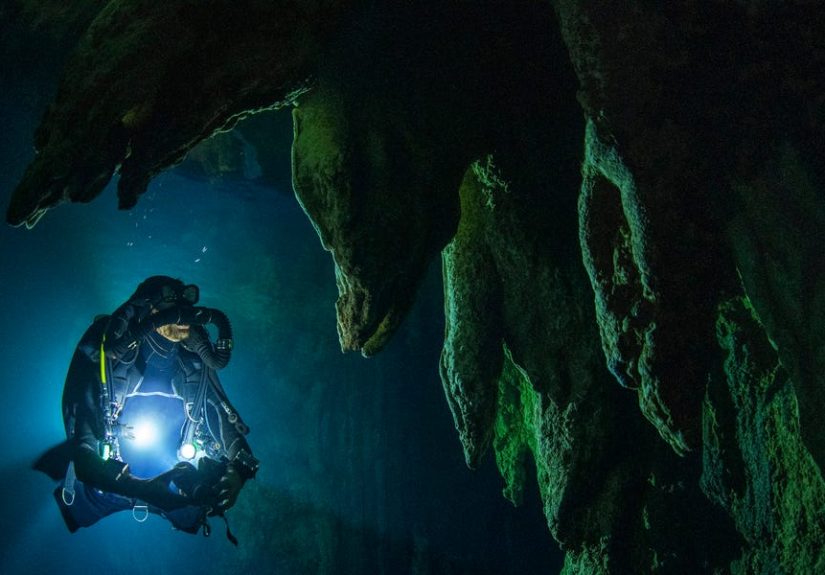
Here is the strange part, and maybe the most human part: after reading about all this loss, it is still possible to understand why cave divers keep going back. The experience, by most accounts, is astonishing. Divers describe flooded caves as places where light slices through clear water like stained glass, where white mineral columns rise from the floor like ancient architecture, and where every fin kick seems to carry you deeper into Earth’s hidden memory. In Mexico’s cenotes, for example, explorers move through submerged passages that preserve speleothems, fossils, artifacts, and even traces of ancient human life. In those settings, cave diving can feel less like sport and more like entering a cathedral, a laboratory, and a time machine all at once.
That beauty matters because it explains the temptation. In ordinary open water, a diver can orient by sunlight, current, depth, and the simple comfort of knowing the surface is above. In a cave, that mental map changes. The world narrows to a beam of light, a guideline, your breathing, your buddy, and the next decision. Some divers love that concentration. It strips away everything petty and leaves only skill, discipline, and awareness. It can feel meditative, almost spiritual. One experienced diver described swimming through caves as moving through the veins of the Earth. Another compared them to inner space, a frontier still full of mysteries even after humans have stood on Everest and visited outer space.
But the psychological experience cuts both ways. The same quiet that feels magical can become oppressive. The same stillness that makes a cavern beautiful can make a diver hyper-aware of every breath. Distance can create “distance stress,” the mental pressure that comes from knowing you are very far from home and every foot inward must eventually be paid back on the exit. In zero visibility, the brain is a terrible navigator. Weightlessness scrambles direction. Panic speeds breathing. Breathing burns gas. And gas, inconveniently, is not a renewable emotion.
That contrast is what makes cave diving so gripping and so dangerous. When things go right, it offers rare access to places that can teach scientists about groundwater, climate history, geology, biology, and even early human life. When things go wrong, it becomes a closed world where the usual human emergency instinct, “go up,” is useless. The diver must rely instead on planning, line awareness, gas reserve, calm technique, and training drilled deep enough to function while fear is trying to throw the steering wheel out the window.
So yes, cave diving is breathtaking. That is part of the problem. Beauty lowers defenses. Awe whispers that maybe the rules are too strict, maybe this passage is manageable, maybe this one little shortcut is fine. The deadliest cave-diving accidents prove the opposite. The caves are beautiful, but they are never casual. They reward respect and punish fantasy. And if there is one lesson echoing through every disaster on this list, it is this: the most dangerous thing in a cave is not always the darkness. Sometimes it is the diver who thinks the darkness will make an exception.
Conclusion
The deadliest cave-diving accidents are not just stories about drowning. They are stories about limits, judgment, and the false comfort of “almost safe.” Mount Gambier showed what happens when a group slips past its own boundaries. Devils Hole showed how fast inexperience can disappear into darkness. Eagle’s Nest showed that ordinary scuba confidence means very little inside a deep cave. Plura showed that even advanced teams enter environments where the margin for survival can be painfully thin.
That does not make cave diving meaningless. If anything, it explains why the discipline is so structured and why experienced cave divers speak so reverently about training, gas management, line discipline, and calm. The caves themselves are not villains. They are indifferent. And indifference, underwater, is more than enough.