Table of Contents >> Show >> Hide
- What Is Asbestos Mastic (and Why Was It Used)?
- Before You Start: A Quick Safety Reality Check
- Easy Ways to Identify Asbestos Mastic: 15 Steps
- Step 1: Figure Out the Building’s Age (and Any Major Remodel Dates)
- Step 2: Identify What Was Installed on Top of the Adhesive
- Step 3: Check the Tile Size (Yes, Bring a Tape Measure)
- Step 4: Look at the Adhesive Color and Texture (Without Going Wild)
- Step 5: Learn the Nickname: “Cutback Adhesive”
- Step 6: Notice How the Adhesive Responds to Water (But Don’t Start a Science Fair)
- Step 7: Check for Backing Material, Felt, or Paper Layers
- Step 8: Look for Layering (Old Floors Love Costumes)
- Step 9: Identify the Subfloor Type (Concrete vs. Wood)
- Step 10: Look for a “Shadow” Where Tiles Used to Be
- Step 11: Do a Paperwork Hunt (Permits, Receipts, Old Listings)
- Step 12: Compare What You See to Known Suspect Scenarios
- Step 13: Assume “Suspect Until Tested” If You’re Planning to Disturb It
- Step 14: Know What Testing Actually Means (and What It Doesn’t)
- Step 15: Call the Right Pro (Not Your “Confident Friend”)
- What To Do If You Suspect Asbestos Mastic
- Mini FAQ: Quick Answers Homeowners Actually Want
- Real-World Experiences (500+ Words): What People Learn While Staring at Black Goo
- Conclusion
If you’ve ever peeled up old flooring and discovered a mysterious, sticky, tar-looking glue underneath,
congratulations: you’ve met the villain of many weekend renovation storiesmastic.
Now for the plot twist: some older flooring mastics (especially the dark “cutback” type) may contain asbestos.
And asbestos is the kind of “vintage” you do not want to collect.
Here’s the big truth up front: you can’t confirm asbestos in mastic just by looking at it.
Visual clues can only tell you whether it’s worth treating as suspect. The only reliable confirmation is
testing by a qualified professional using recognized lab methods.
What Is Asbestos Mastic (and Why Was It Used)?
Mastic is a broad term for adhesives used to bond flooring materials to subfloorsthink vinyl tiles,
linoleum, carpet backing, and other “resilient” flooring products. Older mastics were designed to be durable,
moisture-resistant, and long-lasting. Some formulations historically included asbestos fibers because they helped
with strength and heat resistance. In flooring, the most commonly discussed suspect is a dark, asphalt-based adhesive
often called black mastic or cutback adhesive.
Before You Start: A Quick Safety Reality Check
Asbestos becomes a bigger problem when it’s disturbed and fibers become airborne. If you suspect asbestos mastic,
the safest approach is to avoid scraping, sanding, grinding, or aggressively removing it.
If the material is in good condition and won’t be disturbed, guidance commonly recommends leaving it alone or using
professional containment/management strategies instead of “going full demo mode.”
Translation: you don’t want your renovation soundtrack to be “dust cloud featuring regret.”
Easy Ways to Identify Asbestos Mastic: 15 Steps
Use the steps below like a decision tree. You’re not trying to “diagnose” asbestos with your eyeballsyou’re trying
to decide whether to treat the mastic as suspect and bring in the right help.
Step 1: Figure Out the Building’s Age (and Any Major Remodel Dates)
Start with the most boring clue that’s also one of the most useful: when was the home or building built,
and when was the flooring last replaced? Older structures are more likely to contain legacy materials.
If you’re working in a mid-century home (or older), your “asbestos suspicion meter” should at least flicker on.
Step 2: Identify What Was Installed on Top of the Adhesive
Asbestos concerns often show up with older vinyl composition tile (VCT), vinyl sheet flooring,
linoleum-like resilient flooring, and older asphalt or thermoplastic tiles. Mastic itself can be suspect, but it’s
often part of a flooring systemtile + backing + adhesive. The combo matters.
Step 3: Check the Tile Size (Yes, Bring a Tape Measure)
A classic red flag is older 9-inch by 9-inch floor tiles, frequently associated with older resilient tile eras.
This doesn’t prove asbestos (some 9×9 tiles are non-asbestos), but it’s a strong “treat as suspect until proven otherwise”
clueespecially when paired with dark adhesive underneath.
Step 4: Look at the Adhesive Color and Texture (Without Going Wild)
Suspect flooring adhesive is often described as black or very dark brown, with a tar-like look.
It may appear shiny when fresh/undisturbed and duller when aged. Some people describe it as resembling roofing tar
or thick shoe polish. That said, not all black adhesive contains asbestos, and not all asbestos-containing adhesive is jet black.
Consider color a clue, not a verdict.
Step 5: Learn the Nickname: “Cutback Adhesive”
If you hear the term cutback, pay attention. Cutback adhesives are typically asphalt-based and were widely used
beneath older vinyl tiles and resilient flooring. “Asphalt-based” often means it doesn’t behave like modern water-based glues.
Again: not proof, but a meaningful label to note.
Step 6: Notice How the Adhesive Responds to Water (But Don’t Start a Science Fair)
Many modern adhesives can soften with water. Traditional asphalt-based cutback mastics tend to be more water-resistant.
You are not trying to dissolve it (please don’t), but if you’ve already encountered small incidental moisture and it stays stubborn,
that fits the “older asphaltic adhesive” profile. If you’re tempted to experiment, your best experiment is… stopping and documenting.
Step 7: Check for Backing Material, Felt, or Paper Layers
Some older flooring systems include felt-like backing or paper layers that can also be suspect. If you see remnants of backing
fused into adhesive, note it. The “what’s stuck to what” details help a professional decide what should be tested and managed.
Step 8: Look for Layering (Old Floors Love Costumes)
Multiple layerstile over tile, vinyl over older tile, carpet glued over resilient flooringcan signal repeated remodels without
full removal. That layering increases the odds that one of the older layers used suspect materials, including older mastic.
If your floor looks like a lasagna, treat it carefully.
Step 9: Identify the Subfloor Type (Concrete vs. Wood)
Black mastic is frequently encountered on concrete slabs in basements and ground floors, but it can also be found over plywood/wood
subfloors. Knowing the substrate matters because removal methods (if removal is even appropriate) change based on what’s underneath.
Step 10: Look for a “Shadow” Where Tiles Used to Be
If tiles were removed previously, you may see a tile outlinecleaner squares surrounded by darker adhesiveor the reverse.
That pattern can confirm you’re dealing with old tile adhesive rather than a paint spill or mystery basement goo.
(Basements produce many mysteries. This one is at least nameable.)
Step 11: Do a Paperwork Hunt (Permits, Receipts, Old Listings)
Before you touch anything else, check for clues in documentation:
- Home inspection reports
- Renovation receipts (flooring type, installer notes)
- Remodel permits (sometimes list “resilient flooring removal” or abatement)
- Real estate listings mentioning “original tile” or “mid-century flooring”
Paperwork won’t confirm asbestos, but it can narrow the timeline and materials. It also helps you avoid paying for guesswork.
Step 12: Compare What You See to Known Suspect Scenarios
You’re looking for combinations like:
- Older home + 9×9 tiles + black tar-like adhesive
- Basement slab + older vinyl tiles + dark asphaltic glue
- Multiple flooring layers + older adhesive remnants
One clue alone is “interesting.” Several clues together are “pause the project.”
Step 13: Assume “Suspect Until Tested” If You’re Planning to Disturb It
If you’re about to do anything that would create dust or debrisscraping, sanding, grinding, or aggressive removaltreat the material
as suspect. Many safety frameworks emphasize avoiding disturbance and using less aggressive methods when asbestos-containing flooring
materials may be present.
Step 14: Know What Testing Actually Means (and What It Doesn’t)
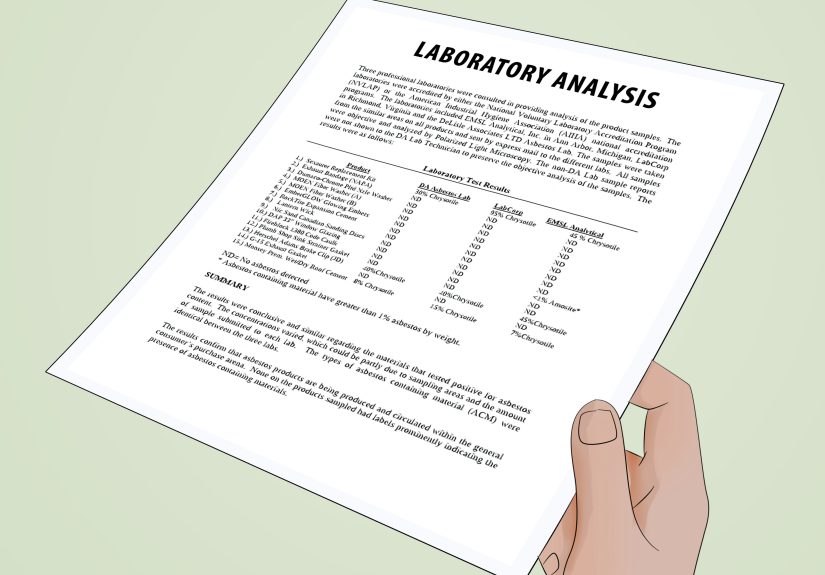
Reliable asbestos confirmation typically involves lab analysis using recognized techniques. For bulk building materials, labs commonly use
methods such as polarized light microscopy (PLM), and in some cases electron microscopy when needed for finer detail.
The key point: testing is about certainty. Visual inspection helps decide whether to testnot whether it “is” asbestos.
Also important: asbestos rules can vary by location and project type. A licensed asbestos inspector or industrial hygienist can help you
navigate what’s appropriate for your situation.
Step 15: Call the Right Pro (Not Your “Confident Friend”)
If your clues point toward suspect asbestos mastic, the most practical next step is to contact a licensed asbestos inspector
(or qualified environmental professional) who can evaluate the area and arrange proper sampling/testing where appropriate.
This is one of those moments where “I watched a video” is not a credential.
What To Do If You Suspect Asbestos Mastic
Once your suspicion is high, your goal becomes risk reduction and smart decision-makingnot speed.
Option A: Leave It Alone (If It’s Intact and Won’t Be Disturbed)
If the mastic is in good condition and you’re not planning a remodel that disturbs it, leaving it alone can be a reasonable approach.
Many public health recommendations emphasize that intact material that won’t be disturbed generally poses lower risk than material that’s
aggressively removed without proper controls.
Option B: Cover/Encapsulate (Common in Flooring “Refresh” Plans)
In many real-world remodels, the safest path is to install a new flooring system over the old one (with appropriate underlayment or
barrier methods), without disturbing suspect materials. The exact method depends on floor condition, moisture, and leveling needs,
so this is where professional guidance is valuable.
Option C: Professional Abatement (When Removal Is Necessary)
If removal is required due to damage, planned structural work, or other factors, professional abatement helps manage fiber release using
regulated practices. This is especially important if the project would otherwise involve sanding/grinding or large-scale disturbance.
What Not To Do (A Short List That Can Save Your Lungs and Your Wallet)
- Don’t sand, grind, or power-scrape suspect mastic.
- Don’t dry-scrape aggressively “just to see what happens.”
- Don’t treat mystery dust like it’s normal house dust.
- Don’t assume “black = asbestos” or “not black = safe.” Both assumptions can be wrong.
Mini FAQ: Quick Answers Homeowners Actually Want
Can I identify asbestos mastic by color alone?
No. Dark/black mastics can be suspect, but color alone can’t confirm asbestos. Only proper testing can confirm.
Is asbestos mastic always dangerous?
Risk increases when asbestos-containing materials are disturbed and fibers become airborne. Intact material that isn’t disturbed is often
considered lower risk than disturbed material.
What’s the fastest safe next step if I’m unsure?
Stop disturbing the area, document what you see (photos and notes), and contact a qualified asbestos professional for evaluation/testing guidance.
Real-World Experiences (500+ Words): What People Learn While Staring at Black Goo
People don’t set out to become amateur historians of floor glue. It just… happens. Usually on a Saturday, usually while wearing “painting clothes”
that quickly become “I guess these are my demolition clothes now.”
One of the most common homeowner stories goes like this: someone pulls up peeling vinyl in a laundry room and finds a neat grid of old tiles underneath.
A few tiles crack. Under the cracks is a glossy, black adhesive that looks like someone spread warm licorice across the slab. The homeowner thinks,
“Wow, that must be some strong glue,” and reaches for a scraper. Then they Google “black mastic under tile,” and suddenly the project shifts from
“refresh the floor” to “research asbestos for three hours and reconsider all life choices.”
Another familiar scenario happens when refinishing a basement: you want a clean, painted concrete look, so you remove old carpet and discover that the
carpet wasn’t actually “loose laid.” It was glued down with something dark and stubborn. The first instinct is to make the slab perfectbecause the internet
loves a flawless before-and-after. But that’s where people often learn an important lesson: floors don’t reward impatience. If the adhesive is suspect,
the safest win is not “getting it all off,” but choosing a strategy that avoids turning old material into airborne debris. Many end up deciding to level and
cover instead of chasing a bare-concrete fantasy.
Contractors and DIYers also share a pattern: the most stressful part isn’t the adhesive itselfit’s the uncertainty. “Is it asbestos or not?”
That question can cause analysis paralysis. The practical workaround is treating the material as suspect until it’s proven otherwise, then planning the next
move around minimizing disturbance. People who do this tend to report a calmer project overall: fewer impulsive scrapes, fewer “let me just try one corner,”
and fewer surprise messes that become expensive cleanups.
There’s also the “layer cake house” experience, where you find three generations of flooring in one room: new luxury vinyl plank on top, older sheet vinyl
beneath, and the grandparent layer9x9 tilesat the bottom. The adhesive at the lowest level is often the darkest and most stubborn. Homeowners who encounter
this setup frequently learn that the best renovation skill is not a fancy tool; it’s knowing when to stop and call in expertise. If a pro confirms the risk,
it’s easier to pick a safe solutionencapsulate, cover, or professionally removewithout guessing.
Finally, many people report a “relief moment” when they switch from panic to plan. They take clear photos, write down the tile size, note the building age,
and stop disturbing the area. That simple pause transforms the problem from scary to manageable. Whether the outcome is professional testing, safe covering,
or abatement, the project becomes less about fear and more about smart steps. And yes, it’s still annoying that a floor can derail your weekendbut at least
you’ll be annoyed safely, which is the best kind of annoyed.
Conclusion
Identifying asbestos mastic is less about having “x-ray vision” and more about recognizing risk patterns:
older flooring systems, classic tile sizes, dark asphaltic adhesives, and layered remodel history. Use the 15 steps to decide whether your
mastic should be treated as suspectand remember the golden rule: if you might disturb it, don’t guess.
Document, pause, and involve a qualified professional so your renovation story ends with a new floornot a new problem.