Table of Contents >> Show >> Hide
- What Is Medicine the Musical?
- Why the Title “Entropy” Fits So Well
- The Song’s Role in the Musical’s Larger Story
- Medical School as Organized Chaos
- Humanizing Doctors Before They Become Doctors
- Why Medical Humanities Matter
- The Rock Musical Format: Why It Works
- Entropy as a Metaphor for Burnout
- What Audiences Can Learn from “Entropy”
- Specific Examples of Entropy in the Medical Student Experience
- Why the Song Still Feels Relevant
- Experience Section: Living With the Theme of “Entropy”
- Conclusion
“Entropy” from Medicine the Musical is more than a song title with a science-class vocabulary word attached. It is a clever doorway into one of the show’s biggest ideas: what happens when bright, ambitious people step into a system designed to test their stamina, identity, confidence, humor, and ability to keep their coffee cup upright at 2 a.m. The answer, naturally, is a little bit of chaos.
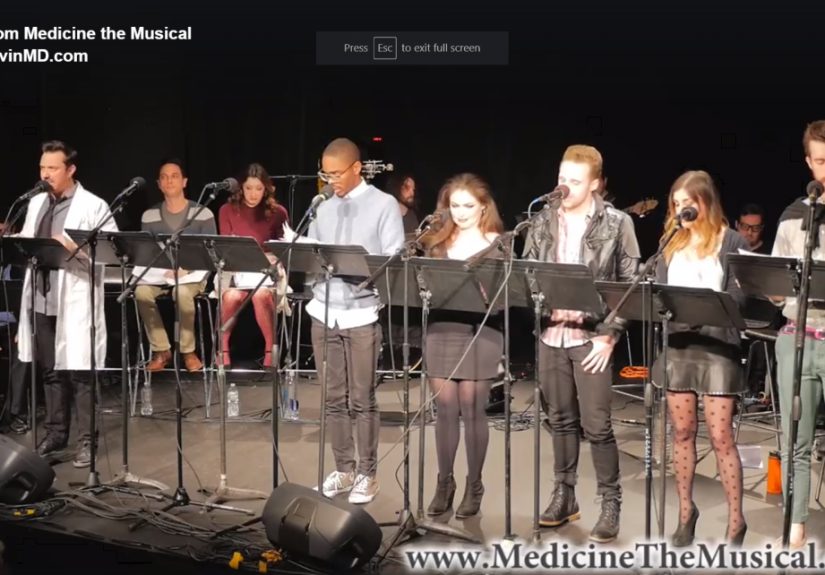
Medicine the Musical, written by Michael Ehrenreich, MD, is a rock musical about first-year medical students navigating the pressure cooker of medical education. The show follows young people who enter training with big dreams, shiny stethoscopes, and the optimistic belief that good intentions plus highlighters will save them. Then anatomy labs, exams, hierarchy, exhaustion, and the emotional weight of medicine arrive like an uninvited group project.
Within that world, “Entropy” works beautifully as a theme because entropy is, in simple terms, the tendency of systems to move toward disorder. In physics, it has a precise technical meaning. In medical school, it can look like a backpack full of crumpled lecture notes, a sleep schedule that has filed for divorce, and a student wondering whether becoming a doctor requires becoming less human. That is where the song’s title becomes dramatically useful: it captures the emotional, academic, and social breakdown that can happen when pressure builds faster than people can adapt.
What Is Medicine the Musical?
Medicine the Musical is a stage work that brings medical school to audiences through humor, music, theatrical exaggeration, and recognizable emotional truth. It centers on a diverse group of first-year medical students as they struggle with education, love, ambition, competition, self-doubt, and the relentless demand to keep going. The production has been associated with New York theater spaces, including a staged reading at the Daryl Roth Theatre and a later fully staged production at HERE Arts Center.
The musical’s creator, Michael Ehrenreich, is a practicing dermatologist who turned the pressures and memories of medical training into a musical narrative. That background matters. This is not a random medical parody written from the outside. It is a doctor’s imaginative remix of the medical-school experience, complete with dramatic liberties, rock energy, and enough institutional stress to make a syllabus sweat.
Why the Title “Entropy” Fits So Well
The word “entropy” might sound like something that belongs on a chemistry exam, but it is surprisingly theatrical. A stage musical thrives on tension: characters want order, but life keeps interrupting. Students want control, but medical school keeps adding more variables. Professors want discipline, patients need compassion, friends need attention, and the human body refuses to be as tidy as a textbook diagram.
That is entropy in story form. The more pressure the students face, the more their neat plans begin to scatter. A study schedule becomes a panic schedule. A dream becomes a burden. A confident applicant becomes a first-year student wondering if everyone else secretly received a manual titled How to Look Calm While Your Brain Is on Fire.
By using “Entropy” as a song title, the musical connects scientific language to emotional experience. This is smart writing because medical students live in a world of technical words. They learn anatomy, pathology, coding, diagnosis, and physiology. Yet behind all that vocabulary are ordinary human fears: Am I good enough? Will I fail? Can I care deeply without falling apart? Will I ever sleep again, or is sleep now an elective?
The Song’s Role in the Musical’s Larger Story
While the full dramatic placement of “Entropy” depends on the production and performance context, the title alone suggests a moment of pressure, unraveling, or realization. In a musical about medical school, that kind of number can serve several functions. It may deepen the emotional stakes, reveal a character’s anxiety, or show how a group of students collectively experiences the collapse of certainty.
Medical school stories often begin with aspiration. Students arrive because they want to heal, discover, serve, achieve, or make their families proud. Then training introduces a difficult paradox: to become a physician, they must learn to manage uncertainty, suffering, hierarchy, and immense responsibility. The result can feel like emotional entropy. Their outer lives become more structured, but their inner lives may feel more chaotic.
That contrast is exactly the sort of material musical theater handles well. A spoken scene can describe stress, but a song can embody it. Tempo, harmony, repetition, rhythm, and ensemble voices can make pressure audible. If a character says, “I’m overwhelmed,” the audience understands. If a song builds until voices overlap and the musical world itself feels unstable, the audience feels it in their bones.
Medical School as Organized Chaos
One reason Medicine the Musical feels compelling is that medical school is already dramatic. It has high stakes, intense competition, transformation, sacrifice, and a built-in ticking clock. Exams arrive. Clinical expectations rise. Students must learn enormous amounts of information while developing professional identity. In other words, it is not just school. It is a four-year identity renovation project with tuition.
First-year medical students often face a particularly sharp transition. Many were high achievers throughout college. They were used to being the person who understood the assignment, got the grade, and maybe even color-coded the assignment for fun. Then they enter a room full of people who were also that person. Suddenly, being smart is not a personality trait; it is the cover charge.
This is fertile ground for a song like “Entropy.” The student who once felt organized may feel scattered. The student who came in confident may feel ordinary. The student who wanted to help people may feel trapped in memorization before meeting many patients. The show’s musical language can turn that internal disorder into performance, helping audiences understand the hidden emotional weather of medical training.
Humanizing Doctors Before They Become Doctors
A major strength of Medicine the Musical is its effort to humanize medical students and, by extension, physicians. Popular culture often portrays doctors as geniuses, heroes, villains, romantically complicated surgeons, or people who can diagnose a rare disease in 42 minutes with commercial breaks. Real medical training is less glossy and more human. It involves uncertainty, fear, fatigue, humor, friendship, awkwardness, and repeated encounters with one’s own limitations.
“Entropy” fits into this humanizing mission because it points to disorder rather than perfection. It reminds the audience that becoming a doctor does not mean being immune to chaos. In fact, medical training often requires learning how to function inside it. The best doctors are not necessarily those who never feel overwhelmed. They are those who learn how to ask for help, organize complexity, stay compassionate, and keep moving without pretending to be machines.
Why Medical Humanities Matter
The existence of Medicine the Musical also connects to the larger field of medical humanities. Medical humanities use literature, theater, music, ethics, history, and art to explore medicine as a human experience, not just a technical profession. This matters because medicine is not only about data and diagnosis. It is about listening, suffering, communication, uncertainty, grief, hope, and trust.
A musical can make these themes approachable. Audiences who might never read a medical education journal can understand a student’s panic through a song. Future students can see the profession with more nuance. Current doctors can recognize their own past. Patients can glimpse the pressure behind the white coat. Theater becomes a bridge between the exam room and the public imagination.
That bridge is especially important in conversations about burnout. Medical students and physicians face significant stress, and the medical education environment can either protect or harm well-being. Research on medical students has linked mistreatment and negative learning environments with burnout and regret, while positive experiences are associated with better empathy and lower burnout. A show like Medicine the Musical does not solve those problems by itself, of course. A guitar riff cannot reform a curriculum. But art can name what people are living through, and naming a problem is often the first act of resistance.
The Rock Musical Format: Why It Works
Making Medicine the Musical a rock musical is a smart artistic choice. Rock music carries urgency. It can sound rebellious, restless, raw, and kinetic. That energy matches the emotional state of students trying to master medicine while their personal lives wobble like a hospital cafeteria tray.
Traditional musical theater can handle big feelings, but rock adds a pulse that suits the subject. Medical school is not gentle background music. It is deadlines, fluorescent lights, cadaver labs, pager culture, ambition, panic, and the strange comedy of learning very serious material while being very sleep deprived. Rock music can give that world a heartbeat.
In that sense, “Entropy” likely benefits from a musical style that can express acceleration and instability. Even without quoting the lyrics, one can understand why a song with this title would belong in a high-energy score. The concept wants movement. It wants pressure. It wants the feeling of papers flying off a desk while someone insists, “Everything is fine,” in the exact tone that means absolutely nothing is fine.
Entropy as a Metaphor for Burnout
One of the richest ways to read “Entropy” is as a metaphor for burnout. Burnout is often described through emotional exhaustion, cynicism or depersonalization, and a reduced sense of accomplishment. In plain English, it is what happens when people care deeply but are pushed beyond sustainable limits for too long.
Medical training can create conditions where entropy spreads quietly. A student stops calling friends. Meals become optional. Exercise becomes a memory. Sleep becomes a rumor. Humor gets darker. Compassion may still exist, but it has to fight through fatigue. The person does not suddenly break; they gradually lose order.
That is why the entropy metaphor is powerful. It avoids blaming the individual. Disorder does not always mean someone is weak. Sometimes the system is applying too much heat. In a medical education context, the solution is not simply telling students to be more resilient, as if resilience were a protein bar. The better question is how schools, hospitals, faculty, and peers can create systems that reduce unnecessary chaos while preparing students for the real uncertainty of clinical work.
What Audiences Can Learn from “Entropy”
For general audiences, “Entropy” can make medical training more visible. Many patients meet doctors only after the long training process has transformed them into professionals. They do not see the early confusion, vulnerability, and sacrifice. A musical number about disorder can make that hidden stage of development feel immediate and relatable.
For medical students, the song may offer recognition. Sometimes the most comforting message is not “Everything is easy.” It is “You are not the only one finding this hard.” Art can reduce isolation by turning private stress into shared experience. A student watching “Entropy” may laugh, wince, and think, “Well, at least my breakdown has choreography.”
For educators, the song can function as a reminder. Students are not empty containers for information. They are people undergoing profound transformation. Their learning environment matters. Their mental health matters. Their sense of belonging matters. If the system ignores those realities, entropy increases.
Specific Examples of Entropy in the Medical Student Experience
1. The Collapse of the Perfect Study Plan
Nearly every medical student begins with a plan. There will be flashcards, review blocks, disciplined mornings, and perhaps a noble attempt to drink enough water. Then the amount of material expands. Lectures multiply. The plan becomes a suggestion. The suggestion becomes a decorative document. “Entropy” captures that moment when structure gives way to survival mode.
2. The Identity Shake-Up
Many students enter medical school with an identity built around achievement. When everyone around them is equally talented, they may feel less special and more replaceable. This can be painful, but it can also be freeing. The musical’s theme suggests that disorder can reveal what remains when external validation is stripped away.
3. The Emotional Weight of Medicine
Even early in training, students encounter illness, death, vulnerability, and ethical complexity. They must learn to be professional without becoming numb. That emotional balancing act is difficult. Entropy appears when feelings are pushed aside for too long and return later with interest.
4. Friendship Under Pressure
Medical school can build intense friendships because students share an unusual world. It can also strain relationships because everyone is busy, tired, and occasionally one quiz away from becoming a haunted Victorian portrait. A song about entropy can reflect how stress affects not only individuals but entire groups.
Why the Song Still Feels Relevant
Although Medicine the Musical emerged from a specific creative project, its themes remain relevant because medical training continues to be demanding. Conversations about student well-being, burnout, learning environments, and physician humanity have only grown louder. The public increasingly understands that health care workers are not invincible. The pandemic years intensified that awareness, but the pressures existed long before.
“Entropy” speaks to a universal experience as well. You do not have to be a medical student to understand what it feels like when life becomes disorganized. Anyone who has chased a difficult dream knows the sensation. The schedule breaks. The confidence dips. The original motivation gets buried under tasks. The question becomes not whether entropy will appear, but how we respond when it does.
Experience Section: Living With the Theme of “Entropy”
To understand why “Entropy” from Medicine the Musical resonates, imagine the experience of walking into a medical school lecture hall on the first day. The room is bright, the laptops are open, and everyone looks suspiciously prepared. The students smile politely, but underneath the smiles is a shared question: “Do I belong here, or did admissions accidentally confuse me with someone who owns a planner and emotional stability?”
At first, the chaos is exciting. There is a thrill in learning the language of the body. New terms become part of daily speech. Students talk about anatomy over lunch with the casual confidence of people who have forgotten that non-medical friends do not want sandwich conversation involving organs. The pace feels intense but manageable. Then the weeks stack up. Exams arrive. Sleep shrinks. The beautiful order of the beginning starts to fray.
This is where the experience of entropy becomes real. It is not always dramatic. Sometimes it is small. A student forgets to reply to a message. Another skips dinner to finish notes. Someone laughs too hard at a joke because laughing is easier than admitting they are scared. Someone else stares at a slide for ten minutes and realizes no information has entered the brain, despite the brain being the organ under discussion.
The genius of a song like “Entropy” is that it gives this experience a shape. Instead of presenting stress as a private failure, it turns disorder into something visible and shared. In theater, the audience watches characters struggle together. That collective witnessing matters. It says that chaos is not evidence that a person is broken. It may be evidence that the environment is demanding, the stakes are high, and the person is still learning how to carry the load.
There is also humor in the experience, and the musical format makes room for it. Medical training is serious, but students survive partly because they find absurdity in the seriousness. There is comedy in the gap between the noble image of medicine and the reality of surviving on vending-machine crackers while memorizing pathways with names that sound like rejected wizard spells. Humor does not erase the stress, but it lets people breathe.
For audiences outside medicine, the experience section of “Entropy” is surprisingly familiar. Every demanding career has its version of this song. Lawyers have case files. Teachers have grading piles. Nurses have impossible shifts. Parents have laundry mountains that regenerate like mythical beasts. Entrepreneurs have inboxes that reproduce overnight. Entropy is everywhere human ambition meets limited energy.
What makes Medicine the Musical special is that it places this universal experience inside a profession often expected to appear calm and competent at all times. It reminds us that doctors are made, not manufactured. Before they are physicians, they are students trying to preserve empathy while learning a staggering amount of information. They are people who can be brilliant and overwhelmed in the same afternoon.
The hopeful part is that entropy is not the end of the story. Disorder can lead to adaptation. Students build better systems. They find friends who understand. They learn what matters and what can wait. They discover that asking for help is not weakness. They become less obsessed with looking perfect and more committed to becoming useful, kind, and steady. In that sense, “Entropy” is not just a song about chaos. It is a song about the messy middle of transformation.
Conclusion
“Entropy” from Medicine the Musical stands out as a meaningful concept because it captures the disorder, pressure, humor, and humanity of medical training. The song title works on several levels: scientific, emotional, theatrical, and cultural. It reflects the chaos that can enter a student’s life when ambition meets exhaustion, but it also points toward growth. In medicine, as in theater, characters are shaped by conflict. The question is not whether they will face disorder. The question is whether they can find meaning, connection, and compassion inside it.
Medicine the Musical uses rock music and stage storytelling to make medical school accessible to the public. It reminds audiences that behind every doctor is a human being who once had to learn, fail, worry, recover, and keep going. “Entropy” is a fitting symbol for that journey. It is funny, unsettling, smart, and deeply relatable. After all, everyone has moments when life feels like a beautifully labeled diagram that someone dropped into a blender. The trick is learning how to make music from the mess.