Table of Contents >> Show >> Hide
- Why Gartner’s SaaS Spending Forecast Mattered
- What Was Driving Faster SaaS Growth in 2023?
- The 2023 SaaS Market Was Strong, But Not Easy
- How SaaS Spending Compared With Other Cloud Categories
- Examples of SaaS Categories That Benefited
- What Gartner’s Forecast Signaled for SaaS Vendors
- What Gartner’s Forecast Signaled for Buyers
- Practical Lessons From the 2023 SaaS Spending Surge
- Experience-Based Perspective: What SaaS Buying Felt Like in 2023
- Conclusion
The software-as-a-service market entered 2023 with the confidence of a sales team that just discovered a fresh pipeline report: nervous, caffeinated, and somehow still optimistic. While many technology categories were forced to tighten their belts, Gartner’s public cloud forecasts showed that SaaS spending was not merely surviving economic uncertainty. It was growing faster than many expected.
That is the twist. In a year filled with inflation concerns, cautious chief financial officers, layoffs across tech, and endless boardroom conversations about “doing more with less,” business software remained a priority. Companies did not suddenly decide they could live without customer relationship management, collaboration tools, cybersecurity platforms, payroll systems, data analytics, marketing automation, and workflow software. If anything, they discovered they needed those tools more than ever.
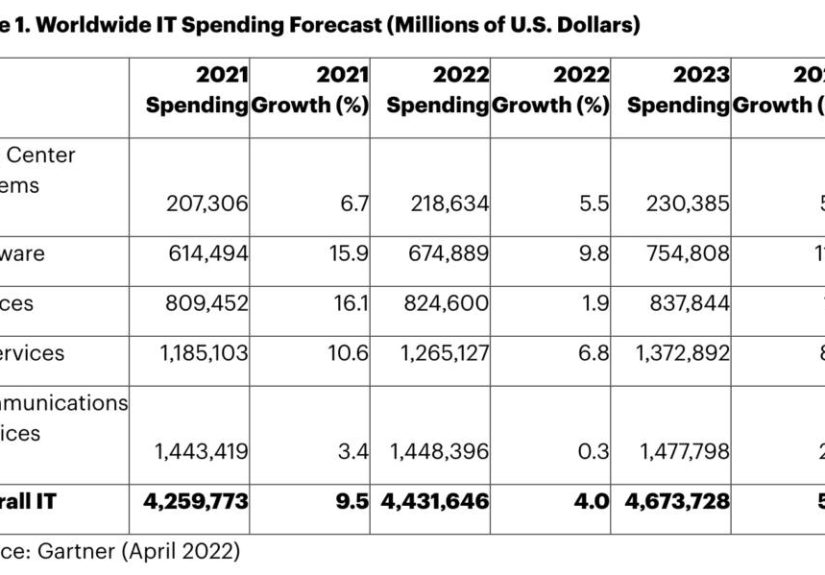
Gartner forecast that global SaaS spending would climb to roughly the high-$190 billion range in 2023, with later public cloud updates placing cloud application services above $200 billion. That put SaaS among the largest categories in public cloud spending and confirmed a market reality: even when budgets get scrutinized, the right software keeps its seat at the table.
Why Gartner’s SaaS Spending Forecast Mattered
Gartner’s cloud forecasts matter because they do not simply describe what software vendors hope will happen. They reflect what enterprises are expected to spend across major cloud categories, including software-as-a-service, platform-as-a-service, infrastructure-as-a-service, desktop-as-a-service, and cloud business process services.
For SaaS companies, investors, IT leaders, and enterprise buyers, the 2023 forecast sent a clear message: the growth story was not over. It had changed shape. The “buy every shiny app because growth is free” era had cooled, but the “use better software to run the business” era was still very much alive.
SaaS Was Still the Largest Cloud Application Category
Infrastructure and platform services grew rapidly in 2023, especially as companies expanded data workloads, artificial intelligence experiments, automation projects, and cloud-native application development. But SaaS remained the familiar giant in the room. It was the category employees touched every day: email, chat, CRM, HR software, finance systems, help desks, analytics dashboards, project management tools, and digital commerce platforms.
In other words, SaaS was not an abstract cloud line item. It was how teams sold products, paid employees, supported customers, closed books, launched campaigns, and tracked performance. Remove it, and most modern companies would not become leaner. They would become confused very quickly, probably while still paying for five forgotten browser tabs.
What Was Driving Faster SaaS Growth in 2023?
The acceleration in SaaS spending was not caused by one magical trend. It came from a stack of practical business pressures. Companies were modernizing operations, replacing legacy systems, supporting hybrid work, improving security, and trying to make better use of data. SaaS happened to sit at the intersection of all those needs.
1. Businesses Needed Efficiency, Not Just Growth
In 2021, software was often purchased to help companies scale quickly. In 2023, the conversation shifted toward efficiency. Executives wanted tools that could automate manual work, reduce operational friction, improve customer retention, and give managers better visibility into what was actually happening across the business.
This helped SaaS platforms with measurable return on investment. A sales automation tool that shortened deal cycles, a customer success platform that reduced churn, or an HR system that streamlined onboarding could still win budget approval. The pitch changed from “this will help us grow faster” to “this will help us operate smarter.” That may sound less glamorous, but CFOs tend to enjoy things that come with spreadsheets and fewer emergency meetings.
2. Hybrid Work Made Cloud Software Non-Negotiable
The workplace did not return to its 2019 shape. Hybrid work became a permanent operating model for many organizations, and that required cloud-based collaboration, identity management, endpoint security, file sharing, workflow automation, and team communication tools.
When employees work from offices, homes, airports, client sites, and occasionally a suspiciously sunny “doctor’s appointment,” businesses need software that works anywhere. SaaS solved that problem better than traditional on-premises applications. It gave companies faster deployment, easier updates, centralized access controls, and lower dependency on office-bound infrastructure.
3. Legacy Software Modernization Continued
Many enterprises still entered 2023 with aging systems that were expensive to maintain and difficult to integrate. Replacing legacy tools with SaaS products was not always cheap, but it often looked better than keeping brittle old systems alive with custom code, manual workarounds, and heroic IT staff who deserved medals.
Modern SaaS platforms offered better user interfaces, mobile access, API integrations, reporting features, and subscription-based pricing. For businesses trying to digitize finance, procurement, customer service, HR, or marketing operations, SaaS was often the most practical modernization path.
4. Data, Analytics, and AI Raised the Value of Cloud Applications
Even before generative AI became the loudest guest at every technology conference, companies were investing in analytics, automation, machine learning, and data-driven workflows. SaaS platforms benefited because business data increasingly lived inside cloud applications.
CRM systems became smarter. Marketing platforms became more personalized. Customer service tools added automation. HR platforms improved workforce analytics. Finance software offered better forecasting. As artificial intelligence features became more common, many SaaS vendors found new ways to increase value, justify renewals, and expand account spending.
5. Security and Compliance Became Board-Level Concerns
Security was no longer just an IT department worry. Boards, executives, insurers, regulators, and customers all wanted stronger controls. This supported spending on SaaS products for identity, access management, endpoint protection, governance, risk management, compliance, monitoring, and secure collaboration.
At the same time, companies had to manage SaaS sprawl. The average organization was not using one or two cloud apps. It was often using dozens or hundreds. That created demand for SaaS management platforms, security tools, procurement systems, and vendor governance processes. Ironically, companies sometimes needed more software to manage all the software. The SaaS industry looked at that and politely said, “We can help.”
The 2023 SaaS Market Was Strong, But Not Easy
Gartner’s growth forecast did not mean every SaaS vendor had an effortless year. The market grew, but buyers became more selective. This is an important distinction. More spending did not automatically mean every product received a bigger check.
In 2023, many companies reviewed software contracts more aggressively. Procurement teams asked tougher questions. CFOs wanted proof of usage. Department heads had to explain why they needed three similar tools that all claimed to “align cross-functional workflows,” which is business language for “we may have bought too many project management apps.”
Renewals Became More Competitive
SaaS companies learned that renewals were no longer automatic. Customers wanted evidence that products were being adopted, delivering measurable value, and supporting business priorities. Vendors that could show strong usage, clear ROI, and high customer satisfaction were in a better position. Vendors that relied on vague promises had a harder time.
This changed the sales motion. Customer success became more important. Expansion revenue required better timing. Product-led growth had to connect with enterprise buying committees. SaaS companies could still win, but they had to earn the right to grow inside existing accounts.
Buyers Consolidated Their Software Stacks
One of the biggest 2023 trends was software consolidation. Businesses wanted fewer overlapping tools and more integrated platforms. That created opportunities for large SaaS suites from companies such as Microsoft, Salesforce, Adobe, ServiceNow, Oracle, SAP, and Workday. It also pushed smaller vendors to sharpen their positioning.
Best-of-breed software still had a place, especially when it solved a specific pain better than a broad platform. But the bar was higher. A niche SaaS product had to prove it was not just “nice to have.” It had to be faster, smarter, more flexible, or more valuable than what customers already owned.
How SaaS Spending Compared With Other Cloud Categories
SaaS was not the only cloud category growing in 2023. Infrastructure-as-a-service and platform-as-a-service were expanding quickly because companies needed compute power, storage, development environments, and data infrastructure. Artificial intelligence, digital twins, analytics, and application modernization increased demand for cloud infrastructure.
However, SaaS had a different kind of strength: it was deeply embedded in daily business operations. Infrastructure spending often supported technical teams and backend systems. SaaS spending supported almost everyone, from sales reps and accountants to marketers, recruiters, support agents, executives, and operations managers.
That broad usage made SaaS resilient. A company could delay a moonshot project, but it could not easily pause its payroll system, CRM, email platform, accounting software, or customer support desk. Some SaaS products were discretionary. Many were not.
Examples of SaaS Categories That Benefited
Customer Relationship Management
CRM remained one of the most important SaaS categories because revenue teams needed better pipeline visibility, automation, forecasting, and customer data. In a tighter economy, leaders wanted to know which deals were real, which customers were at risk, and which sales activities actually produced results.
Collaboration and Productivity Software
Collaboration platforms continued to benefit from hybrid work. Email, chat, video meetings, document collaboration, and shared workspaces became core business infrastructure. Nobody wanted to return to the era of emailing “final_final_v7_reallyfinal.docx” around the office like it was a sacred artifact.
Cybersecurity SaaS
Security tools remained a priority as organizations managed remote access, cloud identities, ransomware threats, compliance obligations, and third-party risk. SaaS-based security platforms offered faster updates and easier deployment across distributed teams.
Finance, HR, and Operations Platforms
Back-office SaaS also gained momentum. Finance teams wanted better planning and reporting. HR teams needed tools for recruiting, onboarding, payroll, benefits, and employee engagement. Operations teams needed automation and workflow visibility. These systems were not flashy, but they kept the company from becoming a very expensive group chat.
What Gartner’s Forecast Signaled for SaaS Vendors
For SaaS vendors, the message was encouraging but not relaxing. The market was still expanding, yet customers were becoming smarter and stricter. Growth was available, but it required discipline.
Vendors needed to focus on product value, customer retention, efficient acquisition, and clear differentiation. The days of assuming that every business would buy another subscription just because the demo looked pretty were fading. Buyers wanted outcomes. They wanted integrations. They wanted pricing that made sense. They wanted fewer surprises when the invoice arrived.
SaaS companies that understood this shift were better positioned. They built stronger onboarding, improved reporting, invested in customer success, and aligned product features with measurable business goals. The winners were not always the loudest companies. They were often the ones that helped customers save time, reduce risk, increase revenue, or make better decisions.
What Gartner’s Forecast Signaled for Buyers
For buyers, rising SaaS spending was both an opportunity and a warning. The opportunity was obvious: better software could help companies modernize, automate, and compete. The warning was also obvious: unmanaged SaaS spending could become messy fast.
Smart buyers in 2023 focused on governance. They reviewed renewals, eliminated duplicate tools, negotiated contracts, measured adoption, and created clearer approval processes. Instead of treating SaaS as a pile of department-level purchases, they treated it as a strategic portfolio.
This was especially important because SaaS costs can hide in plain sight. A single subscription may look small. Multiply it across teams, users, add-ons, premium tiers, integrations, and annual renewals, and suddenly the software budget has developed its own personality.
Practical Lessons From the 2023 SaaS Spending Surge
Lesson 1: Mission-Critical SaaS Is Durable
The first lesson is that mission-critical software is surprisingly durable during uncertain times. Companies may cut experimental tools, but they keep systems that manage revenue, customers, employees, security, and financial operations.
Lesson 2: ROI Became the New Sales Language
The second lesson is that return on investment became the language of serious SaaS buying. Vendors that could connect features to business outcomes had an advantage. “Our dashboard is beautiful” was nice. “Our dashboard helped reduce support resolution time by 22%” was better.
Lesson 3: Consolidation Did Not Kill Innovation
The third lesson is that software consolidation did not eliminate demand for new tools. It simply forced new tools to prove they deserved a spot. Innovative SaaS products could still win if they solved painful problems better than existing platforms.
Lesson 4: AI Made SaaS More Strategic
AI features increased the strategic importance of cloud applications. Because SaaS platforms already held customer, employee, workflow, and transaction data, they became natural places to embed automation and intelligence. This helped explain why SaaS growth continued beyond the immediate 2023 forecast window.
Experience-Based Perspective: What SaaS Buying Felt Like in 2023
From a practical business perspective, 2023 felt like the year SaaS buyers became adults. Not boring adults, exactly, but adults who read renewal terms, ask about implementation timelines, and know that “unlimited” usually means “please check the pricing page again.”
Many teams still wanted new software, but the buying process became more careful. A department could no longer casually add another platform without explaining how it fit into the existing technology stack. Sales leaders had to justify why a new revenue intelligence tool was better than the CRM features already available. Marketing teams had to show why an automation platform would improve conversion rates, not just make campaign reports look more colorful. HR teams had to prove that employee engagement software would be used by actual employees, not just admired during the launch meeting and forgotten by Wednesday.
The best SaaS buying experiences in 2023 usually started with a clear business problem. For example, a customer support team might realize that agents were switching between five systems to answer one ticket. That created slow response times, frustrated customers, and burned-out employees. A well-chosen SaaS help desk or workflow automation platform could reduce that friction. The purchase made sense because the pain was specific and measurable.
The worst buying experiences started with vague excitement. Someone saw a demo, loved the interface, and declared it “game-changing” before anyone defined the game. A few months later, the company had another subscription, low adoption, and a Slack channel full of people asking where the login link went. This was exactly why SaaS governance became more important.
Another common experience involved contract renewals. Vendors that had been easy approvals in previous years suddenly faced detailed usage reviews. Customers asked: How many seats are active? Which features are used? Can we downgrade? Can we consolidate? Are there cheaper alternatives? Does this tool integrate with our main systems? Is the vendor roadmap aligned with our needs?
That may sound painful for SaaS companies, but it made the market healthier. Strong vendors responded by improving onboarding, sharing value reports, offering better customer success support, and helping clients optimize licenses. Weak vendors discovered that a charming sales deck cannot carry a product forever.
For IT teams, the experience was equally revealing. SaaS had become too important to manage casually. Shadow IT, duplicate tools, weak access controls, and unused licenses created cost and security risks. Many organizations began building stronger SaaS management practices, including centralized procurement, single sign-on requirements, security reviews, and regular app audits.
For employees, the best SaaS tools made work feel lighter. They reduced repetitive tasks, improved communication, and helped people find information faster. The worst tools created another dashboard to check, another notification to mute, and another password reset email. The difference was not whether software was cloud-based. The difference was whether it solved a real workflow problem.
That is why Gartner’s 2023 SaaS spending forecast made sense in the real world. Companies were not spending more on SaaS because they had extra money sitting around in a decorative budget bowl. They were spending because modern business had become deeply dependent on cloud software. The challenge was no longer whether to use SaaS. The challenge was choosing the right SaaS, managing it well, and making sure every subscription earned its keep.
Conclusion
Gartner’s 2023 SaaS spending outlook showed that software-as-a-service had moved beyond hype and into the operating core of modern business. Even during a cautious economic year, SaaS spending continued to grow because companies needed cloud applications to manage customers, employees, revenue, security, data, and collaboration.
The forecast also revealed a more mature SaaS market. Growth was still strong, but buyers became more disciplined. Vendors had to prove value. Customers had to manage sprawl. Finance teams had to understand what they were paying for. Everyone had to admit that not every dashboard deserved a renewal.
The bigger lesson is simple: SaaS growth in 2023 was not just about software. It was about how businesses now operate. Cloud applications have become the connective tissue of modern work. When chosen wisely, they help teams move faster, make better decisions, and serve customers more effectively. When chosen poorly, they become expensive digital clutter. The winners, on both the vendor and buyer side, are the ones who understand the difference.
Note: This article synthesizes publicly available market information and industry analysis from reputable technology, cloud computing, enterprise software, and SaaS research sources. It is written as original editorial content for web publication.