Table of Contents >> Show >> Hide
- A 30-Second Fishmonger Checklist (Read This Before You Lean In to Sniff)
- Step 1: Judge the Store Before You Judge the Fish
- Step 2: Decode the Labels (Because “Fresh” Is Not a Timeline)
- Step 3: Use Your Senses Like a Pro (Yes, You’re Allowed to Be a Little Picky)
- Step 4: Whole Fish vs. Fillets (Choose Based on Your Skills, Not Your Ego)
- Step 5: Ask the Fishmonger These Questions (No Awkward Small Talk Required)
- Step 6: Fresh vs. Frozen: When the Freezer Aisle Wins
- Step 7: Shellfish Smarts (Clams, Mussels, Oysters, Shrimp, Scallops)
- Step 8: Sustainability Without the Stress Spiral
- Step 9: Protect Your Fish From Checkout to Cutting Board
- Step 10: A “Best Fish for What You’re Making” Cheat Sheet
- Common Mistakes Fishmongers Wish You’d Stop Making (Lovingly)
- of Real-Life “Fish Counter” Experiences (So You Don’t Have to Learn the Hard Way)
- Conclusion
Buying fish at the grocery store can feel like speed dating with sea creatures: you have 30 seconds to decide,
the lighting is suspicious, and you’re worried you’ll go home with someone who “smelled better in person.”
The good news? Fishmongers say you don’t need a marine biology degreeor a sixth senseto pick great seafood.
You just need a few reliable clues, the right questions, and the confidence to walk away from anything that looks
like it’s having a bad day.
This guide breaks down exactly how pros shop the seafood case: how to spot freshness, decode confusing labels,
choose when frozen is actually the upgrade, and protect your purchase all the way home so your dinner tastes
like “wow” instead of “hmm, is this supposed to be… tangy?”
A 30-Second Fishmonger Checklist (Read This Before You Lean In to Sniff)
- Start with the counter: clean, cold, organized, and not “fridge funk” scented.
- Look for shine and moisture: fish should glisten, not look dry or tired.
- Check edges and gaps: avoid browning, dark edges, and fillets splitting apart.
- Smell should be mild: think ocean-briny, not “ammonia science experiment.”
- Ask one smart question: “When did this come in?”
- Buy last, keep cold: seafood is a “get it home safely” food, not a “run errands” food.
Step 1: Judge the Store Before You Judge the Fish
Fish quality starts with handling. Even an excellent fish can become disappointing if it’s displayed warm,
sitting in liquid, or stored carelessly. Fishmongers recommend picking a seafood counter that looks
well-managed: tidy ice, clear labels, and staff who can answer basic questions without guessing.
Green flags at the seafood counter
- Cold display with fish nestled on ice (not soaking in a puddle).
- Clear, specific labeling (species name, origin, “previously frozen” when applicable).
- No overpowering smell in the department.
- Staff willing to help (and willing to say “I’m not sure” rather than inventing facts).
Red flags that should make you pivot to chicken
- Strong fishy or ammonia odors.
- Murky liquid pooling in packages or the case.
- Fillets with dried-out surfaces, dark edges, or lots of separation (gaping).
- Vague signs like “fish” or “tuna” with no species, origin, or handling info.
Step 2: Decode the Labels (Because “Fresh” Is Not a Timeline)
Let’s clear up the biggest misconception: “Fresh” doesn’t mean “caught today.” In seafood retail,
“fresh” often just means “never frozen.” A fish can be “fresh” and still have spent days (or longer) traveling
through the supply chainespecially if you live far from the coast.
What common seafood terms really mean
-
Fresh (never frozen): Not frozen at any point. It may still be several days old,
so quality depends on temperature control and handling. -
Frozen-at-sea / flash frozen: Frozen quickly soon after harvest. Fishmongers often
consider this better than “fresh” because it locks in quality early. -
Previously frozen: Frozen earlier, then thawed for sale at the counter. This can be perfectly fine
just plan to cook it soon and don’t refreeze it unless you understand safe handling. -
Wild-caught vs. farm-raised: Neither is automatically “best.” The best choice depends on the species,
farming practices, season, and your budget. -
“Sushi-grade”: A marketing term with no universal government standard. If you’re considering raw
preparations, buy only from reputable sellers and follow food-safety guidance.
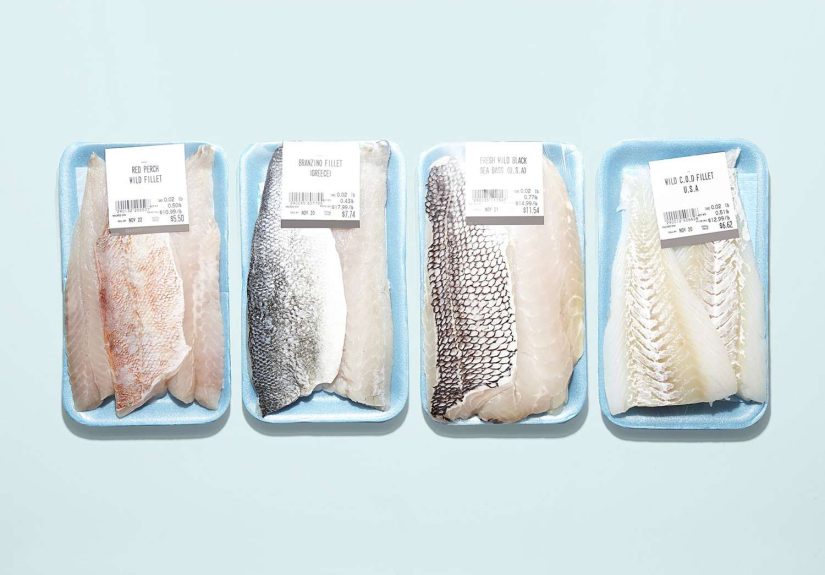
Fishmongers also suggest paying attention to specificity. A label that says “sockeye salmon” gives you
more real information than one that just says “salmon.” Specific labeling often signals the store knows what it’s selling,
which usually means better traceabilityand fewer unpleasant surprises at dinner.
Step 3: Use Your Senses Like a Pro (Yes, You’re Allowed to Be a Little Picky)
Fishmongers lean on three big indicators: appearance, smell, and texture. You’re not trying to solve
a mystery novelyou’re just confirming the fish looks lively and cared for.
Fresh fish should look like it has plans later
- Moist and glossy: a clean sheen is good; a dry, matte surface is not.
- Even color: avoid browning, dark edges, or weird gray patches.
- Minimal liquid: a little clear liquid can happen; lots of liquid (or cloudy/milky liquid) is a warning.
- Not splitting apart: gaping or flakes separating can mean the fish is aging in the case.
The smell test (gentle, not theatrical)
A mild, clean ocean scent is normal. Strong “fishy” smell, sour notes, or ammonia-like odor? Hard pass.
If you have to psych yourself up like you’re about to open a gym bag from 2009, it’s not the one.
Texture: firm, springy, not mushy
If the counter allows touch, the flesh should feel firm and bounce back a bit. If it feels soft, leaves a dent,
or looks like it’s melting into the tray, it’s past its prime.
Step 4: Whole Fish vs. Fillets (Choose Based on Your Skills, Not Your Ego)
Whole fish can be incredible value and flavor, but it’s also a commitment (bones, scaling, and the kind of eye contact
that makes some people reconsider dinner plans). Fillets are convenient and totally respectable.
If you’re buying whole fish, check these first
- Eyes: bright and clear, not cloudy or sunken.
- Gills: red or pink, not brown/gray/green.
- Skin: shiny with tight scales, not dull or drying out.
- Flesh: firm and elasticshould spring back when pressed gently.
If you’re buying fillets or steaks, watch for these clues
- Moist “fresh-cut” look: not dried out, not sticky.
- No browning at the edges: browning suggests age or oxidation.
- Minimal pooling liquid: too much liquid speeds deterioration.
Step 5: Ask the Fishmonger These Questions (No Awkward Small Talk Required)
Fishmongers don’t expect you to know everything. They do appreciate specific questions that help them match you
with the right fish for your recipe, timing, and comfort level.
The “best bang for your question” list
- “When did this come in?” (And how often do you get deliveries?)
- “Was this previously frozen?” (Especially important if it’s thawed in the case.)
- “What’s the best choice for tonight?” (Let them steer you to what’s actually great today.)
- “Where is it from?” (Country/state and whether it’s wild or farmed.)
- “How should I cook it?” (They’ll often recommend a cut that fits your skill level.)
Bonus move: tell them your plan. “Tacos tonight” or “sheet-pan dinner” is incredibly helpful.
Fishmongers can point you to species that stay juicy, don’t fall apart, and won’t punish you for checking a text mid-sear.
Step 6: Fresh vs. Frozen: When the Freezer Aisle Wins
Frozen fish has glow-up energy. Modern freezing can preserve quality extremely wellsometimes better than “fresh”
fish that spent too long in transit. Fishmongers often say the real question isn’t “fresh or frozen?” but:
“Was it frozen properly?”
How to pick great frozen seafood
- Choose solidly frozen packages: no soft spots.
- Avoid heavy ice crystals inside the package: can signal thaw/refreeze cycles.
- Look for intact packaging: no tears, dents, or broken seals.
- Shop below the freezer “load line”: products kept colder tend to stay higher quality.
Quick example: what to buy for different situations
- Weeknight dinner: frozen salmon portions or a sturdy white fish (easy, predictable, minimal waste).
- Fancy dinner: fresh-looking, thick center-cut filletsonly if the counter quality is excellent.
- Budget plan: frozen, canned, or under-loved species (pollock, sardines, mackerel) that cook beautifully.
Step 7: Shellfish Smarts (Clams, Mussels, Oysters, Shrimp, Scallops)
Shellfish is where freshness cues get very specific. The good news: the rules are simple.
The bad news: you must actually follow them (shellfish does not reward optimism).
Live clams, mussels, and oysters
- Shells should be closed or close tightly when tapped.
- Shells should look moist, not dried out and chalky.
- Smell should be clean, never “off.”
Shucked shellfish (like oysters in a tub)
- Look for plump pieces with a natural color.
- Liquid should be clear to slightly opaque, not cloudy in a suspicious way.
- No harsh odor.
Shrimp and scallops
- Shrimp: firm texture, mild smell; avoid blackened edges/spots that suggest quality loss.
- Scallops: should smell sweet and clean; sour or iodine-like odor can indicate spoilage.
Step 8: Sustainability Without the Stress Spiral
Sustainable seafood can sound complicated, but fishmongers and seafood programs agree on a practical approach:
use trusted resources, look for clear sourcing, and don’t treat “wild” or “farmed” as automatic verdicts.
Simple strategies that actually work
- Prefer specific origin info: “U.S.-caught” or a named fishery/region is more meaningful than vague labels.
- Use reputable sustainability guides: quick lookups can help you choose better options by species and region.
- Try well-managed U.S. seafood: it’s often a strong sustainability choice thanks to robust oversight.
- Mix it up: rotating species reduces pressure on popular fish and keeps your meals interesting.
If you’re unsure, ask: “What’s a responsible choice today?” A good fish counter will have an answerand usually a
delicious recommendation you didn’t consider.
Step 9: Protect Your Fish From Checkout to Cutting Board
Fishmongers can sell you a perfect filletand it can still go downhill fast if it warms up in your trunk while you
“quickly” do three other errands (which, in human time, is 45 minutes).
How to get it home safely
- Buy seafood last during your shopping trip.
- Use a cooler or insulated bag if the ride home is more than a short hop.
- Keep it cold: store in the coldest part of the fridge, ideally close to 32°F for fresh seafood.
- Plan the timeline: a good rule is to use fresh fish within 1–2 days of purchase.
- Prevent drips: bag seafood so raw juices can’t leak onto ready-to-eat foods.
Easy at-home storage setup (no fancy gear)
- Pat the fish dry if it’s not prepackaged.
- Wrap tightly or seal in an airtight container.
- Set it on a shallow tray of ice in the fridge (and drain/make fresh ice as needed).
- Cook sooner rather than laterseafood rewards decisiveness.
Also: cook seafood thoroughly unless you’re following trusted, food-safe raw preparation guidance.
When in doubt, aim for an internal temperature of 145°F for cooked fish and many shellfish preparations.
Step 10: A “Best Fish for What You’re Making” Cheat Sheet
| What you’re cooking | Fishmonger-friendly picks | Why it works |
|---|---|---|
| Tacos & sandwiches | Pollock, cod, haddock, tilapia | Firm, mild, forgiving, budget-friendly |
| Pan-searing | Salmon, Arctic char, sea bass, snapper | Thicker cuts brown nicely and stay juicy |
| Sheet-pan dinner | Salmon portions, cod loins | Predictable cook time, easy cleanup |
| Soups & chowders | Coho, cod, haddock, clams | Holds texture in simmering liquid |
| Pasta & fish cakes | Pink salmon, canned salmon, sardines | Big flavor, great value, pantry-friendly |
Common Mistakes Fishmongers Wish You’d Stop Making (Lovingly)
- Buying seafood first: it warms up while you shop. Seafood hates errands.
- Chasing “fresh” as a status symbol: excellent frozen fish existsand often tastes better.
- Ignoring vague labels: vague labeling can hide substitution or weak traceability.
- Storing fish “somewhere in the fridge”: colder is better; ice helps.
- Waiting too long to cook it: buy with a plan and follow through.
of Real-Life “Fish Counter” Experiences (So You Don’t Have to Learn the Hard Way)
Picture a regular Tuesday at 6:10 p.m. You walk up to the seafood case with the confidence of someone who has watched
exactly one cooking video and now believes they are “a fish person.” The case is full, the options are endless, and
your brain instantly tries to solve the ocean like it’s a multiple-choice test. This is where fishmongers quietly
become the heroes of dinnerbecause the best seafood-buying “experience” isn’t dramatic. It’s calm, practical, and
slightly nosy (in the best way).
One common scenario: you spot a gorgeous fillet, but the label is vague“tuna.” Not “yellowfin,” not “albacore,” not
even a “hello my name is.” Fishmongers will tell you that specificity is information, and information is quality.
So you ask, “What kind of tuna is this, and when did it come in?” If the answer is clear and confident, great.
If the answer is a shrug, you’ve just saved yourself from paying steak prices for mystery fish.
Another real-world moment: the “fresh” fish looks fine, but the frozen section has vacuum-sealed portions that are
rock-solid, neatly packaged, and priced like they actually want you to eat seafood more than once a year. Fishmongers
increasingly point people toward high-quality frozen-at-sea fish because it can protect texture and flavor better than
never-frozen fish that’s been traveling and aging. The experience here is freeing: you stop treating frozen fish like a
backup plan and start treating it like a smart plan. Your future self (and your budget) sends a thank-you note.
Then there’s the “shellfish confidence test.” You pick up a bag of mussels, and a few shells are slightly open.
Panic flickers. The pro move is simple: tap the shell. If it closes, it’s alive and reacting. If it doesn’t, it’s not
coming home with you. This tiny momenttwo seconds, one tapturns shellfish shopping from intimidating to routine.
The more you do it, the more you realize seafood isn’t “hard,” it’s just honest.
And finally, the most underrated experience of all: getting it home. People lose good fish in the last mile by tossing
it in the cart, then wandering the snack aisle like they’re on a museum tour. Fishmongers consistently emphasize the
cold chain because seafood quality is basically a race between temperature and time. Buying seafood last, using an
insulated bag, and setting it on ice in the fridge isn’t fussyit’s the difference between “restaurant-level salmon”
and “why does my fridge smell like regret?”
Over time, the experience becomes surprisingly satisfying. You learn which counters you trust, which labels actually
matter, and which questions unlock the best recommendations. You stop shopping for fish like it’s a gamble and start
shopping like a regular who knows the rules. And that’s the real fishmonger secret: the best fish isn’t rare.
It’s the fish you choose on purpose.
Conclusion
Buying the best fish at the grocery store isn’t about luckit’s about reading a few clear signals and using the
fishmonger as your shortcut to quality. Start with a clean, cold counter. Look for moist, glossy flesh with even color.
Avoid strong odors, mushy texture, and vague labeling. And remember: frozen fish can be a top-tier choice when it’s
frozen well and packaged properly. Do those things, keep it cold on the way home, and your seafood dinners will start
feeling less like a gamble and more like a habit you actually look forward to.