Table of Contents >> Show >> Hide
- Quick Snapshot: What You’re Buying (and Why It’s Not Just “a Faucet”)
- The Style: Why “Connaught + Black Levers” Works So Well
- Materials & Build Quality: What “Luxury Plumbing” Actually Means Here
- Polished Chrome vs Silver Nickel: Choose Your Personality
- Performance & Water Use: What to Expect Day-to-Day
- Installation: What Your Plumber Wants You to Know (Even If You Don’t)
- Care & Cleaning: Keep It Beautiful Without Starting a Chemical War
- Warranty & Long-Term Value: Is This Worth It?
- Who Should Buy This Faucet?
- Real-World Experiences: Living With the Connaught Mixer (500+ Words)
- Final Take
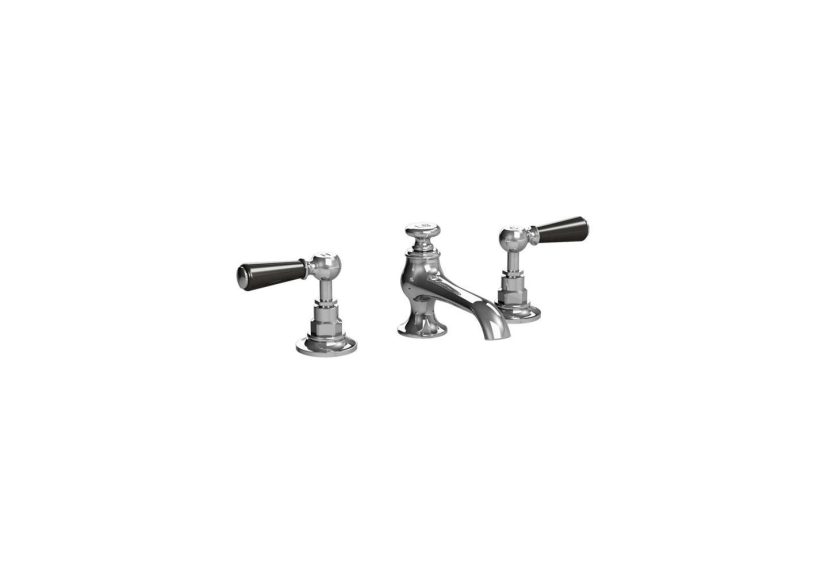
Some bathroom upgrades whisper. This one clears its throat, straightens its tie, and politely reminds your sink who’s in charge. The Lefroy Brooks Connaught 3-hole basin mixer with black levers (often listed as CB-1105, formerly BL1224) is the kind of faucet you buy when you’re tired of “fine” and ready for “how is this faucet… gorgeous?”
In this deep-dive, we’ll unpack what the fixture actually is, how it installs, what the specs mean in real life, how to care for it without accidentally committing finish-related crimes, and whether it’s worth the investment.
Quick Snapshot: What You’re Buying (and Why It’s Not Just “a Faucet”)
A “3-hole basin mixer” is a classic widespread setup: separate hot and cold handles flanking a central spout. The “Connaught” name signals a traditional silhouette, while the black levers add crisp contrastthink of it as formalwear for your vanity. This model typically includes a pop-up waste (the drain you open/close with a lift rod), so the whole sink setup looks intentionally matched instead of “assembled from whatever was on aisle 7.”
Key Specs at a Glance
- Configuration: 3-hole, deck-mounted widespread
- Spread / centers: adjustable roughly 6"–12" (wide compatibility with common sink drilling)
- Overall height: about 4"
- Spout reach: about 4 15/16" (call it “nearly 5 inches,” for normal humans)
- Spout height: about 1 1/8" (low-spout profile)
- Cartridge: ceramic disc (smooth operation, strong durability reputation)
- Finish options commonly sold in the U.S.: Polished Chrome and Silver Nickel
- Included: pop-up waste assembly
The Style: Why “Connaught + Black Levers” Works So Well
Traditional faucets can sometimes lean “grandma’s guest bath,” but Connaught doesn’t. The shape is intentionally classic, yet clean. The real trick is the black levers: they add a bold focal point without the commitment of an all-black faucet body (which, depending on your water, can be a full-time job).
Design-wise, the Connaught mixer is a strong fit for:
- Historic renovations (Edwardian/early 1900s-inspired baths)
- Transitional bathrooms that blend modern tile with classic silhouettes
- High-contrast palettes (white marble + black accents; warm neutrals + dark hardware)
- Boutique-hotel vibes where every detail is curated, including the drain
Pro Tip: Match the “Black” Thoughtfully
Don’t assume every black in your bathroom is the same black. The levers are a specific accent; pair them with a black-framed mirror, a matte-black sconce, or cabinet hardware for a cohesive look. If you sprinkle black randomly, it can feel like your bathroom got dressed in the dark.
Materials & Build Quality: What “Luxury Plumbing” Actually Means Here
Premium widespread faucets tend to differentiate themselves in three big ways: construction, serviceability, and feel.
1) The “Feel” Factor (Yes, It’s a Thing)
If you’ve ever used a bargain faucet where the handle wiggles like it’s trying to escape, you already understand this section. With a quality ceramic disc setup, movement feels deliberate: not stiff, not loosemore like turning a well-made dial than operating a plastic toy.
2) Serviceability: The Boring Superpower
One underrated advantage of established luxury lines is documentation and parts support. This model has dedicated spec sheets, installation instructions, and operation/maintenance guidance available for reference. Translation: when you (or your plumber) need answers, you’re not stuck playing “guess the mystery O-ring” at midnight.
3) Build Confidence (Without Overpromising)
The CB-1105 is typically sold as a traditional/classic widespread faucet with a ceramic disc cartridge and included pop-up waste. Many U.S. listings also note compliance and listings that matter for peace of mind, such as plumbing standards and material safety testing for drinking-water contact components.
Polished Chrome vs Silver Nickel: Choose Your Personality
Both finishes are timeless. The difference is the vibe.
Polished Chrome
- Look: bright, mirror-like, crisp
- Best for: white bathrooms, classic subway tile, high contrast, “clean and tailored” design
- Reality check: chrome can show water spots depending on your water hardnesseasy to wipe, but you’ll notice it
Silver Nickel
- Look: slightly softer, more complex sheen; often reads “warmer” than chrome
- Best for: vintage-inspired bathrooms, softer palettes, warmer stones, and spaces where you want elegance without glare
- Reality check: it’s often priced higher; the payoff is a more nuanced finish that looks intentionally “designer”
If you’re stuck, here’s the tie-breaker: chrome coordinates easily with most modern fixtures, while silver nickel can elevate the room when you’re going for a curated, heirloom feel.
Performance & Water Use: What to Expect Day-to-Day
Ceramic Disc Cartridges
Ceramic disc cartridges are popular in premium faucets because they’re smooth, durable, and less prone to drips when properly installed and maintained. They also tend to handle frequent use gracefullyideal for primary baths where the faucet is basically a full-time employee.
Flow Rate: Why the Listings Say “It Depends”
Some documentation notes that the final achievable flow rate can depend on the outlet/aerator configuration. In practical terms, you’ll want a flow that feels strong enough to rinse hands quickly without turning your sink into a splash park.
If water efficiency matters, keep an eye out for WaterSense benchmarks when selecting lavatory faucet aerators and accessories. WaterSense-labeled bathroom faucets and accessories are designed to reduce flow compared to older federal standardshelpful for both bills and guilt.
Codes & Standards: The Quiet Reassurance
Many U.S. product listings for this model reference items like cUPC listing, compliance with common plumbing performance standards, and material safety testing (for example, NSF-related testing for endpoint devices such as faucets). You don’t buy a faucet for the acronyms, but it’s nice when your faucet has credentials.
Installation: What Your Plumber Wants You to Know (Even If You Don’t)
This is a deck-mounted widespread faucet, so your sink or countertop needs three holes: two for the handles and one for the spout. One benefit of the Connaught widespread format is flexibilitymany specs indicate a center-to-center range that supports common 6-inch spacing and can extend out toward 12 inches depending on your setup.
Before You Order: A 60-Second Compatibility Checklist
- Hole count: must be 3-hole
- Hole spread: confirm your sink’s drilling (common is 8" widespread, but installations vary)
- Deck thickness: verify your countertop/sink deck falls within the supported mounting range
- Drain: check whether you want (or need) pop-up waste compatibility for your sink overflow style
- Water supply lines: ensure shutoffs and connectors are in good condition (now is not the time to discover a 1997 shutoff valve with trust issues)
Common-Sense Installation Notes
- Shut off the water supply (this is not optional if you enjoy dry socks).
- Install the hot/cold side bodies and handle assemblies, then secure the spout.
- Install the pop-up waste, then connect the hoses.
- After installation, open hot and cold supplies and flush the faucet for about a minute to clear debris.
- Avoid twisting or sharply bending flexible hosesgentle curves are your friend.
Bottom line: if you’re investing in a premium fixture, professional installation is the cheapest insurance you can buy.
Care & Cleaning: Keep It Beautiful Without Starting a Chemical War
High-end finishes don’t require complicated carethey require consistent care. The goal is simple: remove minerals and residue before they turn into buildup.
The Safe Routine (Weekly-ish)
- Wipe with a soft cloth and mild dish soap + water.
- Rinse thoroughly with clean water.
- Dry with a soft cloth to prevent spottingespecially on chrome.
For Water Spots
A common, gentle approach is a diluted vinegar-and-water solution used briefly, followed by a full rinse and dry. (The key word here is briefly, like a cameo appearance, not a long-term stay.)
What to Avoid
- Abrasive cleaners and pads (good for cast iron skillets, bad for luxury finishes)
- Wire wool/steel wool
- Harsh chemicals that can dull finishes
- Letting cleaners “sit” on the surface
A lot of manufacturer and major faucet brand guidance boils down to the same rule: gentle cleaning and immediate rinsing help preserve the finish and can protect your warranty coverage.
Warranty & Long-Term Value: Is This Worth It?
Value isn’t just “how shiny it is on day one.” It’s also how confidently you can live with it on day 1,000. Consider:
- Design longevity: classic silhouettes age wellless risk of looking dated in five years
- Daily ergonomics: lever handles are intuitive and generally easier for a wide range of users
- Documentation & support: having product-specific specs and maintenance guidance makes future servicing less painful
- Guarantee terms: many official terms for brass/stainless bathroom fittings cite a multi-year guarantee period for original purchasers
If your bathroom is a long-term home (or a high-end rental), a fixture like this can pay back through durability, aesthetics, and fewer “why does this feel cheap?” regrets.
Who Should Buy This Faucet?
Buy it if…
- You want a traditional widespread bathroom faucet that looks intentional, not generic.
- You love the contrast of black lever handles but don’t want an all-black faucet body.
- You’re building a classic or transitional bath where details matter (and you notice when they don’t).
- You appreciate serviceable products with proper documentation and a premium feel.
Skip it (or rethink) if…
- Your sink is single-hole or centerset-only and you don’t want to change it.
- You want a super-tall spout for washing hair in the sink (no judgment, just physics).
- You hate wiping water spots and live in a hard-water area without a plan for routine care.
Real-World Experiences: Living With the Connaught Mixer (500+ Words)
Because a faucet isn’t just a spec sheetit’s a twice-a-day relationship. Here are a few realistic “living with it” scenarios that reflect what homeowners, designers, and meticulous people who own microfiber cloths tend to notice.
1) The 1920s Bungalow Bathroom Upgrade
Picture a small bathroom with classic tile, a pedestal or console sink, and a mirror that has seen some things. The Connaught 3-hole setup feels instantly at home here because it doesn’t fight the architecture. The black levers become the visual bridge between old and new: they echo the dark accents you often see in vintage-inspired spacesthink black-and-white mosaics, dark grout lines, or an iron-framed mirror. In day-to-day use, people love that lever handles communicate clearly: left is hot, right is cold, and you don’t need a tutorial to get warm water.
The most common “surprise” in older homes isn’t the faucetit’s what’s under the sink. A widespread faucet often reveals aging shutoff valves, cramped supply lines, or old plumbing that deserves attention. In these renovations, the faucet ends up being the glamorous part of a bigger, smarter decision: replacing valves, tidying supply lines, and making the whole setup feel reliable.
2) The Modern Marble Vanity That Needed a Softer Touch
In a newer buildsay, a floating vanity with a crisp stone topsome modern faucets can feel too minimal, almost clinical. The Connaught mixer adds warmth through shape without becoming ornate. The low spout profile looks tidy and intentional, especially when paired with an undermount sink. The black levers are often what make the whole countertop read “designed”: they visually connect to cabinet pulls or lighting without demanding that every piece of hardware be the exact same finish.
Daily use feedback in these spaces is usually about the “feel.” When you’re brushing your teeth half-awake, you don’t want a handle that feels flimsy or unpredictable. The smooth, deliberate movement of a quality cartridge can make the fixture feel like part of the home’s “quiet luxury.”
3) The Hard-Water Reality Check (and the Simple Fix)
If you live in a hard-water area, any shiny finish can show spots. That’s not a moral failing; it’s geology. The good news is that the care routine is straightforward: wipe, rinse, dry. Owners who are happiest long-term usually adopt a tiny habitkeeping a soft cloth in the vanity and giving the faucet a quick wipe after the last use of the day. It takes 10 seconds and prevents the “why does my faucet look tired?” moment two weeks later.
Another common experience: people learn to avoid aggressive cleaners. It’s tempting to grab the strongest spray you own and go to town, but finishes are like good shoesclean them with respect and they’ll look good longer. Mild soap and water, thorough rinsing, and gentle drying are the routine that keeps chrome brilliant and helps nickel tones keep their depth.
4) The “Hotel Bathroom at Home” Payoff
In boutique hotels, the faucet is rarely an afterthought. At home, when you install something like the Connaught mixer, the payoff is subtle but real: the sink area looks “finished.” The pop-up waste makes the drain feel coordinated rather than random. The black levers provide a focal point that reads intentional in photos (hello, listing images) and in real life (hello, daily satisfaction).
The recurring theme across these experiences is simple: this faucet tends to reward people who like details. Not because it’s fussy, but because it’s designed to be noticedquietly, elegantly, and every single day.