Table of Contents >> Show >> Hide
- The Tiny Model That Explains a Huge Instrument
- Why Grand-Piano Action Is a Mechanical Marvel
- Why 3D Printing This Mechanism Matters
- Printed Model vs. Real Grand Piano
- The Real Secret: Regulation, Not Just Design
- What Makers, Musicians, and Students Can Learn
- Why the Grand Still Feels Grand
- Extended Experience: Living With a Printed Piano Mechanism Project
- Conclusion
There are few machines in daily life that can make grown adults whisper, stare, and suddenly start using phrases like “touch response” with the seriousness of a space mission. The grand piano is one of them. From the outside, it looks elegant, polished, and faintly intimidating, like it knows more music theory than the rest of us ever will. But inside? It is an outrageously clever chain of levers, pivots, felt, wood, and timing. And when that mechanism is recreated as a 3D-printed model, the mystery gets gloriously cracked open.
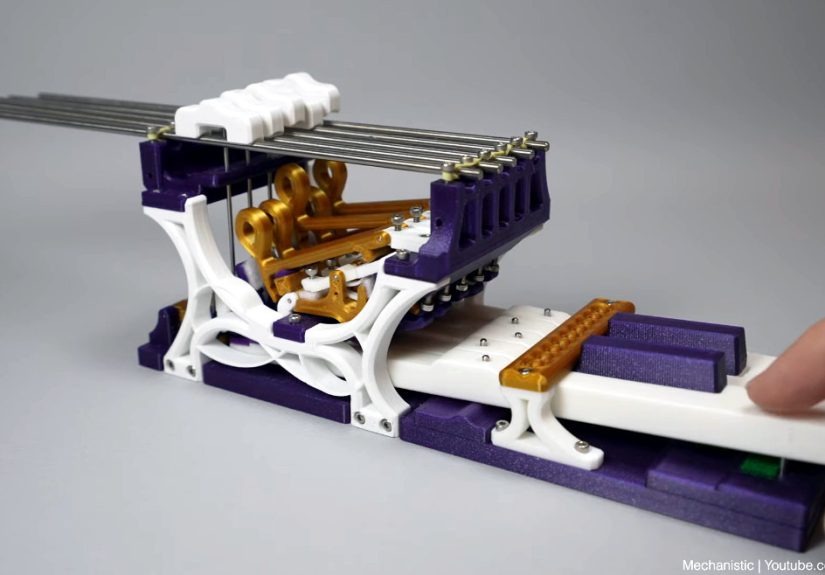
That is what makes the idea behind Printed Piano Mechanism Sure Is Grand so irresistible. A printed grand-piano action turns one of music’s most refined mechanisms into something visible, touchable, and teachable. Instead of hiding under a lid and behind a fallboard like a celebrity avoiding paparazzi, the action sits out in the open and says, “Go ahead. Push the key. Watch the engineering happen.” For musicians, makers, teachers, and the merely curious, that is catnip.
This is not just a story about a neat 3D-print project. It is a story about why the grand piano action is still one of the smartest mechanical systems ever designed, why printing even a partial model of it is an educational jackpot, and why seeing it in motion makes you appreciate every repeated note, whisper-soft phrase, and thunderous chord a little more. The printed model may be small, but the lesson is huge.
The Tiny Model That Explains a Huge Instrument
A 3D-printed grand-piano mechanism works because it strips the instrument down to its dramatic essentials. Press a key, and the rear of the key rises. That motion lifts a sequence of linked parts. A hammer accelerates toward a string or, in a demonstration model, a substitute rod. A damper lifts away. The hammer escapes at the last moment so it can strike freely rather than stay glued to the string like an overeager intern. Then it rebounds, gets checked, and positions itself for another strike. All of this happens in a blink.
In a real piano, most people never see that choreography clearly. They hear the result, they feel the response, but the mechanism itself remains a kind of refined mechanical gossip happening out of sight. A printed model changes that. It slows the mystery down. It makes the invisible visible and turns abstract terms like escapement, repetition lever, and damper timing into physical realities instead of vocabulary words musicians pretend to understand at parties.
That alone makes the model valuable. But it gets better. Because the grand piano action is not merely complicated; it is purposeful. Every moving part solves a musical problem. Every adjustment affects expression. A well-designed printed mechanism reveals that the piano is not just a percussion instrument with excellent branding. It is a mechanical translator for human intention.
Why Grand-Piano Action Is a Mechanical Marvel
To understand why a printed grand action is so captivating, you first have to appreciate what the full-size version is trying to do. A piano key does not just trigger sound. It has to let a player control volume, timing, repetition speed, articulation, and color. It must feel consistent across the keyboard while still handling radically different string lengths, hammer sizes, and tonal demands. It must be fast enough for virtuoso repetition, subtle enough for pianissimo, and sturdy enough to survive years of practice, performance, and occasional abuse by children playing one-finger movie themes.
Escapement: The Genius Move
The secret sauce is escapement. As the hammer moves toward the string, the mechanism has to release it just before impact. Otherwise, the hammer would jam against the string and kill the vibration. In other words, the hammer must be launched, not shoved all the way through. That tiny breakaway motion is where engineering becomes music.
This is also why the piano became such an expressive instrument in the first place. Earlier keyboard instruments could do many things beautifully, but they did not offer the same range of touch-sensitive control. The hammer-action idea made loud and soft playing possible through finger force alone. The grand action refined that concept into something astonishingly nuanced.
Repetition: Because Music Does Not Wait for Gravity
Then comes the grand piano’s party trick: rapid repetition. In a basic action, a hammer must fall all the way back before it is ready to strike again. That is not ideal if the player wants a note repeated quickly. Enter the repetition mechanism, often associated with double escapement. It allows the hammer to reset enough for another strike before the key returns fully to rest. This is why a grand piano can feel quick, elastic, and alive under the fingers.
A printed model makes this beautifully obvious. You can watch the hammer stay poised in a near-ready position, like a sprinter crouched at the blocks. Suddenly, what feels magical at the keyboard becomes logical in the mechanism. The printed action does not cheapen the wonder. It deepens it.
Dampers: The Unsung Professionals
Hammers get the glamour, but dampers do the cleanup. Their job is to stop the strings from vibrating when the player releases the key. A note does not end cleanly by accident. It ends because the damper returns at the right moment, with the right pressure, and without weird noise or delay. In a printed model, the damper system often looks modest compared with the hammer train, but musically it is just as essential. Without dampers, piano playing turns into an echo chamber with commitment issues.
Why 3D Printing This Mechanism Matters
A printed piano mechanism matters for the same reason scale models of engines, clocks, and bridges matter: they turn admiration into comprehension. The grand action is famous among pianists and technicians, but most people only know the broad outline. They understand that pressing a key makes a hammer strike a string. That is true in the same way that saying “cars move because engines happen” is technically true. It is also hilariously incomplete.
3D printing creates a bridge between theory and physical intuition. Students can see how leverage changes across the key. Makers can study the geometry of the action and understand how tiny alignment shifts affect motion. Teachers can explain touch not as mystical talent, but as the result of a system built to respond to minute differences in force and timing. Piano owners can finally understand why technicians talk about regulation with the tone of surgeons discussing joint replacement.
There is also something culturally important here. 3D printing does not replace traditional craftsmanship, but it democratizes access to mechanical literacy. Not everyone can pull the action out of a concert grand in a workshop. Many people can, however, print parts, assemble a model, and learn by testing it. A printed grand action becomes a portable lesson in engineering, music history, industrial design, and tactile problem-solving.
Printed Model vs. Real Grand Piano
No, a 3D-printed mechanism is not a substitute for a concert grand any more than a plastic skeleton turns your hallway into a medical school. But that misses the point. The printed version is valuable precisely because it is a model. It exaggerates visibility, isolates functions, and invites experimentation. If a part sticks, you learn something. If a lever binds, you learn something. If a hammer return feels sluggish, congratulations: you have just met the real-world spirit of regulation.
Still, the differences matter. A real grand piano uses carefully selected woods, dense felt, precision centers, calibrated friction, and exact tolerances developed through centuries of refinement. Touch depends on weight, balance, alignment, travel distance, let-off, drop, checking, and dozens of tiny relationships between parts. A printed model can illustrate these principles, but it cannot fully reproduce the tactile sophistication of a top concert instrument.
That limitation is not a failure. It is a reminder. The model teaches structure. The real instrument teaches nuance. One explains the architecture; the other reveals the art living inside it.
The Real Secret: Regulation, Not Just Design
One of the smartest lessons a printed piano mechanism can teach is that design alone is not enough. Even a brilliant mechanism performs poorly if it is not adjusted properly. In piano terms, that means regulation. Regulation is the painstaking process of setting the action so that motion, timing, and feel are even and accurate across the keyboard. It is where engineering stops being theoretical and starts becoming playable.
This is why two pianos of similar make can feel completely different. It is also why serious technicians talk about friction, geometry, key leveling, hammer checking, and repetition with intense concentration. The action is a network of levers moving through intersecting arcs. If one part is slightly off, the player feels it. Maybe a note does not repeat evenly. Maybe a pianissimo entrance refuses to speak. Maybe a fast passage feels muddy. The problem is not always the pianist. Sometimes the machine is having a bad day.
A printed mechanism illustrates this beautifully because it is honest about misalignment. Parts that are slightly warped, over-tightened, loose, or printed with imperfect tolerances do not hide their flaws. They announce them. That makes the model a perfect teaching tool for the concept of regulation. You begin to understand that the piano is not only an instrument. It is an adjustable system designed to convert microscopic physical differences into audible musical results.
What Makers, Musicians, and Students Can Learn
For makers, a printed grand action is a master class in purposeful complexity. It shows how multiple simple motions can be combined into a sophisticated result. It demonstrates that good mechanical design is rarely about one dramatic part. More often, it is about timing, sequencing, leverage, and controlled release. The grand piano is basically a chain reaction with manners.
For musicians, the model builds respect for touch. It explains why grands feel different from uprights, why repetition is faster, and why subtle control depends on both design and maintenance. You stop thinking of the piano as a black box and start thinking of it as a responsive mechanism tuned to your hands.
For students, especially in STEM and music education, the crossover is gold. A printed action invites conversations about force, friction, energy transfer, materials, manufacturing, history, ergonomics, and acoustics. It is one of those rare objects that can sit comfortably in a makerspace, a music lab, a physics classroom, or a museum education program without looking lost.
Why the Grand Still Feels Grand
The title says it all: a printed piano mechanism sure is grand. Not because plastic parts are fancier than spruce, felt, and tradition. Not because a model outperforms the original. It is grand because the mechanism itself is grand. The concept is grand. The inheritance of centuries of refinement is grand. And the realization that one key press triggers a precisely timed ballet of mechanical events is, frankly, delightfully overqualified for something most of us learned by poking out “Twinkle, Twinkle” at age six.
That is what makes the printed version so satisfying. It proves that the grand piano’s greatness is not only sonic. It is structural. It is intellectual. It is tactile. It is the kind of design that rewards close inspection. The more you look, the smarter it gets.
Extended Experience: Living With a Printed Piano Mechanism Project
Spending time with a printed piano mechanism changes the way you experience both making and music. At first, the project feels like a novelty. You print parts, sort tiny components, and assume you are building a charming desk toy for people who enjoy gears and probably own too many hex keys. Then assembly begins, and the joke is on you. What looked simple in theory turns into a lesson in patience, sequencing, and respect for tolerances.
The first experience is visual. A pile of printed parts does not look like music. It looks like the contents of a very opinionated plastic sandwich bag. But as the keys, hammers, supports, and linkages come together, the logic starts to reveal itself. You begin to see why the piano action has fascinated inventors, technicians, and performers for generations. Each part seems modest on its own, yet each one matters. Remove one, and the whole story becomes nonsense.
The second experience is tactile. Pressing a finished printed key for the first time is unexpectedly satisfying. Even if the action is simplified, even if the strike lands on a rod instead of a real string, there is a small thrill in watching motion travel through the mechanism. You feel the lever balance. You notice where friction lives. You start experimenting immediately: What happens if this spring is tighter? What if the hammer sits a little higher? What if the return feels sluggish? Suddenly you are not just assembling a model. You are diagnosing behavior.
The third experience is humbling. A printed mechanism teaches you that “close enough” is often not close enough. One part printed a little rough, one pivot slightly misaligned, one fastener too tight, and the whole motion loses grace. That realization is powerful because it mirrors the real piano world. Concert-level touch does not happen by accident. It comes from exacting geometry, careful materials, and skilled adjustment. The model makes that truth physical.
There is also a surprisingly emotional side to the project. Once you have watched the action work in slow, exposed detail, you can never look at a grand piano in quite the same way again. Sit at a real instrument, press a repeated note, and your brain quietly replays the hidden choreography underneath your fingers. You imagine the jack resetting, the repetition lever supporting the hammer, the damper rising and returning on cue. The piano stops feeling like a mysterious polished box and starts feeling like an intimate collaboration between hand and mechanism.
For teachers, this kind of hands-on experience is especially valuable. Students who might glaze over during a lecture about action geometry often light up when they can touch the mechanism and see cause and effect. For makers, it is a rewarding crossover project that blends engineering with musical culture. For pianists, it can be oddly reassuring. When a technician says the instrument needs regulation, the phrase no longer sounds like ceremonial wizardry. It sounds practical, necessary, and completely reasonable.
In the end, the experience of living with a printed piano mechanism is not just about the object. It is about perspective. You learn to admire the grand piano twice: once for the music it makes, and again for the mechanical intelligence hiding beneath the lid. That second admiration tends to last. And honestly, any project that leaves you more impressed by both engineering and Chopin has done excellent work.
Conclusion
A printed grand-piano mechanism is more than a clever build. It is a mechanical x-ray of one of the world’s most expressive instruments. It reveals why the grand action remains such an engineering triumph, why regulation matters as much as design, and why touch at the keyboard is really a conversation with a beautifully disciplined machine. For makers, it is a fascinating build. For musicians, it is an education in cause and effect. For everyone else, it is proof that even one piano key contains enough engineering drama to keep a whole workshop busy.
The grand piano has always been a monument to nuance. Printing its mechanism does not shrink that wonder. It puts it under a brighter light. And once you see the action clearly, the title feels less like a pun and more like a fact: printed piano mechanism, sure is grand.