Table of Contents >> Show >> Hide
Anime can be anything: a sword fight on top of a flying castle, a quiet walk home in the rain, or a heartfelt story
about learning how to live in a body (or mind) that the world wasn’t exactly built for.
When disability shows up on-screen with care, it can do something powerfulmake people feel seen, make others
understand, and make everyone ugly-cry at least once (hydration is important).
This fan-ranked list spotlights anime where disability isn’t a “plot twist” or a cheap shortcut to inspiration.
Instead, these stories focus on daily realities: communication barriers, accessibility challenges, pain and recovery,
identity, relationships, and the complicated work of letting yourself be loved without being “fixed.”
A quick note before we dive in: disability representation is nuanced. No single anime can represent everyone’s
experience, and some titles handle certain moments better than others. When in doubt, listen to disabled fans
they’re the real critics with the best receipts.
How This Fan Ranking Was Built
The core ranking below follows a popular fan-voted list centered on anime about living with disability, then
cross-references reviews and commentary from major entertainment and anime outlets to add context, strengths,
and common critiques. In other words: fans set the order, and we’re here to explain why each pick hits as hard as it does.
Quick Jump List
- #13: Ef: A Tale of Memories
- #12: Breakers
- #11: Gangsta.
- #10: My Sister Momoko
- #9: Dororo (2019)
- #8: In/Spectre
- #7: Fullmetal Alchemist: Brotherhood
- #6: Ranking of Kings
- #5: Yuki Yuna Is a Hero
- #4: Violet Evergarden
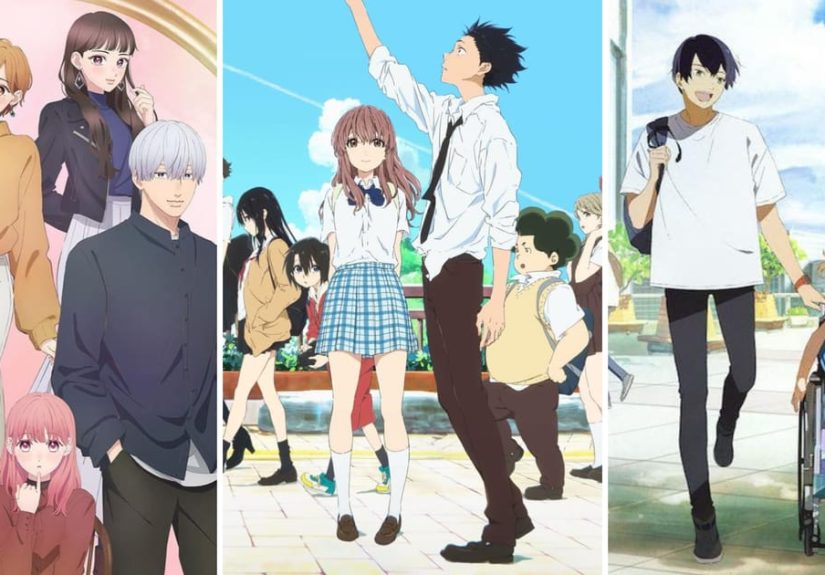
- #3: A Sign of Affection
- #2: Josee, the Tiger and the Fish
- #1: A Silent Voice
The 13 Best Anime About Living With A Disability, Ranked By Fans
#13: Ef: A Tale of Memories
Disability focus: memory impairment (a central character lives with severe limitations on memory retention).
Ef: A Tale of Memories is a romance-drama that looks gorgeous and feels emotionally heavy in a quiet,
creeping waylike a song you can’t shake for days. One of its most memorable arcs explores the reality of living
with a life-disrupting memory condition. That means routines become survival tools, trust becomes complicated,
and relationships require an unusual level of patience and clarity.
Why fans rank it: it treats memory limitations as more than a gimmickyour heart starts to understand
what it costs to build a life when your brain refuses to hold onto yesterday.
#12: Breakers
Disability focus: para-sports and disabled athletes (wheelchair basketball, goalball, track/high jump).
If you want something different from the usual “teen saves the world” formula, Breakers is a standout.
It’s built around para-athletes and the sports they compete in, which shifts the story from “overcoming yourself”
to “training, teamwork, and competing like a beast.” It also introduces disability through real sports culture:
rules, equipment, classification, and community.
Why fans rank it: it’s energetic and respectful, and it doesn’t treat disability as a sad filter
it treats it as part of a full, competitive life.
#11: Gangsta.
Disability focus: deafness and communication access (a main character communicates primarily through signing).
Gangsta. drops you into a gritty city full of crime and moral gray zones. In the middle of that chaos is
a character whose deafness is not a decorative detailit shapes how he connects, how others underestimate him,
and how he navigates danger when communication is life-or-death.
Why fans rank it: it includes deafness as a meaningful part of character and relationships,
not a “quirk,” and fans often point to the care put into depicting signed communication.
#10: My Sister Momoko
Disability focus: chronic illness and physical disability (a child’s health and access to school/community).
My Sister Momoko is the quietest title on this listand possibly the one that punches the hardest.
It centers family life when one child has serious health limitations. Instead of dramatic speeches, you get the
real stuff: small joys, scheduling, worry, sibling feelings that don’t fit neatly into “hero” or “villain,” and
a community learning (sometimes clumsily) how to include someone who’s often left out.
Why fans rank it: it feels grounded. Disability isn’t a metaphorit’s a daily reality, with love and frustration
sharing the same room like they always do.
#9: Dororo (2019)
Disability focus: limb difference, sensory loss, prosthetics, and identity.
Dororo follows a young warrior who begins life missing major parts of his body and senses.
The story is supernatural and intense, but the disability themes are surprisingly thoughtful: What does it mean
to “get” a body back? What counts as wholeness? How do you build identity when your physical experience of the
world changes repeatedly?
Why fans rank it: it turns “body” into a serious question, not a shallow power-up, and it doesn’t shy away
from how disability shapes safety, relationships, and selfhood.
#8: In/Spectre
Disability focus: limb difference and vision loss (prosthetic leg and eye) alongside romance and mystery.
In/Spectre is a supernatural mystery with a surprisingly flirty, talky vibe. Its heroine is missing an eye and a leg,
and the series treats her prosthetics as normalpart of her design, her mobility, and her presence.
She’s clever, socially bold, and often the one driving the conversation (sometimes like a tiny detective tornado).
Why fans rank it: it’s refreshing to see a disabled lead who’s not framed as fragile. She’s competent,
romantic, funny, and fully in charge of her story’s momentum.
#7: Fullmetal Alchemist: Brotherhood
Disability focus: amputation, prosthetics, chronic pain, and rehabilitation (plus major trauma themes).
In Fullmetal Alchemist: Brotherhood, disability isn’t a side noteit’s built into the world.
The main character lives with prosthetic limbs, and the story acknowledges maintenance, vulnerability,
and the reality that replacing body parts doesn’t erase loss. The show also broadens the conversation by portraying
war injuries and the social costs of violence.
Why fans rank it: it balances action with consequences. The “cool metal arm” is still cool, but it’s also heavy,
imperfect, and emotionally loaded.
#6: Ranking of Kings
Disability focus: deafness, speech differences, and social prejudice.
Ranking of Kings looks like a gentle fairy tale. Then it calmly wrecks your feelingsin a good way.
Its young prince is deaf and struggles to be understood in a world that equates communication differences with incompetence.
The series does a strong job showing how prejudice works: not always loud and cruel, but quietly dismissive, constant,
and “polite” in the way that hurts the longest.
Why fans rank it: Bojji’s story isn’t about becoming “normal.” It’s about being valued as he isand
building bonds with people who actually try to understand him.
#5: Yuki Yuna Is a Hero
Disability focus: mobility disability (wheelchair use) and the costs bodies pay in high-stakes narratives.
Magical-girl shows often sparkle on the surface while hiding a darker core. Yuki Yuna Is a Hero leans into that contrast.
One key character uses a wheelchair, and the story repeatedly emphasizes friendship, access, and how a group adapts around
a member’s needs without treating her as a burden.
Why fans rank it: it mixes warmth with seriousness, and it doesn’t pretend “being heroic” is freeespecially
when bodies are the ones paying the bill.
#4: Violet Evergarden
Disability focus: limb loss/prosthetics and neurodivergent-coded communication differences.
Violet Evergarden is famous for being visually stunning, but its emotional impact comes from how it treats communication:
as a skill you learn, not something you’re automatically “good at.” Violet lives with prosthetic arms after war,
and the series frequently returns to the idea that healing isn’t a straight line. Many viewers also read Violet as autistic-coded,
especially in how she processes language, emotion, and social expectations.
Why fans rank it: it’s a story about building a life after traumalearning how to connect, work, love, and grieve
when your old “instructions for living” no longer apply.
#3: A Sign of Affection
Disability focus: deafness, sign language, and everyday accessibility in romance.
If you’ve ever wanted a romance that treats disability as part of normal lifenot an obstacle course designed for drama
A Sign of Affection is your pick. The heroine is deaf, and the show pays attention to communication logistics:
texting, lip-reading limits, when sign language helps, and how a relationship changes when one person actually does the work
to meet you where you are.
Why fans rank it: it’s gentle without being shallow. It’s a love story where access needs aren’t “cute details”
they’re respected realities.
#2: Josee, the Tiger and the Fish
Disability focus: wheelchair use, independence, and the difference between help and control.
Josee, the Tiger and the Fish is an intimate film about dreams, art, and the complicated push-pull between safety and freedom.
Josee uses a wheelchair and has lived a sheltered life. The story explores what independence actually meansnot in a “stand up and walk!”
kind of way, but in choices: where you go, who you trust, how you take risks, and how you fight the social barriers that tell you to stay small.
Why fans rank it: when it’s at its best, it challenges the idea that disabled people need “rescuing.”
It asks harder questions about autonomy, overprotection, and the right to a messy, adventurous life.
#1: A Silent Voice
Disability focus: deafness, bullying, isolation, and the long shadow of childhood cruelty.
A Silent Voice is a story about harm and repairhow a deaf girl is treated when classmates (and adults) fail her,
and how the people around her change over time. It’s not a simple redemption tale, and that’s why it sticks.
The film spends a lot of time on communication: not just sign language, but the emotional work of listening, apologizing,
and trying to do better when “better” doesn’t erase what happened.
Why fans rank it: it forces viewers to sit with consequences. It shows disability as a social experience,
shaped by access, attitudes, and who’s willing to meet you halfway.
What These Anime Get Right (and Where They Can Trip)
Across these titles, you’ll see two big themes. First: disability often isn’t the “problem”the world is.
Stairs, social stigma, overprotective control, and lack of communication access cause as much pain as any diagnosis.
Second: relationships matter. Friends who learn to sign, communities that make room, teammates who adapt strategy
support is portrayed as a practice, not a personality trait.
Where anime sometimes trips is in leaning too hard on “inspiration” framing, or making a nondisabled character the emotional center
of a disabled person’s life. The best entries here push back on that by giving disabled characters agency, privacy, and real flaws
because representation that only allows perfection is just another cage with better lighting.
How to Watch These Responsibly (and Enjoyably)
- Use captions even if you don’t “need” themmany of these stories are literally about accessible communication.
- Look up basic disability context (like goalball rules in Breakers or signing norms in deaf-led stories) to catch details you might miss.
- Notice who the story centers: whose emotions matter most, and who gets to make choices?
- Give yourself breakssome titles are emotionally heavy, and that’s not a personal weakness. That’s just good storytelling doing cardio.
Afterword: of Viewer Experiences & Takeaways
Fans often describe these anime as “the kind that sneaks up on you.” You start watching because you want a good story,
and thensurpriseyou’re thinking about ramps, captions, and how many conversations you’ve had while only half listening.
A lot of viewers say the biggest impact isn’t a single dramatic scene; it’s the smaller moments: a character waiting while
someone types, a friend choosing patience instead of pity, or a lead confidently moving through the world without apologizing
for taking up space.
Disabled fans frequently point out something that nondisabled audiences may miss at first: representation isn’t just
“a character with a disability exists.” It’s whether that character is allowed to be complicated. Is she funny and stubborn?
Does he mess up and still get loved? Do they have dreams that aren’t limited to “proving everyone wrong”?
When an anime gets that right, it can feel like permissionpermission to be imperfect, to ask for access, to expect respect,
and to build relationships that don’t require performing gratitude 24/7.
Nondisabled viewers often share a different but equally valuable takeaway: these stories change what they notice.
After A Sign of Affection or A Silent Voice, people talk about paying attention to how much communication is assumed
to be effortlesshow often “just speak up” is treated like universal advice. After Josee or My Sister Momoko,
viewers mention recognizing the line between helping and controlling: pushing someone’s wheelchair without asking,
speaking for them, or deciding “what’s safest” while ignoring what they want.
And then there’s the pure fandom side of it: people love these series because they’re good. They’re romantic, funny,
tense, gorgeous, and sometimes painfully honest. Fans trade recommendations like: “Watch this when you need hope,
but also prepare snacks because you’ll need emotional support carbs.” They also swap practical watching tips
like enabling subtitles, pausing to catch signed dialogue, or looking up para-sport rules so the action hits harder.
The best viewing experience, many agree, is watching with someone willing to talk afterwardnot to “debate representation,”
but to ask simple questions: What felt real? What felt off? What did you learn? What would make life easier if the world
were designed with more people in mind?
Conclusion
Fan rankings are never the final word (anime fans can’t even agree on the best opening without starting a small civil war),
but this list shows something encouraging: audiences genuinely want stories that take disability seriously and portray disabled
characters as whole people. Whether you’re here for romance, action, sports, or emotional storytelling, these 13 titles give you
a powerful mix of empathy, craft, and characters worth rooting for.