Table of Contents >> Show >> Hide
- Introduction: Why This Vietnam War Movie Still Sparks Debate
- Quick Overview of The Boys in Company C
- Overall Ranking: Where Does The Boys in Company C Stand?
- Character Rankings: Who Leaves the Strongest Impression?
- Performance Rankings: Best Acting in The Boys in Company C
- Best Scene Rankings
- Theme Rankings: What the Movie Says Best
- Critical Opinions: Why Reviews Were Divided
- Is The Boys in Company C Better Than Full Metal Jacket?
- What Works Best in the Film
- What Does Not Work as Well
- Final Opinion: A Flawed, Underrated Vietnam War Film
- Experience-Based Reflections on Watching The Boys in Company C
- Conclusion
- SEO Tags
Note: This article is written from a synthesis of established film databases, professional reviews, audience reactions, veteran commentary, and historical film references. Source links are intentionally omitted for clean web publishing.
Introduction: Why This Vietnam War Movie Still Sparks Debate
The Boys in Company C is one of those war films that walks into the room wearing muddy boots, starts telling uncomfortable truths, and then refuses to leave quietly. Released in 1978 and directed by Sidney J. Furie, the film follows five young Marine recruits from boot camp into the chaos of Vietnam. It stars Stan Shaw, Andrew Stevens, James Canning, Michael Lembeck, and Craig Wasson, with an early appearance by R. Lee Ermey as Sergeant Loyce, years before he became forever linked with drill-instructor fury in Full Metal Jacket.
What makes the movie interesting is not simply that it is a Vietnam War drama. Plenty of films have marched across that battlefield. What makes The Boys in Company C worth ranking, debating, and rewatching is its strange mix of buddy comedy, anti-war anger, military satire, boot camp realism, and tragic coming-of-age storytelling. It can be funny one moment, brutal the next, and occasionally uneven enough to make viewers wonder if the editor briefly went AWOL. Still, its best scenes hit hard.
This ranking and opinion guide looks at the film’s characters, performances, themes, scenes, and lasting reputation. Is it a forgotten classic? A flawed but powerful Vietnam War movie? A rough draft for later films like Full Metal Jacket? The honest answer is: yes, yes, and mostly yes.
Quick Overview of The Boys in Company C
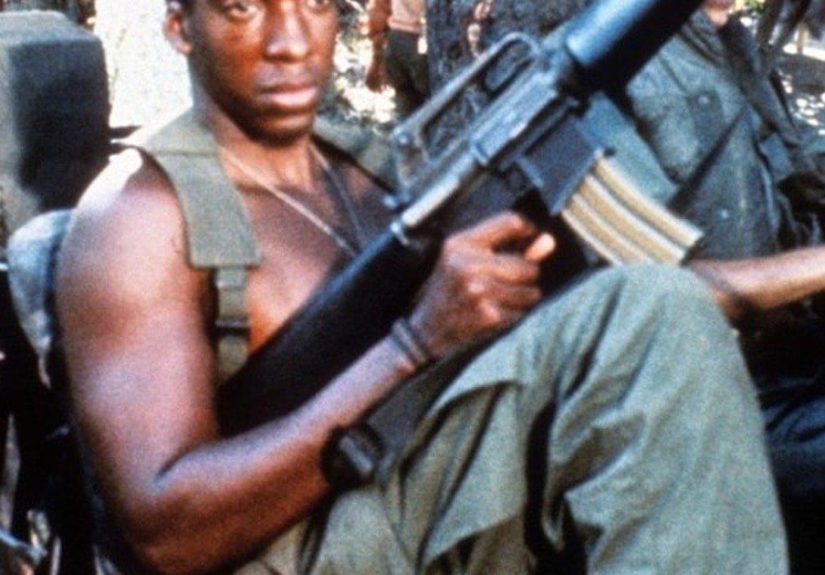
The story begins in 1967, as five young men enter Marine Corps training before being sent to Vietnam. They include Tyrone Washington, a tough and guarded man from Chicago; Billy Ray Pike, a young Texan with athletic talent and personal trouble waiting at home; Alvin Foster, an aspiring writer who records his experience in a journal; Vinnie Fazio, a streetwise Brooklyn personality; and Dave “Jesus” Bisbee, a hippie war protester dragged into the military machine.
The film’s first half focuses on boot camp, where the recruits are stripped of civilian identity and hammered into soldiers. The second half follows them into Vietnam, where the official mission is often less clear than the danger. They face incompetent officers, racial tension, body-count obsession, corruption, fear, and the bitter realization that survival may depend less on heroism than on luck and loyalty.
At its heart, The Boys in Company C is not about glorious combat. It is about young men being pushed through a system that demands discipline while often offering confusion in return. That tension gives the movie its bite.
Overall Ranking: Where Does The Boys in Company C Stand?
On a personal ranking scale for Vietnam War films, The Boys in Company C lands in the “underrated but imperfect” category. It is not as polished as Platoon, not as surreal as Apocalypse Now, and not as technically controlled as Full Metal Jacket. However, it arrived early in the post-Vietnam movie cycle and had the nerve to show the war as absurd, morally exhausting, and emotionally corrosive.
Final Film Ranking: 8 out of 10
The movie earns a strong score because its emotional honesty outweighs its rough edges. Some scenes feel too broad, and a few character types are sketched with thick markers rather than fine pencils. But when the film works, it really works. It captures the way soldiers use humor as armor, how friendship forms under pressure, and how authority can become dangerous when it values numbers over human lives.
The best way to describe the film is this: it is messy in the way a barracks locker is messy. Not everything is where it should be, but there is a lot of life inside.
Character Rankings: Who Leaves the Strongest Impression?
1. Tyrone Washington
Tyrone Washington, played by Stan Shaw, is the strongest character in the film. At first, he seems isolated, angry, and unwilling to trust anyone. As the story develops, he becomes one of the clearest moral centers in Company C. His growth feels earned because it does not happen through speeches alone. It happens through decisions, pressure, and moments when he sees the system for what it is.
Washington’s best scenes show leadership without polishing him into a perfect hero. He is flawed, defensive, and sometimes difficult, but he has the kind of instinct that matters in combat: he understands people quickly. In a film full of chaos, he often feels like the character most awake to reality.
2. Alvin Foster
Alvin Foster, played by James Canning, is the observer. His journal gives the movie a reflective quality, turning the war into something remembered and recorded rather than simply endured. Foster begins with a writer’s curiosity, almost romanticizing the idea of seeing combat because it might give him material. That attitude changes as the war becomes personal and horrifying.
Foster’s arc is one of the film’s most tragic because it shows the collapse of innocence. He enters the story wanting experience. By the end, experience has taken far more than he expected to pay.
3. Billy Ray Pike
Andrew Stevens gives Billy Ray Pike a believable mix of charm, confusion, athletic confidence, and emotional immaturity. Pike is not the deepest character in the film, but he represents a familiar type: the young American man who thinks he can outrun consequences. His personal life, especially the pregnancy storyline, adds pressure outside the battlefield.
What makes Pike memorable is that he is neither coward nor saint. He is young, scared, and often selfish, which is another way of saying he is human. The film uses him to show that war does not wait for people to grow up before demanding adult sacrifices.
4. Vinnie Fazio
Michael Lembeck’s Vinnie Fazio brings needed energy to the group. He is loud, funny, impulsive, and sometimes exactly the kind of person you would want nearby when everything is terrible, because at least he can make terrible things slightly less boring. Fazio could have become pure comic relief, but the film gives him enough emotional reaction to make him more than a joke machine in fatigues.
His friendship with Foster is one of the quieter strengths of the movie. It feels unlikely at first, then oddly natural, which is how many military friendships work in films and, apparently, in life: people bond because the alternative is going quietly insane.
5. Dave “Jesus” Bisbee
Craig Wasson’s Dave Bisbee is the film’s counterculture figure, a protest-minded young man forced into the military world he rejects. He is important thematically because he brings anti-war feeling directly into the company, but he is not always as fully developed as Washington or Foster.
Still, Bisbee matters. His presence reminds viewers that the Vietnam era was not just fought overseas; it was argued over at home, in families, colleges, streets, courtrooms, and draft boards. He brings that national conflict into the barracks.
Performance Rankings: Best Acting in The Boys in Company C
1. Stan Shaw as Tyrone Washington
Stan Shaw gives the film its strongest performance. He communicates toughness without making Washington one-note. The anger in his performance feels defensive, not decorative. He plays Washington as someone who has learned not to expect fairness, which makes his later loyalty more powerful.
2. R. Lee Ermey as Sergeant Loyce
R. Lee Ermey’s appearance is impossible to watch today without thinking of Full Metal Jacket. His drill instructor presence is already sharp, intimidating, and darkly magnetic here. He does not dominate the entire movie, but whenever he appears, the room temperature drops by about ten degrees. Even the furniture seems afraid to stand at ease.
3. James Canning as Alvin Foster
Canning gives Foster a thoughtful quality that helps balance the louder personalities. His performance works because it does not beg for sympathy. Instead, it lets the character slowly absorb the horror around him.
4. Michael Lembeck as Vinnie Fazio
Lembeck brings rhythm and comic timing to the ensemble. His role could have become cartoonish, but he gives Fazio enough vulnerability to make the comedy feel like survival behavior.
5. Andrew Stevens as Billy Ray Pike
Stevens plays Pike with youthful uncertainty and physical confidence. His performance may not have the gravity of Shaw’s, but it fits the role well. Pike is supposed to feel unfinished, and Stevens captures that.
Best Scene Rankings
1. The Boot Camp Sequences
The boot camp section is the most famous part of the film for good reason. It has energy, tension, humor, cruelty, and realism. The instructors are not presented as noble speech machines. They are practical, aggressive, and focused on turning civilians into people who might survive Vietnam. The scenes are rough, funny, and uncomfortable, which is exactly the point.
2. The Body Count Scene
The film’s criticism of body-count logic is one of its strongest anti-war statements. The idea that success can be measured by numbers rather than meaning becomes horrifying. This is where the movie stops being just a story about five Marines and becomes a critique of systems that reward the wrong things.
3. The Soccer Match
The soccer match is one of the movie’s most debated choices. Some viewers find it symbolic and bitterly ironic. Others think it feels too close to sports-movie territory. The truth is somewhere in the muddy middle. It is not subtle, but subtlety was not exactly the war’s most abundant natural resource.
4. Foster’s Journal Moments
The journal gives the film a literary thread. It reminds viewers that someone is trying to make sense of the experience while still trapped inside it. That is a painful and fascinating idea: writing as witness, writing as escape, writing as the last fragile proof that the person inside the uniform still exists.
Theme Rankings: What the Movie Says Best
1. War Turns Youth Into Memory Too Quickly
The film’s strongest theme is the speed at which young men are transformed. At the beginning, the recruits still carry pieces of home: girlfriends, attitudes, dreams, jokes, grudges, and bad habits. By the end, those details feel almost antique. War does not simply test them; it accelerates them into trauma.
2. Humor Is a Survival Tool
The comedy in The Boys in Company C is not accidental. Soldiers joke because the alternative is staring directly at terror all day, and terror is rude enough without giving it full eye contact. The film understands that laughter and fear are not opposites. Sometimes they share a bunk.
3. Bad Leadership Can Be as Dangerous as the Enemy
Captain Collins and other authority figures represent one of the film’s harshest ideas: the men are endangered not only by combat but by incompetence, politics, and career-minded decision-making. The movie is especially angry at leaders who treat soldiers like statistics.
4. Brotherhood Is Real, but It Does Not Fix Everything
The company develops loyalty, but the film refuses to pretend that brotherhood is magic. Friendship helps the men endure the war, but it cannot explain the war, justify it, or save everyone. That is part of why the ending lands with such bitterness.
Critical Opinions: Why Reviews Were Divided
Opinions on The Boys in Company C have always been split. Some critics praised its humor, emotional force, and early willingness to confront Vietnam directly. Others argued that it relied on familiar war-movie clichés or shifted too awkwardly between satire and tragedy.
That divide makes sense. The movie is not cleanly one thing. It is a boot camp film, a combat film, a buddy movie, a satire, a protest picture, and a tragedy all packed into one rucksack. Sometimes the rucksack holds. Sometimes a boot falls out.
For modern viewers, the film may feel especially interesting because it appears before several better-known Vietnam War movies. Watching it today, you can see ideas that later films would refine: the brutal training environment, the absurdity of command, the psychological cost of combat, and the uneasy gap between military discipline and moral reality.
Is The Boys in Company C Better Than Full Metal Jacket?
No, but the comparison is worth making. Full Metal Jacket is more controlled, more iconic, and more visually precise. Stanley Kubrick’s film has a colder, more surgical quality. The Boys in Company C, by contrast, feels rawer and more emotionally immediate.
The boot camp overlap is impossible to ignore, especially because of R. Lee Ermey. However, the two films use similar ingredients for different recipes. Full Metal Jacket studies dehumanization with icy precision. The Boys in Company C studies young men trying to remain human inside a broken machine.
So the better question may be: is The Boys in Company C an essential companion to Full Metal Jacket? Absolutely. Watching both gives a fuller sense of how Vietnam films evolved from immediate postwar anger into darker, more stylized reflection.
What Works Best in the Film
The ensemble is the movie’s greatest strength. The five central Marines feel distinct enough to follow, and their differences create tension without turning the group into a simple checklist of personalities. The boot camp scenes also have a lived-in force that gives the film credibility.
The film’s moral anger is another strength. It does not attack soldiers. In fact, it shows deep sympathy for enlisted men trapped inside decisions made far above them. Its harshest judgment is aimed at systems, leaders, and policies that reduce human life to strategy and scorekeeping.
Finally, the movie has memorable tonal courage. It allows comedy to sit beside grief. That is risky, and it does not always work perfectly, but when it does, the result feels painfully human.
What Does Not Work as Well
The biggest weakness is tonal unevenness. The film sometimes swings from barracks comedy to battlefield tragedy so quickly that viewers may feel emotional whiplash. A few characters are introduced with broad stereotypes before gaining more depth, and not every supporting role gets enough room to breathe.
The soccer sequence is also divisive. As symbolism, it is bold. As drama, it can feel heavy-handed. The idea of war reduced to a rigged game is powerful, but the execution may not work for everyone.
Still, these flaws do not sink the movie. If anything, they are part of its identity. The Boys in Company C is not a perfect parade formation. It is a chaotic patrol through anger, humor, confusion, and grief.
Final Opinion: A Flawed, Underrated Vietnam War Film
The Boys in Company C deserves more attention than it usually gets. It may not be the most famous Vietnam War movie, but it is one of the more important early attempts to process the conflict through mainstream American cinema. It arrived when the wounds of Vietnam were still fresh, and it had the nerve to show the war as absurd, frightening, and morally unstable.
The film is strongest when it stays close to the enlisted men. Their jokes, fears, rivalries, and friendships make the story matter. The movie’s politics are not delivered through polished lectures but through situations where the men slowly realize that the official version of events does not match the reality in front of them.
If you enjoy war films that mix character drama with social criticism, The Boys in Company C is worth watching. If you prefer perfectly smooth storytelling, it may frustrate you. But if you can accept rough edges in exchange for urgency, personality, and emotional honesty, this film still has plenty to say.
Experience-Based Reflections on Watching The Boys in Company C
Watching The Boys in Company C today feels different from watching a modern war film with polished digital sound, carefully graded colors, and battle scenes designed to shake the theater seats until your popcorn files a complaint. This film has a rougher texture. It feels sunburned, sweaty, and a little unpredictable. That roughness becomes part of the experience.
The first thing that stands out is how familiar the boot camp structure feels, even if you have never served in the military. The film captures the universal shock of being thrown into a system that does not care about your personality, your plans, or whether you had a nice breakfast. The recruits arrive as individuals, but the institution immediately starts sanding them down. Names, clothes, habits, and private dreams all get pushed aside. For viewers, that creates an uneasy question: how much of a person can be removed before the mission begins?
The second experience is the strange comfort of the group dynamic. Even when the characters argue, insult each other, or make terrible choices, you begin to understand why they need one another. War movies often talk about brotherhood, but this film shows brotherhood as something less poetic and more practical. It is not always noble. Sometimes it is just sharing a joke, covering for someone, returning a notebook, or recognizing that the guy next to you is just as scared as you are.
Another strong reaction comes from the film’s humor. At first, the comedy can feel almost too casual for the subject matter. Then it starts to make sense. People under pressure often joke at exactly the wrong time because the right time never arrives. The humor in The Boys in Company C feels like a pressure valve. Without it, the characters might collapse under the weight of what they are being asked to accept.
The Vietnam scenes create a different kind of discomfort. The enemy is not always visible, the objectives are often unclear, and the officers do not always inspire confidence. This makes the film less about battlefield strategy and more about moral confusion. As a viewer, you feel the frustration of men who are expected to obey orders even when those orders seem foolish, dangerous, or empty. That is where the movie becomes more than a war story. It becomes a story about trust breaking down.
The most lasting experience is sadness. Not loud, violin-heavy sadness, but the quieter kind that arrives when you realize how young these characters are. They talk tough, act foolish, chase pleasure, pick fights, and make jokes because they are barely adults. The tragedy is not only that some of them die or suffer. It is that the war demands maturity from them before giving them wisdom, and by the time wisdom arrives, it is too late to use it safely.
For modern audiences, The Boys in Company C may feel imperfect, but that imperfection can make it more personal. It does not glide; it stumbles. It does not always whisper; sometimes it shouts. Yet it leaves behind the feeling that you have spent time with characters who were pushed into history before they understood the cost. That is why the film still matters. It reminds us that war is not experienced as a clean lesson. It is experienced as confusion, fear, loyalty, anger, boredom, laughter, and loss all arriving in the same exhausted hour.
Conclusion
The Boys in Company C remains a powerful, overlooked entry in the Vietnam War film canon. It is not flawless, but it is alive with urgency. Its rankings are easy to debate because the film itself is full of contradictions: funny but tragic, familiar but bold, rough but memorable. Stan Shaw’s performance, R. Lee Ermey’s early drill-instructor intensity, and Sidney J. Furie’s willingness to mix satire with sorrow make the movie worth revisiting.
In the end, this is not a film about clean heroism. It is about young men trying to stay human while the machinery around them becomes increasingly absurd. That is why The Boys in Company C still earns respect. It may not stand at the very top of Vietnam War cinema, but it deserves a firm salute from anyone interested in war movies that dare to be messy, angry, funny, and painfully sincere.