Table of Contents >> Show >> Hide
- Meet the Heavyweight Champions: Giant Victoria Water Lilies
- How Can a Leaf Hold 180+ Pounds Without Immediately Sinking?
- The Waterlily Weigh-Off: The Internet’s Most Charming Plant Competition
- Who Won the “Nearly 200 Pounds” Crown?
- The Real Winner: Creativity (and Occasionally Cheesecake)
- Why This Contest Is More Than a Gimmick
- How Gardens Grow Giant Water Lilies (Without Losing Their Minds)
- Want to See One in Person? Here’s How to Make It a Great Visit
- Bonus: The “I Was There” Feeling of Whimsical Weigh-Off Experience
- Conclusion
If you’ve ever looked at a lily pad and thought, “Adorable. Perfect for a frog. Probably collapses under the emotional weight of a raindrop,” allow the giant Victoria water lily to politely disagree. These botanical show-offs can float massive, dinner-table-sized leavesthen casually support stacks of weights that would make your bathroom scale file a formal complaint.
And because humans can’t see something impressive without turning it into a friendly competition, public gardens and zoos now hold a delightfully nerdy, wildly entertaining annual event: the Waterlily Weigh-Off. The premise is simple: pick a giant water lily leaf, add weight (often in the form of dumbbells, sandbags, or… cheesecakes), and keep going until the leaf finally dips under. The winner gets bragging rights, internet glory, and the satisfaction of knowing a plant beat your gym PR.
Meet the Heavyweight Champions: Giant Victoria Water Lilies
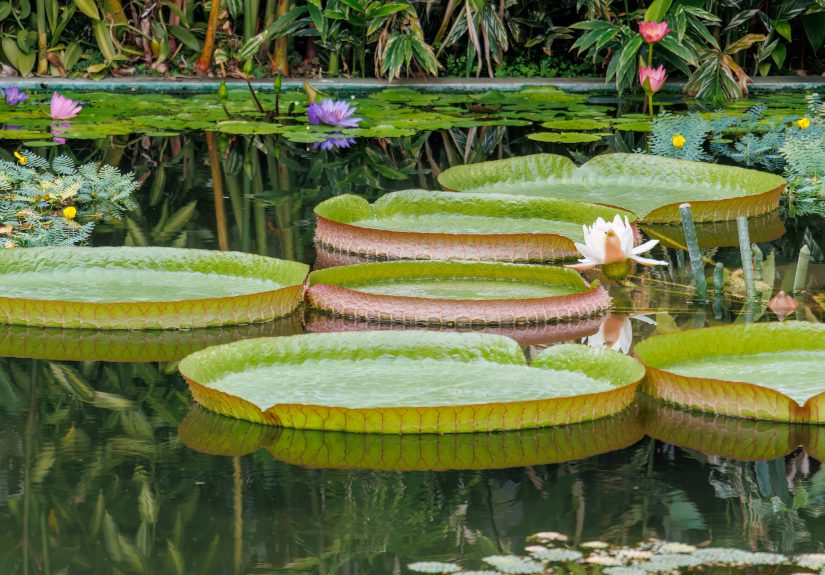
When people say “record-breaking water lilies,” they’re usually talking about the genus Victoriagiant water lilies native to South America that have become superstar attractions in conservatories and public gardens. The leaves (often called “pads” or “water platters”) can reach several feet across, with upturned rims and a dramatic, engineered-looking underside that seems borrowed from a sci-fi movie set rather than a pond.
What makes Victoria lilies different from the lily pads in your neighborhood pond?
- Size: These leaves are enormousbig enough to look like nature invented floating patio furniture.
- Structure: The underside features a strong lattice of ribs, like a green trampoline frame designed by an extremely patient architect.
- Attitude: The stems and undersides can be prickly, which is the plant’s way of saying, “Please admire from a respectful distance.”
Different gardens grow different members of the Victoria family, including Victoria amazonica, Victoria cruziana, and a famous hybrid called Victoria ‘Longwood Hybrid’a plant with the energy of a champion powerlifter and the résumé of a botanical celebrity.
How Can a Leaf Hold 180+ Pounds Without Immediately Sinking?
Let’s address the obvious question: is this lily pad secretly made of carbon fiber? Not quite. The magic is a mix of physics, plant anatomy, and the kind of structural design that makes engineers squint, smile, and start sketching.
1) Buoyancy does the heavy lifting (literally)
Floating leaves don’t “hold” weight the same way a chair does. They displace water. When you add weight on top, the leaf pushes down, displacing more water, and the upward buoyant force increasesuntil the plant can’t keep up and the leaf floods or submerges.
2) The ribbed underside is nature’s support beams
The underside of a Victoria leaf is reinforced by a grid of thick veins and ribs that spread forces outward. Instead of one sad little spot taking all the pressure (and instantly failing), the load is distributed across the leaf’s “skeleton.” This is why a carefully placed, evenly distributed load can be supported far better than a pointy, concentrated one.
3) Air spaces and “built-in flotation” help keep it afloat
The leaf’s structure includes air-filled spaces within the vein network and tissues, which improves buoyancy and helps the plant ride higher on the surfacelike a very sophisticated pool float that photosynthesizes.
4) Load distribution is everything
If you’ve ever seen demonstrations where weight is placed on a board on top of the leaf, that’s not cheatingit’s physics. The broader the contact area, the more evenly the force spreads, and the longer the leaf can resist submerging. The leaf isn’t a dumbbell rack; it’s a floating, living platform that rewards good weight placement.
The result? Under the right conditions, a giant water lily leaf can support astonishing totalsenough to earn headlines that sound like a fairy tale written by a structural engineer.
The Waterlily Weigh-Off: The Internet’s Most Charming Plant Competition
The Waterlily Weigh-Off is an annual social-media-driven contest organized by Denver Botanic Gardens. Participating public gardens and zoos film themselves testing how much weight a single water lily leaf can support before it sinks. Then they post their results online for the world to gasp, giggle, and immediately send to that friend who loves plants and chaos.
How it works
- Pick a champion leaf: Usually a giant Victoria leaf (or a smaller water lily, depending on what the institution grows).
- Add weight in stages: Competitors stack itemsoften standardized weights, but sometimes playful local choices.
- Record the moment of truth: The “finish line” is when the leaf finally starts sinking or submerges.
- Share results: Videos and totals are posted publicly, turning plant science into a spectator sport.
Part of the contest’s charm is that it’s both seriously scientific and cheerfully unserious. The horticulturists know exactly what they’re doingwater temperature, leaf maturity, placement techniqueyet the internet gets to enjoy the spectacle of a plant quietly out-performing everyone’s New Year fitness goals.
Who Won the “Nearly 200 Pounds” Crown?
In the 2025 editionreported as the third year of the eventthe winning leaf came from Bok Tower Gardens in Florida. Their giant water lily held 183 pounds before it started to sink, edging out the runner-up by the botanical equivalent of a photo finish.
2025 leaderboard highlights
- 1st place: Bok Tower Gardens (Florida) 183 pounds
- 2nd place: Missouri Botanical Garden (Missouri) 182 pounds
- 3rd place: Huntsville Botanical Garden (Alabama) 176 pounds
That’s right: the difference between first and second place was one pound. In other words, this contest is competitive enough that somewhere, a horticulturist is probably staring at a leaf and whispering, “Next year… we’re adding a slightly heavier brick.”
The Real Winner: Creativity (and Occasionally Cheesecake)
The Waterlily Weigh-Off isn’t just about numbers; it’s about spectacle. Many institutions use classic weights like dumbbells, sandbags, and brickspractical, tidy, and very “we respect the scientific method.” Others lean into local personality.
Examples that make the internet a better place
- Cheesecake weights: One garden stacked boxed cheesecakes for a uniquely local twistbecause nothing says “serious horticulture” like dessert-based measurement.
- Playful props: Some teams include themed objects (like novelty items or figurines) for comedic flair, proving that plant science can have a punchline.
- Regional pride: Gardens often highlight local culture, foods, or humorturning the weigh-off into a mini postcard from their city.
It’s wholesome, it’s weird, and it’s educational in the sneakiest way possible: you click for the cheesecake, and you leave knowing how buoyancy works.
Why This Contest Is More Than a Gimmick
Sure, the weigh-off is entertainingbut it also does something public gardens constantly strive for: it gets people to care. Not in a vague “plants are nice” way, but in an “I am emotionally invested in a floating leaf’s performance” way. That attention supports real goals.
1) It spotlights horticulture as skilled work
Growing giant Victoria lilies isn’t a casual weekend hobby. It takes controlled conditions, careful timing, and experienced staffespecially in places with cooler climates where the plant may be grown seasonally. The contest highlights the behind-the-scenes expertise that keeps public gardens thriving.
2) It turns botany into a gateway science
After watching a leaf hold 183 pounds, it’s hard not to ask “How?” That question opens the door to plant anatomy, ecology, materials science, and the physics of floating structures.
3) It makes conservation feel personal
When people fall in love with a plantyes, even via a goofy contestthey’re more likely to support gardens, conservation programs, and scientific research. Joy can be a serious tool.
How Gardens Grow Giant Water Lilies (Without Losing Their Minds)
If the weigh-off made you wonder, “Could I grow one of these in my backyard pond?” the honest answer is: maybe… if your backyard pond is basically a warm, sun-drenched botanical facility with a dedicated plant caretaker who doesn’t mind a little drama.
What giant Victoria lilies typically need
- Warm water: These are tropical plants that prefer high temperatures for strong growth.
- Full sun: Big leaves require big energy. Shade is not the vibe.
- Rich growing medium: Think nutrient-rich, muddy substrates that anchor the plant and feed rapid growth.
- Space: The leaves spread wide, and the plant doesn’t do “tiny corner of the pond” energy.
- Respect: Many have prickles on stems and undersides, so handling requires care.
Public gardens often grow these lilies from seed, starting them under controlled conditions and then moving them to display pools when the season is right. Some institutions treat them as seasonal stars that headline summer and retire when temperatures droplike botanical pop icons with a strict touring schedule.
Want to See One in Person? Here’s How to Make It a Great Visit
Giant water lilies are often showcased in summer displays at major public gardens. If you’re planning a visit, your best strategy is to:
- Check bloom and display updates: Many gardens post seasonal plant highlights, bloom trackers, or greenhouse updates.
- Go at the right time: Summer is typically peak “giant lily pad” season in many U.S. gardens.
- Look for special programming: Some gardens tie aquatic displays to talks, tours, or social media eventsespecially during weigh-off season.
- Bring your curiosity: The leaves are impressive, but the underside structure is the real engineering marvel.
And if you catch a weigh-off post while you’re there? Congratulations: you’ve found the rare intersection of botany, spectacle, and wholesome internet culture.
Bonus: The “I Was There” Feeling of Whimsical Weigh-Off Experience
Imagine walking into a conservatory on a bright summer day, and the air immediately changes. It’s warmer, heavier, and faintly smells like damp stone, green leaves, and the kind of optimism plants have when nobody’s trying to stack gym equipment on them. You turn a corner and there it is: a pool that looks calm, almost ceremonial, with a giant green platter floating on top like nature is hosting a very exclusive tea party for frogs.
At first, the leaf doesn’t seem real. The rim curls upward like the lip of a pie crustexcept it’s alive, glossy, and big enough to make you rethink every kiddie pool you’ve ever seen. The underside is the part you can’t stop thinking about: a web of ribs and veins that looks engineered, like a bridge you’d drive across in a video game. You start to understand why people call it “structural.” This leaf isn’t just floating; it’s prepared.
Now picture the weigh-off energy. Even if you’re just watching online, it feels like a sporting event where the athlete is chlorophyll-powered. One garden goes classic: neat stacks of weights, carefully centered, like they’re performing surgery with dumbbells. Another garden chooses chaos-with-a-smile: local items, playful props, maybe something that makes you say, “Is that… dessert?” You laugh, but you’re also invested, because the leaf keeps holding, and holding, and holding. You catch yourself whispering, “One more. It can do one more.”
If you’re lucky enough to watch a test in person (or even just see the aftermath), you notice how deliberate everything is. The placement isn’t random. The staff move with the calm focus of people who have done this before and have the scratch marks to prove it. Someone checks the leaf like a coach checks a player’s stance. The pool surface trembles slightly as weight is added, and the leaf dips almost imperceptiblylike a slow elevator descending into the water.
And then there’s the crowd reactionsometimes literal, sometimes just the comment section. People cheer for a plant. They debate technique. They root for their city. They type things like “LET’S GO LILY!” with the sincerity usually reserved for playoffs. For a moment, everyone agrees on something: nature is astonishing, and also extremely funny. Because yes, a leaf just held the equivalent of a medium-to-large adult human, and yes, we are all emotionally attached now.
When the leaf finally sinks, it isn’t tragicit’s triumphant. It did its job. It showed off the genius of its design. And it reminded you that science doesn’t always have to arrive wearing a lab coat. Sometimes it arrives as a gigantic lily pad quietly winning the internet.
Conclusion
The Waterlily Weigh-Off is proof that the best science communication doesn’t always come in a textbook. Sometimes it comes on social media, featuring a plant that looks delicate but performs like a floating weight platform. Giant Victoria water lilies can support astonishing loads because of buoyancy, clever structural reinforcement, and the simple physics of spreading weight across a broad surface. And in 2025, Bok Tower Gardens’ champion leaf stole the crown with a jaw-dropping 183-pound performancenearly 200 pounds of “excuse me, I’m a leaf.”
Whether you’re a gardener, a science nerd, or just someone who enjoys wholesome competitions involving plants and occasional pastry-based weights, this is one contest worth following. Because where else do you get botany, engineering, and comedyon a lily pad?