Table of Contents >> Show >> Hide
- What Are Vesicles?
- Why Vesicles Form: The “Fluid Under the Roof” Explanation
- Common Causes of Vesicles (Grouped by Category)
- 1) Friction, Heat, and Everyday Injury
- 2) Allergic or Irritant Contact Dermatitis (Including Poison Ivy)
- 3) Eczema and Inflammatory Skin Conditions
- 4) Viral Infections
- 5) Bacterial Infections (Including Impetigo)
- 6) Autoimmune Blistering Disorders
- 7) Medication Reactions and Serious Skin Emergencies
- Vesicle Symptoms: What You May Notice
- How Vesicles Are Diagnosed (What Clinicians Actually Do)
- When to See a Doctor (And When to Seek Urgent Care)
- Conclusion
- Real-World Experiences With Vesicles (About )
- SEO Tags
Your skin is an overachiever. It blocks germs, keeps your insides in, and somehow still finds time to be dramatic when something’s off. One of its favorite “drama props” is the vesiclea tiny, fluid-filled blister that pops up like a miniature water balloon. Sometimes it’s harmless (hello, new shoes). Sometimes it’s your body waving a very specific red flag (hello, shingles).
This guide breaks down what vesicles are, what causes them, which symptoms matter most, and how clinicians figure out the diagnosiswithout drowning you in medical jargon. (Light sprinkling only. Like seasoning.)
What Are Vesicles?
A vesicle is a small, raised, fluid-filled lesion on or just under the outer layer of skin. In plain English: a little blister. Vesicles usually contain clear fluid (serum), but they can also hold cloudy fluid, blood-tinged fluid, or (if infection joins the party) something that looks less “sparkling water” and more “suspicious soup.”
Size matters in dermatology. Clinicians often use a size cutoff to describe blister-like lesions:
- Vesicle: a smaller blister (often described as under about 1 centimeter).
- Bulla: a larger blister (bigger, floppier, and usually harder to ignore).
Vesicles are not a diagnosis by themselvesthey’re a clue. The real question is: Why did your skin decide to trap fluid right there?
Why Vesicles Form: The “Fluid Under the Roof” Explanation
Think of the top layer of your skin like shingles on a roof (ironically appropriate when we talk about shingles later). When the skin barrier is irritated, inflamed, infected, or injured, tiny spaces can open between cellsor the layers can separate slightly. Your body sends fluid into that space as part of inflammation and repair, and voilà: a vesicle.
The pattern, location, and “vibe” of the vesiclesitchy vs. painful, localized vs. widespread, single crop vs. repeated flarehelp narrow down the cause.
Common Causes of Vesicles (Grouped by Category)
1) Friction, Heat, and Everyday Injury
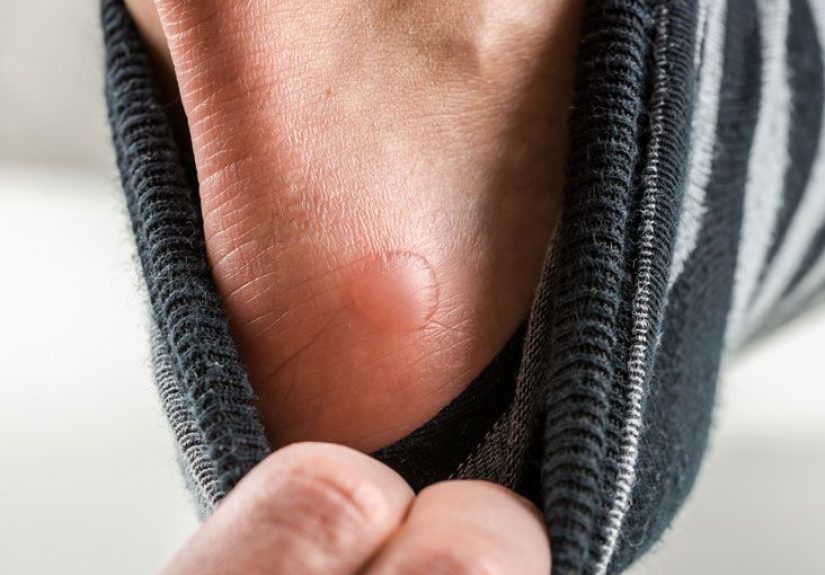
The most relatable vesicles are the ones caused by rubbing (new shoes, tools, athletic tape), heat (minor burns), or minor trauma. These typically appear where the irritation happenedheels, toes, palms, or anywhere something repeatedly scraped the skin.
Clues it’s mechanical: a single blister or small cluster, right where friction occurred, without other symptoms like fever or a spreading rash.
2) Allergic or Irritant Contact Dermatitis (Including Poison Ivy)
If vesicles show up after your skin touches something it hateslike nickel, fragrance, chemicals, or plants such as poison ivy/oak/sumaccontact dermatitis can be the culprit. Allergic contact dermatitis is famous for being extremely itchy, sometimes with streaky or geometric patterns that match the contact area.
Classic examples:
- Poison ivy/oak/sumac: intensely itchy bumps and blisters often in lines or streaks where the plant brushed the skin.
- Product reaction: vesicles under a new watch band, adhesive, topical antibiotic, or “miracle” skincare product.
3) Eczema and Inflammatory Skin Conditions
Several inflammatory conditions can create vesicles, but one has a signature look: dyshidrotic eczema (also called dyshidrosis or pompholyx). It causes tiny, intensely itchy blisters on the palms, sides of fingers, and sometimes soles. People often describe them as “tapioca-like” bumps under the skin.
These flares can be triggered by things like sweating, stress, irritants, or allergens, and they often recurbecause skin loves sequels.
4) Viral Infections
Viruses are frequent vesicle-makers. The “look” and distribution matter a lot:
- Herpes simplex virus (HSV): often causes clusters of small, painful or burning vesicles. Common sites include lips (cold sores) and genital skin.
- Varicella-zoster virus (VZV): causes chickenpox (widespread itchy vesicles in different stages) and shingles (a more localized, painful rash).
- Hand, foot, and mouth disease (HFMD): common in children, with fever, mouth sores that can blister, and a rash on hands and feet that may include blister-like lesions.
Shingles tip-off: pain, tingling, or burning on one side of the body followed by a band-like vesicular rash in a single nerve distribution (a dermatome).
5) Bacterial Infections (Including Impetigo)
Bacteria can also cause blistering lesions, especially impetigo. Classic impetigo often starts as red sores that ooze and form a honey-colored crust, but bullous impetigo can create larger fragile blisters (bullae) and smaller blister-like lesions as wellmost often in children.
Clues it’s bacterial: crusting, oozing, rapid spread among close contacts, and lesions around the nose/mouth or in areas of broken skin.
6) Autoimmune Blistering Disorders
Some conditions create vesicles because the immune system mistakenly targets structures that hold the skin layers together. These are less common, but important to recognize.
- Dermatitis herpetiformis: intensely itchy clusters of small vesicles and bumps, often on elbows, knees, buttocks, back, or scalp, and strongly associated with celiac disease.
- Other autoimmune blistering diseases: may cause blistering that’s widespread, persistent, or involves mucous membranes.
Autoimmune causes are more likely when vesicles are recurrent, widespread, unusually stubborn, or occur with other systemic signs.
7) Medication Reactions and Serious Skin Emergencies
Certain drug reactions can cause blistering and skin peeling and may involve the mouth, eyes, or genitals. These reactions are rare, but they’re urgent. If vesicles/blisters appear with fever, widespread skin pain, facial swelling, mucosal sores, or rapid spreading rash, seek emergency care.
This is not the moment for “Let’s see how it looks tomorrow.” This is the moment for “Let’s not gamble with our skin.”
Vesicle Symptoms: What You May Notice
Vesicles can feel (and look) very different depending on the cause. Here are the most common symptoms and what they may suggest:
Itching
Intense itching is common with contact dermatitis, dyshidrotic eczema, and dermatitis herpetiformis. If you’re trying not to scratch and failing heroically, that’s a useful diagnostic clue.
Pain, Burning, or Tingling
Painful or burning vesicles often suggest a viral cause like HSV or shingles, especially if pain starts before the vesicles appear. Shingles can be particularly tender, sometimes with deep nerve pain.
Redness, Swelling, Oozing, or Crusting
Inflamed skin around vesicles can occur with many conditions, but crusting and drainage raise suspicion for infection (impetigo, secondary bacterial infection from scratching) or a more weepy dermatitis flare.
Fever or “I Feel Sick” Symptoms
Fever, sore throat, fatigue, or body aches alongside vesicles may point to viral illness (HFMD, chickenpox, shingles) ormore rarelya severe drug reaction. When vesicles are part of a broader systemic illness, clinicians take the diagnosis and timing seriously.
Location Patterns That Matter
- Palms/soles: dyshidrotic eczema, HFMD, contact dermatitis, some infections.
- Lip/genitals: HSV is high on the list.
- One-sided band on trunk/face: shingles pattern.
- Elbows/knees/buttocks/extensors with severe itch: consider dermatitis herpetiformis.
- Exactly where something touched: contact dermatitis loves a good boundary line.
How Vesicles Are Diagnosed (What Clinicians Actually Do)
A vesicle is a visual clue. Diagnosis is detective work: history + exam + (sometimes) targeted testing. Here’s how that typically unfolds.
Step 1: History (The Questions That Aren’t Random)
Expect questions like:
- When did the rash start, and how fast did it spread?
- Does it itch, burn, or hurt?
- Any new products: soaps, detergents, lotions, adhesives, topical medications?
- Outdoor exposure: gardening, hiking, poison ivy risk?
- Anyone else around you with a similar rash?
- Recent illness, fever, or sore throat?
- New medications or dose changes in the last few weeks?
- Past episodessame place, same pattern?
These questions help narrow down whether you’re dealing with infection, allergy, eczema, autoimmune disease, or injury.
Step 2: Physical Exam (Pattern Recognition Is a Superpower)
Clinicians look at:
- Distribution: localized vs. widespread; one side vs. both sides.
- Arrangement: grouped vesicles, linear streaks, dermatomal bands.
- Stage: fresh vesicles vs. crusts vs. healing erosions.
- Skin around the vesicle: redness, swelling, scaling, “weeping.”
- Mucous membrane involvement: mouth, eyes, genitals.
Step 3: When Testing Helps (And What Those Tests Are)
Many vesicular rashes are diagnosed clinically. But when the diagnosis affects treatmentor the presentation is atypicaltesting can be essential.
Swabs for Viral PCR (HSV and VZV)
If shingles or HSV is suspected, clinicians may swab fluid from a vesicle or sample the lesion. Modern molecular tests (like PCR) can rapidly and sensitively detect viral DNA from skin lesions, which is especially useful when the pattern is unclear or the case is high-risk.
Bacterial Culture (When Infection Is Suspected)
For suspected impetigo or secondary infection, a clinician may take a sample to identify bacteria and guide antibiotic choiceparticularly if resistant bacteria are a concern.
Skin Scraping or Microscopy (Selected Cases)
If there’s uncertaintyespecially if the rash is scaly, recurrent, or unusualskin scrapings may help rule out other causes.
Patch Testing (For Allergic Contact Dermatitis)
If contact dermatitis is frequent or severe, patch testing can identify specific allergens (like nickel, fragrances, preservatives) so you can avoid them more accurately than “I guess I’ll never touch anything again.”
Skin Biopsy (Including Direct Immunofluorescence)
A biopsy may be used for autoimmune blistering disorders or unclear, persistent eruptions. For conditions like dermatitis herpetiformis, a biopsy with special testing (direct immunofluorescence) can detect characteristic immune deposits and confirm the diagnosis.
Step 4: Diagnosis Is Also About Rule-Outs
Vesicles can resemble (or become confused with) other lesions:
- Pustules: fluid looks pus-like (often bacterial/inflammatory).
- Hives: raised itchy welts, but usually not fluid-filled.
- Insect bites: can blister, especially if scratched or if there’s an allergic reaction.
- Drug eruptions: may start as red rash and evolve; urgent if blistering spreads or mucosa involved.
This is why “I googled it and now I’m 12% sure it’s aliens” doesn’t count as a diagnosis.
When to See a Doctor (And When to Seek Urgent Care)
Some vesicles are “treat-at-home” problems. Others are “call your clinician today” problems. A few are “go now” problems.
Make a routine appointment if:
- Vesicles keep coming back (especially on hands/feet) or don’t improve within 1–2 weeks.
- The rash is spreading, very painful, or interfering with daily activities.
- You suspect shingles (early treatment matters most in the first few days).
- You suspect allergic contact dermatitis but can’t identify the trigger.
Seek urgent care or emergency care if:
- You have fever, widespread skin pain, or rapidly spreading blistering.
- Blisters involve eyes, mouth, or genitals.
- You feel unwell, dehydrated, confused, or have trouble swallowing.
- You’re immunocompromised, pregnant, or the patient is a very young infant.
Conclusion
Vesicles are small blistersbut they’re big on information. The cause may be simple (friction), inflammatory (eczema), allergic (contact dermatitis), infectious (HSV, shingles, HFMD, impetigo), orless commonlyautoimmune or medication-related. Diagnosis depends on the details: location, pattern, timing, and associated symptoms, with tests like PCR swabs or biopsy used when clarity matters.
If your vesicles are painful, spreading, recurring, or paired with systemic symptoms, don’t just “power through.” Skin is not a silent organ. It’s sending a messageyour job is to read it (preferably with a clinician when needed).
Real-World Experiences With Vesicles (About )
People usually don’t walk around saying, “Ah yes, today my vesicles are flourishing.” They say things like: “Why do my hands feel like they’re full of invisible splinters?” or “My rash hurts before I can even see it,” or “I wore the same earrings for yearswhy am I reacting now?”
One common experience is the confusing timeline. With allergic contact dermatitis, the rash can appear a day or two after exposure, which makes the trigger feel like a mystery novel written by your immune system. Someone switches laundry detergent on Monday, breaks out on Wednesday, and blames the salad they ate on Tuesday. (The salad is innocent. Probably.)
Another frequent theme is itch vs. pain. People with dyshidrotic eczema often describe intense itch and a “tight” feeling in the skin of the fingers or palms. The vesicles may look tiny but feel disproportionately annoyinglike a mosquito that pays rent. After a flare, the skin may peel, crack, or feel raw, leading many people to over-wash their hands (understandable) and accidentally worsen dryness (unfair). The “aha” moment often comes when they notice flares after sweating, stress, frequent handwashing, or exposure to irritants at work.
With shingles, many people report the warning phase: tingling, burning, or deep tenderness before any rash appears. That lag can be unsettling because the skin looks normal while it feels “sunburned from the inside.” When vesicles do appear, the one-sided band pattern is often what makes the diagnosis click. People frequently mention how simple clothinglike a shirt seamcan feel painfully abrasive.
Parents dealing with HFMD often describe a different kind of stress: the child feels feverish, has mouth sores, and then the hands/feet rash shows up. The experience is less about diagnosing a single blister and more about managing comfort, hydration, and contagionplus the challenge of explaining to a toddler why “sharing toys” suddenly has consequences.
Across many causes, a surprisingly universal experience is the scratch-and-regret cycle. Vesicles itch. Scratching breaks the skin. Broken skin invites bacteria. Then what started as a clean inflammatory rash becomes crusty, oozing, and harder to treat. People often say the biggest improvement came from a simple change: trimming nails, using cool compresses, covering areas at night, and treating the underlying cause instead of playing whack-a-mole with symptoms.
The most helpful “real-world” takeaway: if vesicles keep returning or don’t fit a clear story, don’t rely on guesswork. Getting the right diagnosissometimes with a swab, patch test, or biopsycan save weeks of discomfort and a cabinet full of products that only make your skin more offended.