Table of Contents >> Show >> Hide
- Why exercise still matters in ankylosing spondylitis
- Ankylosing spondylitis exercises to avoid: The practical list
- 1. High-impact and high-collision activities
- 2. Jerky, ballistic, and uncontrolled movements
- 3. Deep forward bending and forceful twisting in the wrong situation
- 4. Heavy lifting with poor form or excessive spinal loading
- 5. Balance-challenging exercises without support
- 6. Any movement that causes sharp pain, nerve symptoms, or a long flare
- 7. Do-it-yourself neck cracking and forceful spinal manipulation
- Exercises that are often safer and more helpful
- How to tell whether a movement is helping or hurting
- When to seek help for ankylosing spondylitis
- How to build a smarter exercise plan with AS
- Conclusion
- Experiences related to ankylosing spondylitis exercises to avoid: What people often go through
- SEO Tags
Ankylosing spondylitis, often called AS, has a rude habit of turning simple movement into a negotiation. One day a walk feels refreshing. The next day tying your shoes feels like a full-contact sport. That is exactly why exercise advice for AS needs nuance. Movement is one of the most important parts of treatment, but not every movement is a good idea for every body.
If you searched for ankylosing spondylitis exercises to avoid, you are probably not looking for a lecture about “just stay active.” You want the practical list. What should you skip, what should you modify, and when should you stop being brave and call a professional? Fair questions. Your spine deserves better than random internet chaos.
This guide breaks down the kinds of exercises and physical activities that may be risky for people with AS, why they can be a problem, what safer alternatives usually make more sense, and when it is time to seek help from a rheumatologist, physical therapist, or urgent care team. While exercise remains essential for posture, mobility, breathing, strength, and pain management, the smartest plan is not “go harder.” It is “go smarter.”
This article is for educational purposes and should not replace individualized medical advice.
Why exercise still matters in ankylosing spondylitis
Before we get into the avoid list, let us clear up one common misunderstanding: having AS does not mean you should avoid exercise altogether. In fact, regular physical activity is a major part of managing the condition. It can help reduce stiffness, support posture, preserve spinal mobility, improve chest expansion, maintain muscle strength, and make daily life feel less like a wrestling match with your own skeleton.
The trick is choosing movement that works with your body instead of picking a fight with it. AS can affect the spine, sacroiliac joints, hips, shoulders, and even the rib cage. Some people also develop more limited mobility, poor balance, or lower bone density over time. That means an exercise that is perfectly fine for one person may be a terrible choice for another. This is why blanket advice like “do more stretching” or “just hit the gym” is not enough.
Think of AS exercise like cooking on a picky stove. The goal is not maximum heat. The goal is consistent heat, good timing, and not setting off the smoke alarm.
Ankylosing spondylitis exercises to avoid: The practical list
1. High-impact and high-collision activities
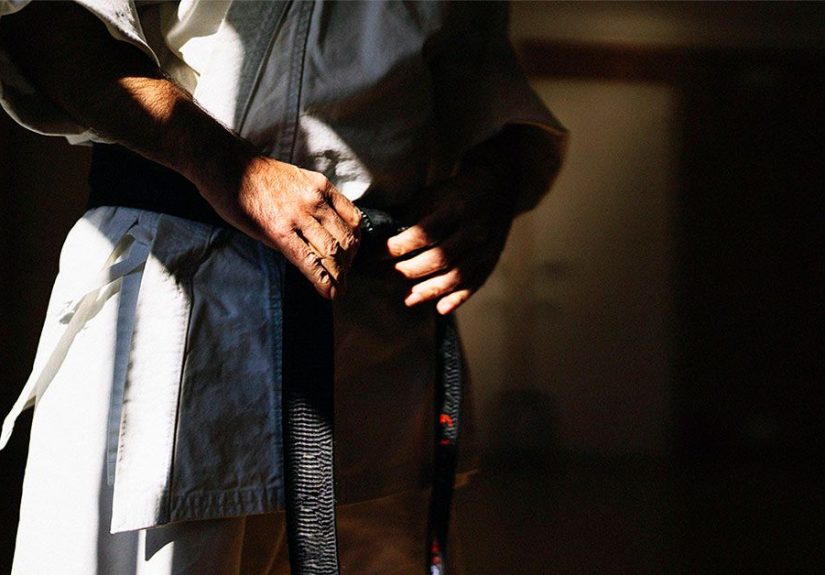
Some people with AS, especially those with severe disease, spinal fusion, poor balance, or known osteoporosis risk, should be very cautious with high-impact exercise and contact sports. That includes activities like football, rugby, hockey, martial arts, and any workout where collisions, falls, or sudden twisting forces are part of the deal.
Why? A stiffer or fused spine does not absorb force normally. If bone density is also reduced, the risk of injury can climb. A hit that might feel “annoying but manageable” to someone else could become a much bigger problem in a person with AS. This is not a dramatic movie trailer voiceover. It is plain biomechanics.
That does not mean every person with AS must swear off sports forever. It means the risk level rises when impact and unpredictability rise. If your disease is advanced, you have had fractures, or you feel unsteady, these activities belong in the “ask your clinician first” bucket.
2. Jerky, ballistic, and uncontrolled movements
Exercises done with bouncing, snapping, whipping, or rapid end-range motion are often poor choices for AS. Examples can include ballistic toe touches, aggressive twisting drills, fast spinal rotations, or any “push through it” mobility class where momentum is doing the work instead of control.
AS usually responds better to slow, controlled movement. When the spine and surrounding joints are inflamed or stiff, jerky movement can irritate tissues, provoke pain, and increase the chance of strain. If an exercise looks like something your body would file a formal complaint about, that is useful information.
3. Deep forward bending and forceful twisting in the wrong situation
This category needs context. Not every forward bend is forbidden. But deep spinal flexion, repeated bending at the waist, and forceful twisting can be risky in people with significant stiffness, spinal fusion, or reduced bone density. Common examples include full sit-ups, repeated toe-touching, aggressive spinal twists, and some yoga or fitness moves that combine bending and rotation under load.
Why is this an issue? When the spine is less mobile or more fragile, loaded bending and twisting can place more stress on structures that are already unhappy. If you also have osteoporosis or fracture risk, the concern gets even bigger. This is one reason a move that feels “like a good stretch” to a healthy friend may not be a wise choice for you.
In plain English: if your spine already acts like it is wearing a tight suit of armor, forcing it into dramatic shapes is rarely the winning strategy.
4. Heavy lifting with poor form or excessive spinal loading
Strength training can be excellent for AS. The problem is not strength work itself. The problem is heavy, poorly controlled lifting that loads the spine aggressively or rewards bad mechanics. Think ego deadlifts, sloppy barbell good mornings, awkward overhead presses with a cranked neck, or “one more rep” when your form already left the building.
If you have AS, especially with neck or back stiffness, posture changes, or hip involvement, poor lifting form can magnify strain. A better route is usually guided strength training that prioritizes core support, hip stability, glute strength, and controlled range of motion. Resistance bands, machines, light-to-moderate free weights, and supervised form work are often much more useful than pretending you are training for a powerlifting documentary.
5. Balance-challenging exercises without support
Some people with AS develop posture changes or reduced balance over time. For them, exercises that heavily challenge balance or postural stability may need to be modified. That includes unstable-surface training, advanced one-leg drills, fast direction changes, or complex yoga balances performed without support.
The issue is not that balance work is bad. Balance training can actually be helpful. The issue is doing it in a way that raises fall risk. If your body wobbles like a shopping cart with one rebellious wheel, adding risk for the sake of “functional fitness” is not noble. It is just unnecessary.
6. Any movement that causes sharp pain, nerve symptoms, or a long flare
This is the golden rule: stop exercises that cause sharp pain, shooting pain, numbness, tingling, weakness, or symptoms that linger well after the workout. Mild muscle effort is normal. Sharp joint or spine pain is a red flag. So is pain that ramps up instead of settling down, or stiffness that becomes dramatically worse for hours or days afterward.
AS exercise should usually help you feel looser, stronger, and more functional over time. If a move reliably leaves you angry, inflamed, and walking like a folding chair, it is not your move.
7. Do-it-yourself neck cracking and forceful spinal manipulation
This is not exactly an exercise, but it belongs on the avoid list. Forceful neck or back manipulation, including chiropractic manipulation in people with limited spinal mobility or fusion, can be dangerous. If you have AS and feel tempted to “just crack it back into place,” resist that impulse. Your spine is not a glow stick.
If you need help with stiffness, pain, or mobility, a physical therapist with experience in inflammatory spinal conditions is a much safer bet than aggressive manipulation.
Exercises that are often safer and more helpful
If that avoid list felt like a parade of bad news, here is the better part: there are many forms of exercise that usually fit AS far better than high-impact or uncontrolled movement.
- Walking: Simple, accessible, low-impact, and surprisingly effective for stiffness.
- Swimming or water exercise: Great for mobility and conditioning without pounding the joints.
- Cycling or stationary biking: Helpful for cardiovascular fitness, though bike setup matters for posture.
- Gentle yoga or tai chi: Best when modified and focused on posture, control, breathing, and balance rather than extreme ranges.
- Pilates-style core work: Useful when it emphasizes alignment and controlled strengthening instead of aggressive flexion.
- Physical therapy programs: Often the gold standard because they are individualized.
- Posture and chest-expansion work: Important because AS can affect spinal alignment and rib cage motion.
The real goal is a balanced routine that includes flexibility, strength, aerobic conditioning, and posture training. In other words, not just stretching, not just cardio, and definitely not just doing whatever your most dramatic gym friend tells you is “beast mode.”
How to tell whether a movement is helping or hurting
People with AS often ask the same question: “How do I know if this is normal soreness or a bad idea?” Here are some useful clues.
Signs a movement is probably helping
- You feel looser after warming up.
- Stiffness eases without creating new pain.
- Your posture, walking, or daily function improves over time.
- Muscle fatigue fades within a reasonable window.
Signs a movement needs to be modified or stopped
- Sharp pain during the exercise.
- Pain that radiates, tingles, or causes weakness.
- Symptoms that keep worsening after you finish.
- Flares that last much longer than expected.
- Feeling unstable, dizzy, or unsafe doing the activity.
A good exercise plan for AS often includes a warm-up, controlled movement, and a reality check. If you consistently need a rescue mission after your workout, the program needs revision, not more motivational quotes.
When to seek help for ankylosing spondylitis
Make a routine medical appointment if:
- Your current exercise plan increases pain instead of helping.
- You feel more stiff, hunched, or limited over time.
- You are unsure which exercises are safe for your stage of AS.
- You have recurring hip, shoulder, heel, or rib pain that affects movement.
- You need help building a plan that includes posture, strength, cardio, and mobility.
Ask for a physical therapy referral if:
- You do not know how to modify exercises safely.
- You have trouble with posture or balance.
- You are recovering from a flare and want to return to movement without overdoing it.
- You want a home program tailored to your mobility, pain pattern, and goals.
Seek urgent help right away if:
- You develop a painful red eye, blurred vision, light sensitivity, or watering of the eye.
- You have sudden severe spine pain after a fall, accident, or impact.
- You notice new numbness, weakness, or loss of coordination.
- You have difficulty breathing or swallowing along with worsening spinal symptoms.
- You develop major new symptoms while under treatment.
That eye warning deserves extra attention. AS can be associated with uveitis or iritis, and that is not something to “sleep off and see how it feels tomorrow.” Eye inflammation needs prompt medical care.
How to build a smarter exercise plan with AS
If you are living with ankylosing spondylitis, the best exercise plan is usually not extreme. It is specific. A strong routine often looks like this:
- Daily movement: even short walks or mobility breaks count.
- Posture practice: gentle spinal extension, alignment awareness, and chest-opening work.
- Low-impact cardio: walking, swimming, cycling, or water exercise.
- Strength training: core, glutes, hips, upper back, and leg strength with controlled mechanics.
- Flexibility: gentle stretching after warming up, not cold and aggressive stretching.
- Consistency: regular exercise beats occasional heroic workouts every time.
It is also smart to break up long periods of sitting. Many people with AS feel worse after being still for too long, so short movement breaks throughout the day can help more than one giant workout followed by six hours in a chair shaped like regret.
Conclusion
When it comes to ankylosing spondylitis exercises to avoid, the answer is not a dramatic blacklist of every fun activity on Earth. It is a practical warning against the kinds of movement most likely to stress a stiff, inflamed, or fragile spine: high-impact collisions, jerky motions, loaded bending and twisting, sloppy heavy lifting, unsupported balance challenges, painful exercises, and forceful spinal manipulation.
At the same time, avoiding the wrong exercises should never turn into avoiding movement altogether. AS usually responds best to regular, low-impact, controlled exercise paired with posture work, strengthening, mobility training, and professional guidance when needed. If your symptoms are changing, your workouts leave you worse, or you develop urgent signs like eye pain or sudden severe spinal pain, seek help early. Smart movement is medicine. Random punishment disguised as fitness is not.
Experiences related to ankylosing spondylitis exercises to avoid: What people often go through
Many people with ankylosing spondylitis describe the same frustrating cycle. At first, they think they just need to stretch harder, train harder, or “get in better shape.” Morning stiffness makes them feel ancient before breakfast, so they try a tough workout video, a fast yoga flow, or a boot-camp class with jumps, burpees, and twists. For a brief moment, they feel productive. Then comes the backlash. Their lower back tightens, their hips feel glued in place, and by evening they are moving like someone who owes rent to gravity.
Another common experience is confusion about what pain means. Some people learn that gentle movement helps their stiffness, so they assume all pain during exercise must be good pain. That idea can get them into trouble. They may keep doing full sit-ups, deep spinal twists, or heavy lifting because they think discomfort means progress. Later, they realize their body was not asking for motivation. It was asking for modifications.
People also talk about the mental side of exercise with AS. It is hard to feel confident in movement when your body is inconsistent. One week walking feels easy. The next week even turning your head to back out of a parking space feels like a structural engineering problem. That unpredictability can make people either overdo it on good days or avoid activity completely on bad days. Both extremes tend to backfire.
Then there is the posture issue. Some people notice that they slowly stop standing as tall as they used to. They start looking for stretches online and accidentally follow routines built for flexible athletes, not for someone with inflammatory spinal disease. Instead of feeling better, they feel strained, sore, and discouraged. When they finally work with a physical therapist, the difference is often huge. The exercises are less flashy, more targeted, and weirdly effective. It turns out that boring, controlled movements can be much more powerful than dramatic ones. Very rude, but true.
Some people with AS also describe learning the hard way that eye symptoms matter. What starts as a red, painful eye or blurry vision may seem unrelated to back pain, until they find out otherwise. Others discover that balance changes, fatigue, or chest tightness affect what kinds of workouts they can safely tolerate. These experiences often teach the same lesson: AS is not just “back pain,” and exercise needs to match the whole picture.
The encouraging part is that many people do find a rhythm that works. They replace punishment-style workouts with walking, swimming, mobility work, posture drills, strength training with good form, and rest that is strategic instead of excessive. They stop chasing the hardest workout in the room and start chasing the one they can repeat consistently. That shift may not look glamorous on social media, but it often works better in real life. And with AS, real life is the only scoreboard that matters.